Camera Muting as a False Solution in Video Monitoring
Disabling noisy camera feeds silences real threats along with false alarms.

Camera muting is standard practice in video monitoring centers, and it is a mistake dressed up as a fix. When a monitoring team silences a camera that generates too many false alarms, it clears the backlog of alerts and eliminates the coverage at the same moment, because the same switch that stops the noise also stops the real alert that eventually arrives.
Why monitoring centers reach for muting
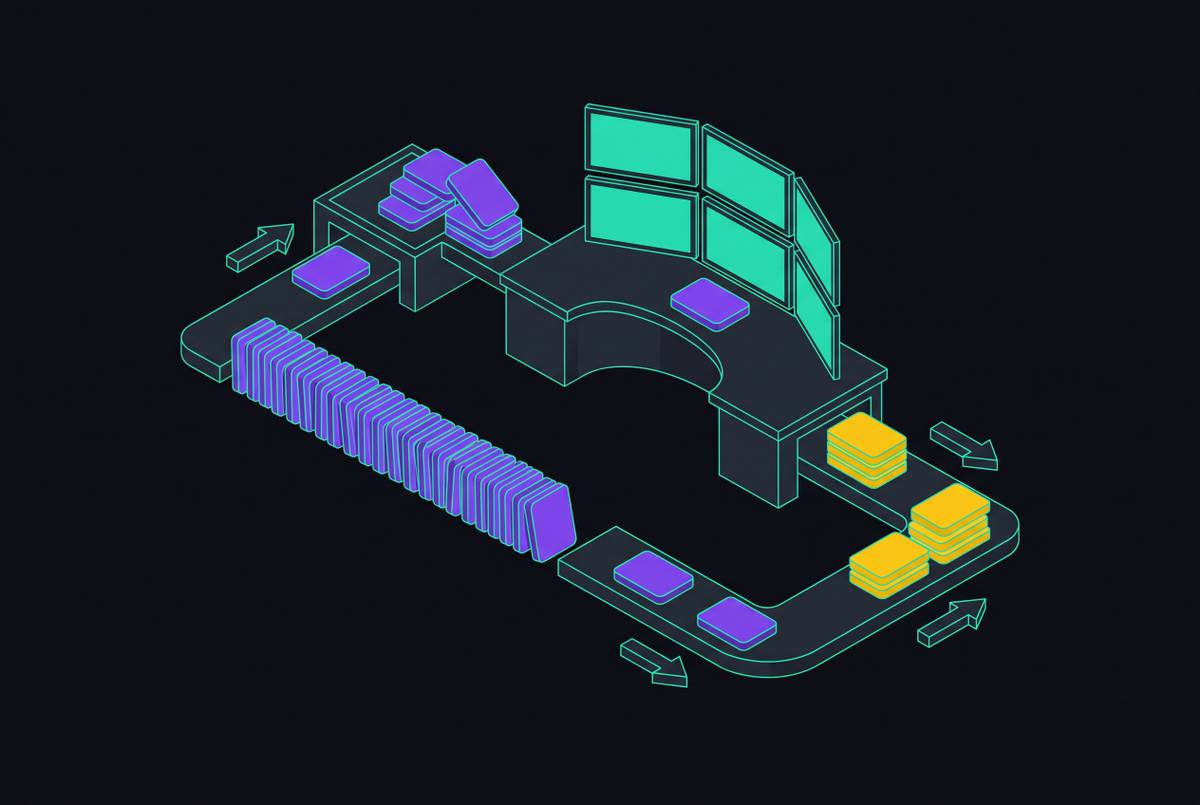
An operator sitting in front of a wall of live feeds does not control how many alarms arrive. The system does: a sensor trips, a pixel changes, a leaf moves across a frame at the wrong angle, and the alert lands in the queue regardless of whether anything resembling a threat is actually present. When that queue fills faster than a human being can clear it, the queue does not slow down to match capacity. It grows, and every alarm behind the first hundred waits its turn, including the one alarm in that batch that might represent an actual intruder.
The bottleneck in any video monitoring operation has always been human attention, not camera count or bandwidth. An operator watching hundreds of high-resolution feeds runs into a basic limit of perception: when every screen is active and every tile is blinking with some flavor of motion, nothing stands out as more urgent than anything else. Everything competes for the same narrow channel of attention, and the channel does not expand just because the demand on it has.
Faced with that condition, muting the loudest cameras is the only lever an operator actually has. Silencing the feeds that generate the most false alarms shrinks the queue to something a person can work through in a shift, and it restores a sense of control that the volume had taken away. That decision is the predictable behavior of someone working inside an architecture that gives them no better option.
What muting removes alongside the noise
Muting a camera does not remove just the false alarms coming from it. It removes every alarm coming from it, the false ones and the real ones alike, because the system cannot tell in advance which alert in that stream will turn out to matter.
The camera itself keeps recording. The camera keeps recording and appears active on a dashboard, so a client checking on their security posture sees a feed that looks exactly like every other covered camera on the property. Nobody is reviewing what it sends, but nothing about its outward appearance says so. The contract still counts it as a monitored point. The client still believes, reasonably, that someone is watching it.
That gap between appearance and function puts a muted, monitored camera in roughly the same place as a passive, unmonitored one. Passive surveillance only gets reviewed after the fact, once a break-in or an act of vandalism has already happened, and by then the loss is already on the books. A muted camera that is nominally part of an active monitoring contract delivers the same outcome: footage exists, but nobody intervened while the intervention still mattered. The client does not learn any of this until a real event lands on that camera, at which point there's a recording to pull but no window left in which anyone could have acted on it.
None of this makes the decision to mute an act of bad faith on the part of a monitoring vendor. The legacy alarm model produces a false-alarm rate between 94 and 99 percent for police responses to activations, a number that describes the signal quality the entire reactive architecture runs on. Operators triaging that kind of feed are sorting through noise almost all of the time, and muting the noisiest sources is close to the only tool available inside that architecture. Given that starting point, if the pipeline itself does not change, some form of coverage sacrifice becomes close to inevitable.
Alarm volume as an architectural problem, not a staffing one
Adding operators to a monitoring center, or moving the function to a lower-cost location, changes who absorbs the cost of the noise without changing how much noise there is. The ratio of real alerts to false ones stays exactly where it started, and the pressure to mute cameras comes back at the same volume it left at.
The queue is a routing problem: every unverified signal, regardless of how likely it is to mean anything, gets sent to a human being before any filtering happens. More operators means more capacity to work through that stream of noise. It does not mean less noise arrives, so the next operator hired is triaging false alarms at the same rate as the first one. The reactive central station model built around triggering a human on any sensor activation, with that 94 to 99 percent false-alarm rate behind it and verification happening downstream through a phone call to the premises, puts the person at the wrong end of the pipeline. By the time a human looks at the alert, the filtering that should have happened already didn't.
Attention itself has a hard limit that no amount of training closes. Research published in Applied Ergonomics on operators monitoring CCTV footage found that a vigilance decrement sets in after roughly 20 to 35 minutes of continuous monitoring, and this matches guidance from the UK's National Protective Security Authority, which says the decrement typically starts 20 to 30 minutes in, depending on how much concentration the task demands. That is a cognitive ceiling, not a discipline problem, and it applies to a well-trained, well-staffed team exactly as it applies to an understaffed one. Adding shifts compresses the fatigue into shift boundaries. It does not make the fatigue go away.
Muting, offshoring the monitoring function, and overage pricing for alert volume are all patches applied downstream of where the actual problem sits. Each one moves the cost of an overloaded queue somewhere else: onto a muted camera, onto a cheaper labor market, onto a client's invoice. None of them touches the queue itself.
What upstream filtering looks like when it works
Reducing false alarms before they reach a human operator changes what the operator is looking at rather than how fast they can get through it, a different kind of intervention than filtering them after they arrive.
Legacy video analytics work by detecting an object class: a shape resolves into "person," and the system passes an alarm forward. The operator still has to work out, from a static frame or a short clip, whether that person is a threat, an employee, a delivery driver, or someone's houseguest looking for the right door. Scene-reasoning systems do more of that work before the alert ever reaches a person. They evaluate who is present, what that person is doing, whether the behavior is unusual given the location and the time of day, and what category of threat, if any, applies. The result handed to the operator is a contextualized read on a situation, not a flag that says a pixel cluster matched the shape of a human.
An AI agent operating this way can carry out situational analysis on its own, take an initial response action automatically, and recommend a follow-up course of action to the human operator reviewing the escalation. That is triage by reasoning about the scene, not triage by a fixed detection threshold that fires the same way regardless of context.
Context is what makes any of this work. A person standing at a loading dock at two in the morning on a Tuesday is a very different event than the same person standing in the same spot at eight in the morning during a scheduled delivery window, and a system with no access to that schedule cannot tell the two apart. Left without that information, it defaults to flagging both, which puts the operator right back in the noise it was supposed to escape. Feeding the system schedules, records of authorized activity, and site-specific protocols lets it reason about a scene and understand what the objects inside it mean. A system that has been told what normal looks like at a given site, down to the hour and the activity pattern, can set aside the routine churn of weather, lighting shifts, and known personnel, and reserve escalation for what actually falls outside that envelope.
Where this kind of reasoning happens in the pipeline matters as much as how sophisticated the reasoning is. A model that runs at the edge and acts before a signal ever reaches the central queue occupies a structurally different position than a cloud-side analytics layer that receives the identical flood of raw alerts the human operator would have otherwise faced.
The practical effect is a queue built only from verified, contextualized events, where an operator can act on every item that reaches them instead of sorting through hundreds to find the handful that matter. Manual scanning of feeds can take many minutes to surface an incident; an AI-powered system flagging the same event in under 30 seconds makes a verified-event service commitment realistic. Once operators are only receiving escalations that have already been verified, no backlog of noise is left to silence, and the incentive to mute a camera disappears because the camera has stopped generating the volume that made muting necessary.
The cost of a coverage gap when a real threat arrives at a muted camera
A threat arriving at a muted camera does not just slip past the monitoring center. It slips past dispatch too, because an alarm with no verification behind it does not move any faster through a police response system, and in a growing number of jurisdictions it does not move.
Verified-response policies now require some form of confirmation, video, audio, or an in-person check, before police will send officers to a location. The Security Industry Association reports that Seattle became the 19th U.S. law enforcement agency to adopt such a policy. A muted camera cannot supply that confirmation. A real event unfolding in front of it can go without a verified dispatch because the architecture never produced the evidence a dispatcher needed to act on.
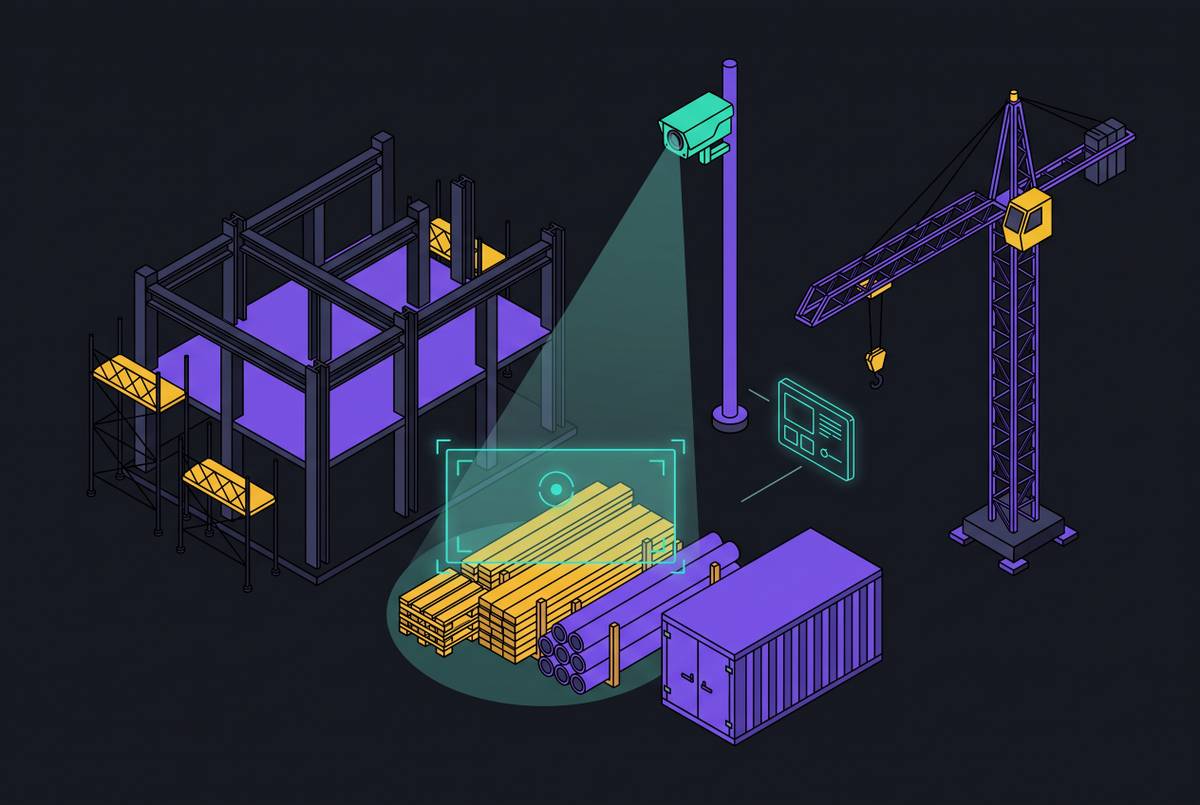
Multifamily housing illustrates the pattern clearly. The sites generating the most nuisance alarms on a typical property, parking areas, perimeter fencing, dumpster enclosures, are also the sites where after-hours intrusion and loitering concentrate. One property manager using AI-augmented monitoring identified vagrancy near a dumpster enclosure after hours and deterred six intruders within the first two weeks, catching the activity as it happened. That outcome depended on a camera covering exactly the zone that a legacy system would have muted first, since dumpster areas and parking lots are reliable sources of the environmental motion, wind, stray animals, shifting shadows, that drive false-alarm volume on exterior cameras.
Exterior, low-light, weather-exposed cameras, the ones most likely to be muted for generating nuisance alarms, are the cameras covering the approach to a building, the point where an intruder makes first contact with a property. AI-assisted monitoring, applied to that same footage, lets an operator separate unauthorized after-hours movement from the ordinary churn of wind and weather. The pattern holds across property types: the camera carrying the most noise is usually the one covering the point of first contact, and it is the one a legacy system is most likely to silence.
The operator's changing role once the queue is verified
None of this argues the human operator out of the picture. It changes what the job consists of. An operator working a queue made up entirely of verified events holds a more consequential position than one working an unfiltered feed, because every item reaching them has already been confirmed to require a person's judgment.
What remains for the operator is exactly the kind of decision a machine should not be making alone: reading an ambiguous situation, deciding whether to trigger a live audio warning, coordinating with dispatch, or escalating a life-safety event. Industry discussion of this shift describes operators moving into something closer to a command role, making final calls that require weighing legal exposure, context, and consequence, alongside a parallel role in AI governance, where the operator's job includes tracking and supervising what the automated layer is doing and why. The broader direction across the industry is toward orchestration: AI absorbing the repetitive, high-volume work of sorting signal from noise, while a trained person retains authority over the decisions that carry real consequences. Operators verify AI-generated alerts as they arrive, read the ambiguous cases the system escalates rather than resolves on its own, and decide whether that escalation calls for a warning, a dispatch call, or an emergency response. The operator is not replaced. The operator is moved to the one decision in the chain that was always theirs to make.
AI filtering and human judgment are not two approaches competing for the same job. AI absorbs the volume that would otherwise force a muting decision. Humans supply the judgment that no model can substitute for. Neither one does the other's job, and a monitoring architecture that leans on only one of them ends up back where this piece started, either drowning in noise or blind to context.
That gives a security buyer a concrete question to ask any monitoring vendor, rather than taking a sales pitch about artificial intelligence at face value. Whether every alarm the system generates reaches a human being for review, and whether a verified threat reaches that human in seconds rather than minutes, is what matters. A monitoring architecture either clears the alert backlog before muting becomes the only option left, or it doesn't, and that answer is the one worth getting before signing a contract, before a muted camera misses the one event it existed to catch.