Environmental Noise Dismissal in AI Video Monitoring
AI learns what matters by understanding objects and behavior, not just pixel changes.
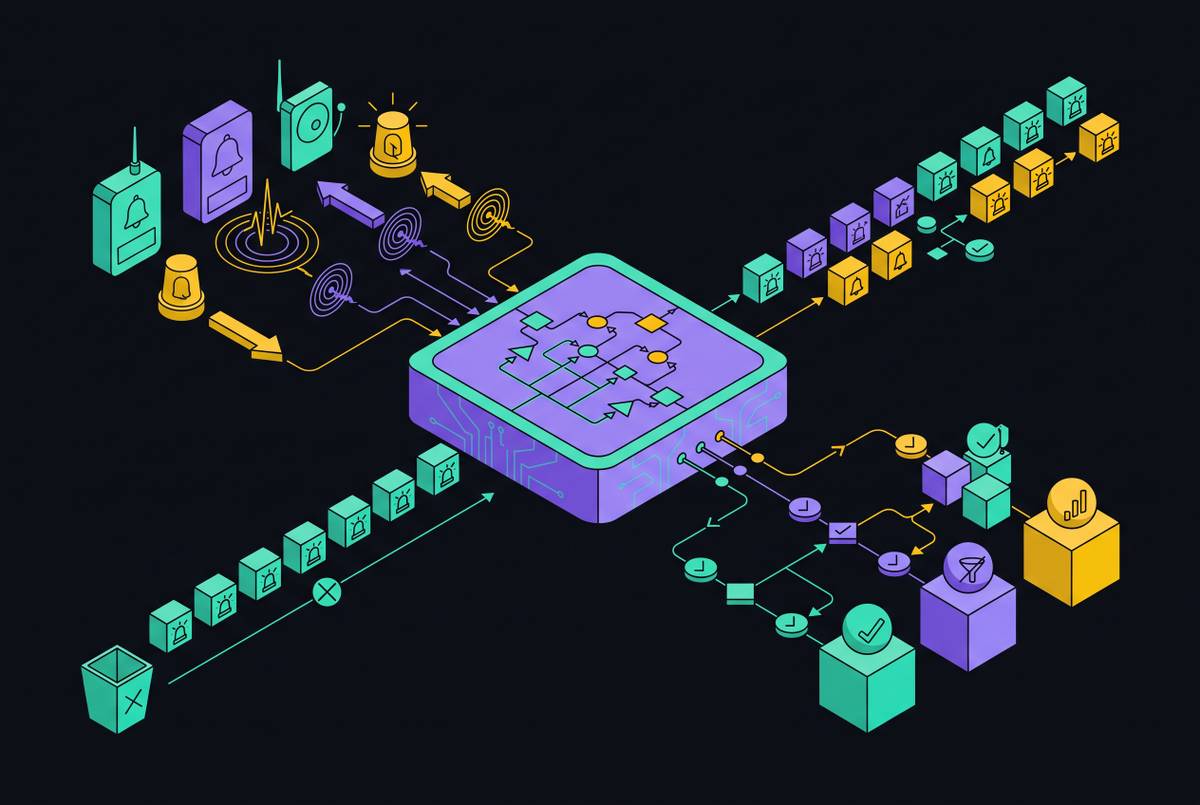
Environmental noise dismissal in AI video monitoring is a reasoning capability. An AI triage plus human response model for commercial video surveillance uses automated video analysis to dismiss environmental noise, check objects and behavior against site rules, and send verified alerts to live operators for final judgment. For operators to trust alerts, that separation must happen before an alert reaches the human queue.
Why pixel-change detection was structurally guaranteed to flood operators with false alarms
Legacy video management systems detect motion by comparing one frame with the next and counting the pixels that changed. Once the change exceeds a threshold, the system fires an alert. Scylla AI describes motion-activated cameras as sending a feed when a specified percentage of pixels changes, regardless of what caused the change. The algorithm measures visual difference. A person scaling a fence and a cloud shadow crossing the ground are therefore indistinguishable at the level of the trigger.
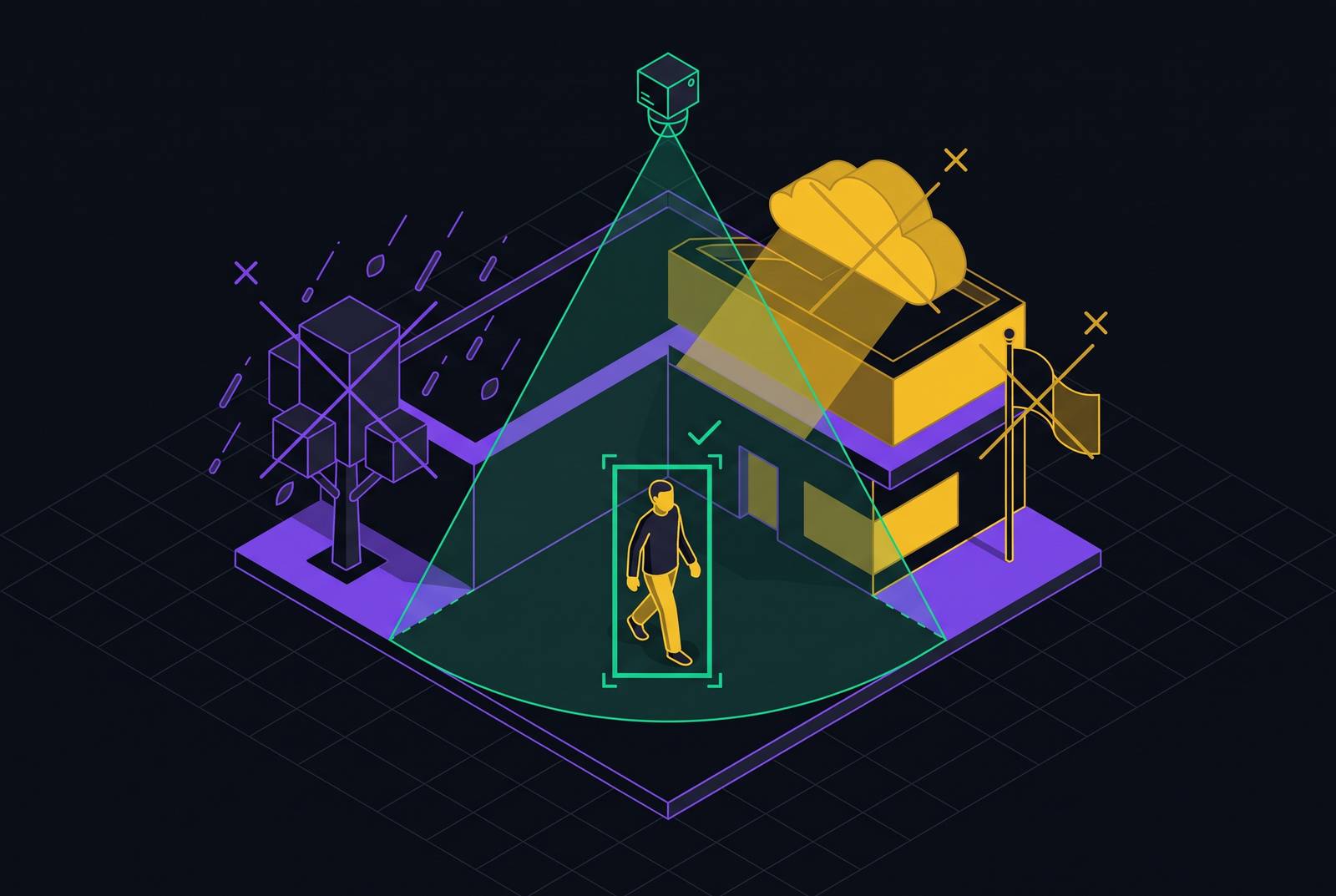
Environmental movement makes that limitation unavoidable in practice. Wind moves foliage and litter, headlights sweep parking lots, and rain alters the image on a lens. Lights that flicker, shadows that shift, and sensor noise from too little background lighting cause more changes without adding threats. Low light, backlighting, and fog also distort the visual information available for analysis, including AI analysis. More camera coverage does not resolve this ambiguity because every additional feed can introduce changes that the counting algorithm has no means to interpret.
What the alarm flood does to a human operator over a shift
The resulting queue transfers the missing interpretation to an operator. Each alert requires a decision, but repeated investigation reveals that most alerts have no security significance. Skepticism becomes the predictable response to the feed. When a genuine threat arrives, it enters a queue whose previous contents have taught the operator not to expect one.
That failure arises from the system’s architecture. The system asks the operator to respond to every notification while showing over and over that those notifications cannot be trusted. Across a shift, this creates a conflict between the attention the queue demands and the information it provides. The queue itself becomes the failure mode. Even an alert that correctly detects an intrusion inherits the distrust created by the nuisance alerts before it.
Raising the change threshold reduces false positives but increases missed events, while shrinking detection zones creates coverage gaps. Adding time schedules can create predictable blind windows. VideoraIQ makes the underlying point that tuning cannot compensate for a system that does not understand the scene, so a quieter queue is not necessarily a more reliable one.
What it means to reason about a scene rather than count its pixels
AI-driven monitoring changes the question from whether the image changed to what changed and whether it requires attention. Neova Solutions frames the distinction as moving from “did something move” to “should we care.” The first step is object classification. A computer-vision model classifies moving regions in each frame as a person, vehicle, animal, or environmental artifact. Rain on a lens, headlights, and sensor noise can then be separated from the object classes associated with a response, rather than suppressed by making all motion harder to detect.
Classification helps the system judge behavior when the model tracks an object across frames. A person is no longer only a label attached to one image but an object whose movement can be evaluated over time. That continuity supports reasoning about crossings, entry, and dwell time. The sequence becomes evidence for a behavioral decision. VideoraIQ describes object-level separation as eliminating major nuisance-trigger categories without reducing detection sensitivity for real events, which addresses the trade-off that constrained pixel counting.
The next step is adaptation to each camera’s environment. Models trained on real-world surveillance footage can learn lighting conditions at different times of day, normal traffic patterns, and objects that are always present. An anomaly is then judged against a local baseline. Image quality still constrains the reasoning process, however. Hanwha Vision identifies AI-based image signal processing as a prerequisite for useful analysis in challenging environments because it distinguishes objects from noise while preserving object detail.
Behavioral rules on top of object classification show how specificity replaces sensitivity
Recognizing a person does not establish that intervention is warranted. The next layer evaluates what that person is doing, where the action occurs, and whether the conditions make it unauthorized. VideoraIQ illustrates the distinction with a forklift moving through a warehouse that generates no alert and a person crossing a perimeter tripwire in the early hours that generates timestamped video evidence.
Line-cross detection selects an event using an operator-set virtual tripwire with a rule for the direction of crossing. Movement parallel to the line, or a crossing in the permitted direction, generates nothing. Only a crossing in the defined direction triggers an alert with a timestamped clip. Zone-based unauthorized access applies a different condition to a polygon covering a restricted interior, such as a server room, cashier station, or storage bay. When a person enters outside authorized conditions, the system sends a live video link so the operator can see the footage without having to request it later.
Dwell-time rules add duration to this reasoning. A person loitering in a parking structure at 3 a.m., or an unrecognized vehicle remaining in a fire lane for an extended period, can match a defined threat pattern that ambient noise does not. Continuous inference across feeds finds those matches so an operator can act on them without having to search video streams that run at the same time. AI-powered detection systems can generate verified alerts and initiate response protocols within 3 to 15 seconds of a threat becoming visible. That speed is useful because the alert contains a specific reason for attention. That evidence helps operators trust the next notification.
Why site-specific context is what makes noise dismissal meaningful rather than generic
Behavioral verification is incomplete without a definition of normal activity at the site. A delivery truck at a loading bay during business hours is background activity, while the same vehicle at 2 a.m. is anomalous. Its object class has not changed at all. The schedule changes the interpretation, just as location, historical patterns, and environmental conditions influence whether a detected action warrants escalation. A system that lacks these distinctions can correctly identify an event and still generate an irrelevant alert.
Site configuration supplies the conditions against which behavior is evaluated. Masking foliage or known environmental movement can selectively reduce coverage to remove nuisance triggers where no persons should appear. Time-of-day baselines distinguish normal lobby traffic at noon from activity at 3 a.m. Loitering duration, zone-crossing direction, and vehicle dwell time must likewise match the actual use of the field of view. These settings define what a detection means locally.
An after-hours cleaning crew or a permitted vehicle in a normally restricted zone can satisfy a generic threat rule without representing a threat. If the site model leaves out those exceptions, verified alerts that need no response again burden operators above the object-classification layer. Hanwha’s agentic architecture makes this dependency especially clear because autonomous situational analysis needs site-specific context against which to reason.
How noise dismissal plays out differently across commercial, multifamily, and industrial sites
Headlights, storefront lighting, loading-bay deliveries, and after-hours cleaning can all generate detections that need no intervention. Yet those same views can show unauthorized access after close, people loitering at entry points, and vehicles staging in unusual places, all of which need attention. The schedule separates routine activity from suspicious behavior. Brivo cites a property manager case in which remote video monitoring combined with AI reduced false alarm response to near zero and deterred six intruders in the first two weeks.
Residents, normal vehicle traffic, stray animals, and wind-blown debris share views across parking structures, entries, amenity spaces, hallways, and perimeter points. A large apartment complex may have dozens of cameras covering these spaces simultaneously, making continuous human scrutiny structurally impractical. Normal occupancy cannot itself become grounds for escalation. Parking structures are a major crime zone and a place where AI helps most because analytics can dismiss leaves, animals, and routine resident behavior while leaving high-priority events for operators.
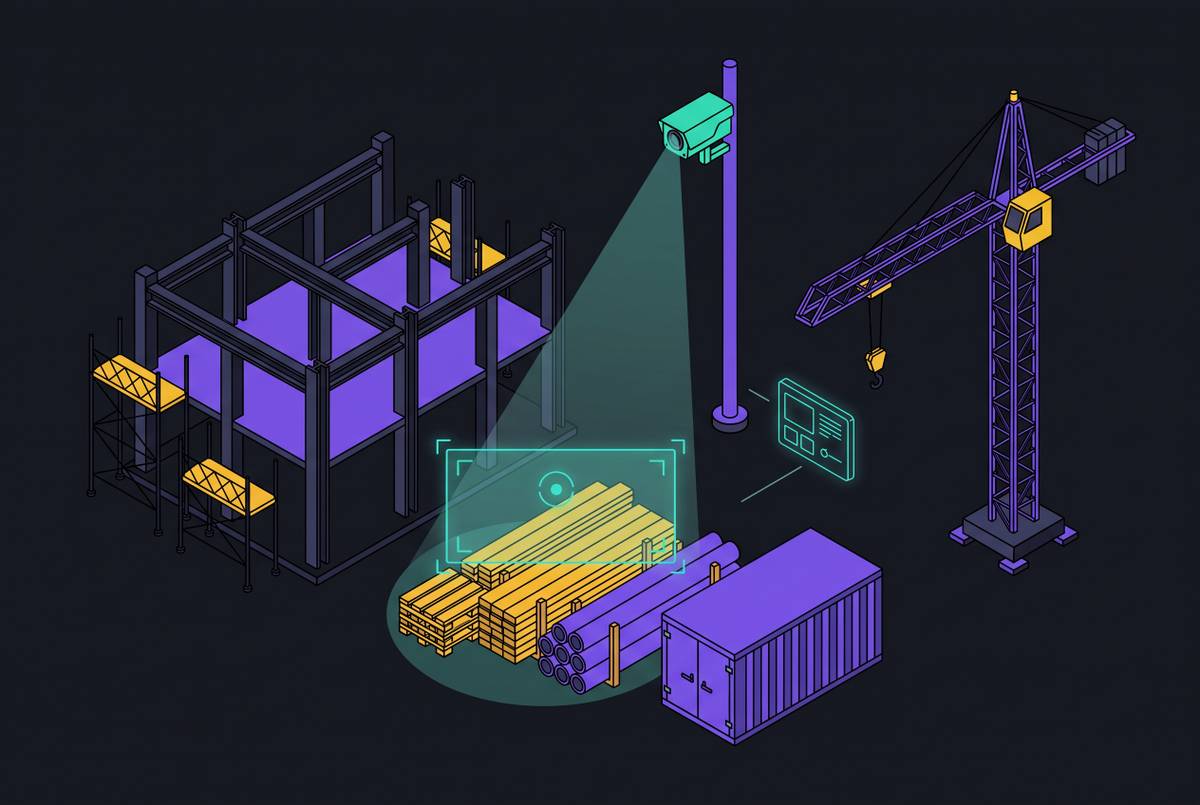
At industrial and logistics sites, the system must tell authorized machinery movement apart from unsafe or unauthorized activity. Forklifts, shift-change foot traffic, steam, dust, and variable lighting form the background against which the system evaluates perimeter breaches, forklift-pedestrian zone intrusions, and protective equipment non-compliance involving helmets, vests, or gloves. A moving forklift’s relationship to a defined zone or a pedestrian can be the relevant condition for an alert. Fire and smoke detection sends a live feed when it sees smoke or flame, without waiting for a heat threshold. Environmental dismissal must therefore distinguish routine industrial conditions without discarding the visual evidence needed for safety escalation.
How does AI triage route verified threats to human operators in an agentic monitoring model?
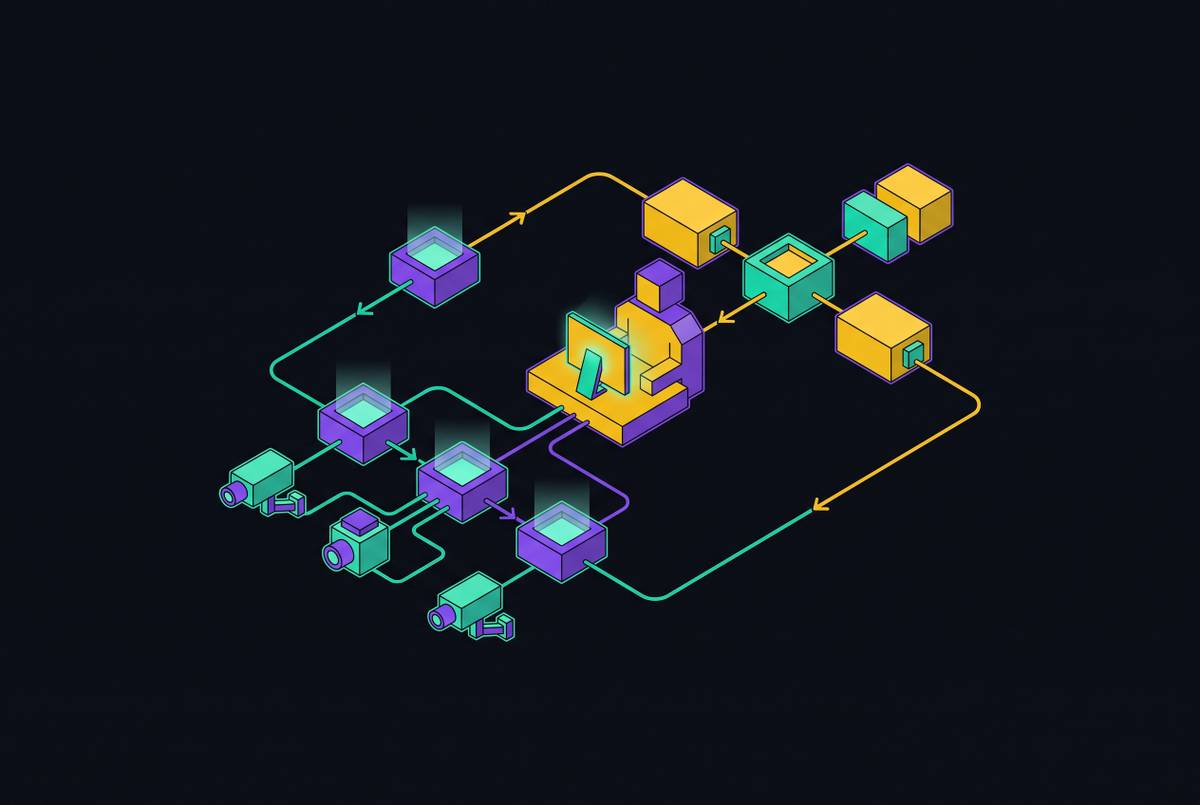
The emerging agentic model extends classification and behavioral evaluation into an autonomous reasoning cycle. Hanwha’s 2026 trends analysis identifies “Autonomous AI Agents” as a development expected to reshape surveillance operations through complex situational analysis, initial responses, and recommendations for follow-up action. Humans retain a different kind of responsibility. Operators move from screening raw motion queues to acting as commanders who make the final decisions when a case needs nuanced judgment. This changes the division of work.
In that division, AI performs continuous inference, noise dismissal, object classification, behavioral evaluation, context application, and first-pass verification without human instruction at every step. A verified escalation reaches the operator with a video clip, location, timestamp, and AI reasoning log. The operator then judges the response and governs autonomous actions. Brivo describes AI that watches all cameras at once and supports natural-language queries, so the AI layer does the watching and users can find the information they need.
That handoff changes how monitoring performance is assessed. The relevant service-level interval runs from a real threat becoming visible to a human receiving a verified alert, rather than counting how many alerts the team reviewed. Governance becomes equally important as agents gain authority. Hanwha describes operators supervising autonomous actions and reasoning processes as AI governance managers, a role requiring a higher level of skill. The European Union’s AI Act imposes transparency obligations on certain high-risk surveillance uses, including biometric identification systems and law enforcement monitoring tools, so deployers can interpret outputs. That classification depends on function and deployment context rather than applying automatically to ordinary object detection.
The intended endpoint is a queue of verified threats. AI reasoning happens before the interruption, and human attention is reserved for escalations that need judgment. When alerts consistently arrive with relevant evidence, operators have grounds to trust them. That trust is the condition under which AI triage and human response become a working monitoring model.