AI Agent Roles in a Human-in-the-Loop Monitoring Workflow
AI agents filter alarms; humans decide whether to respond.
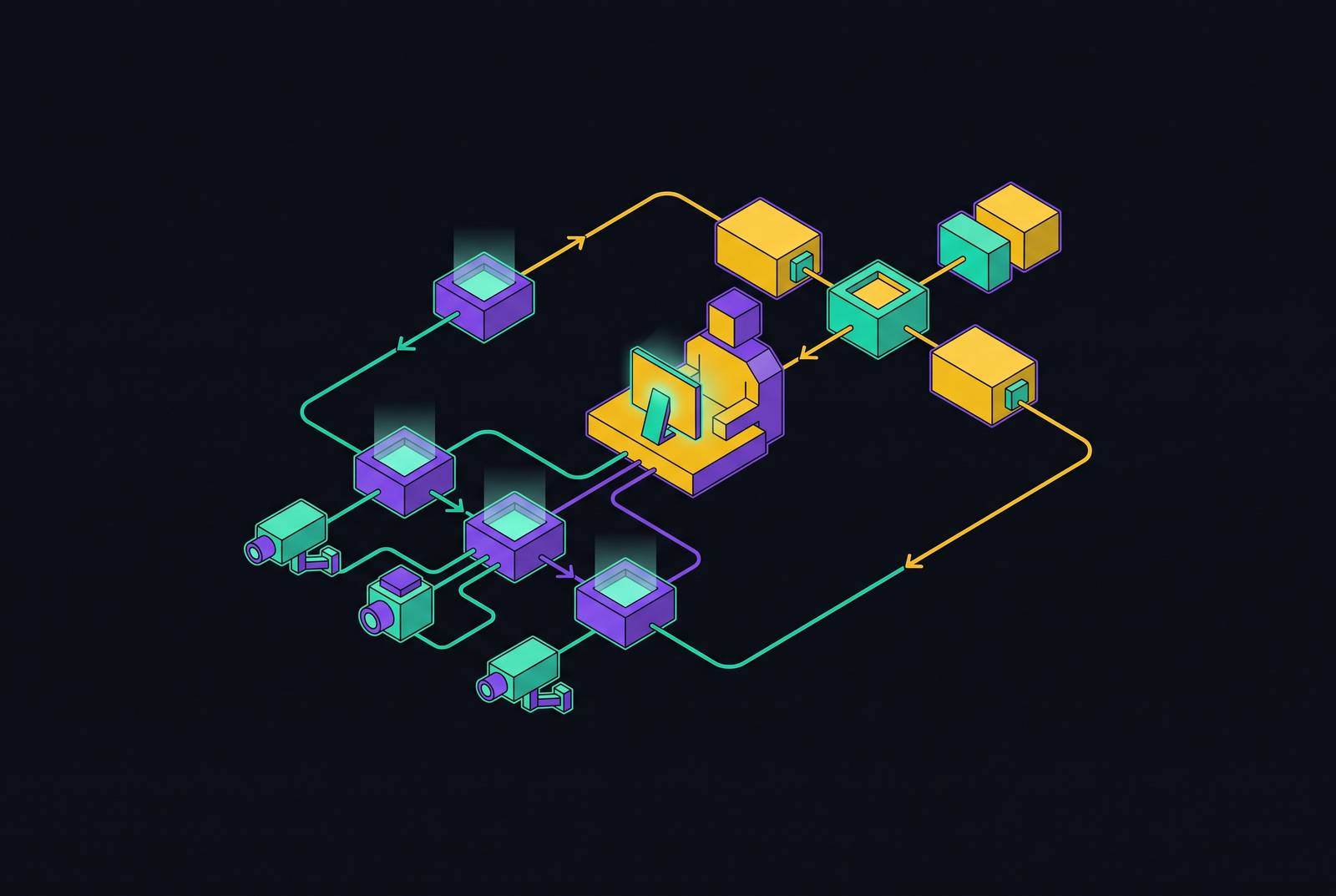
An AI triage plus human response model for commercial video surveillance assigns continuous alarm analysis and context-based filtering to AI agents, while human operators own every verified-threat response decision. “AI Agent Roles in a Human-in-the-Loop Monitoring Workflow” explains why that division must be specified before deployment. The defining feature is not human availability, but a required human decision before a verified threat produces a response action.
Why the traditional alarm relay model fails before AI enters the picture
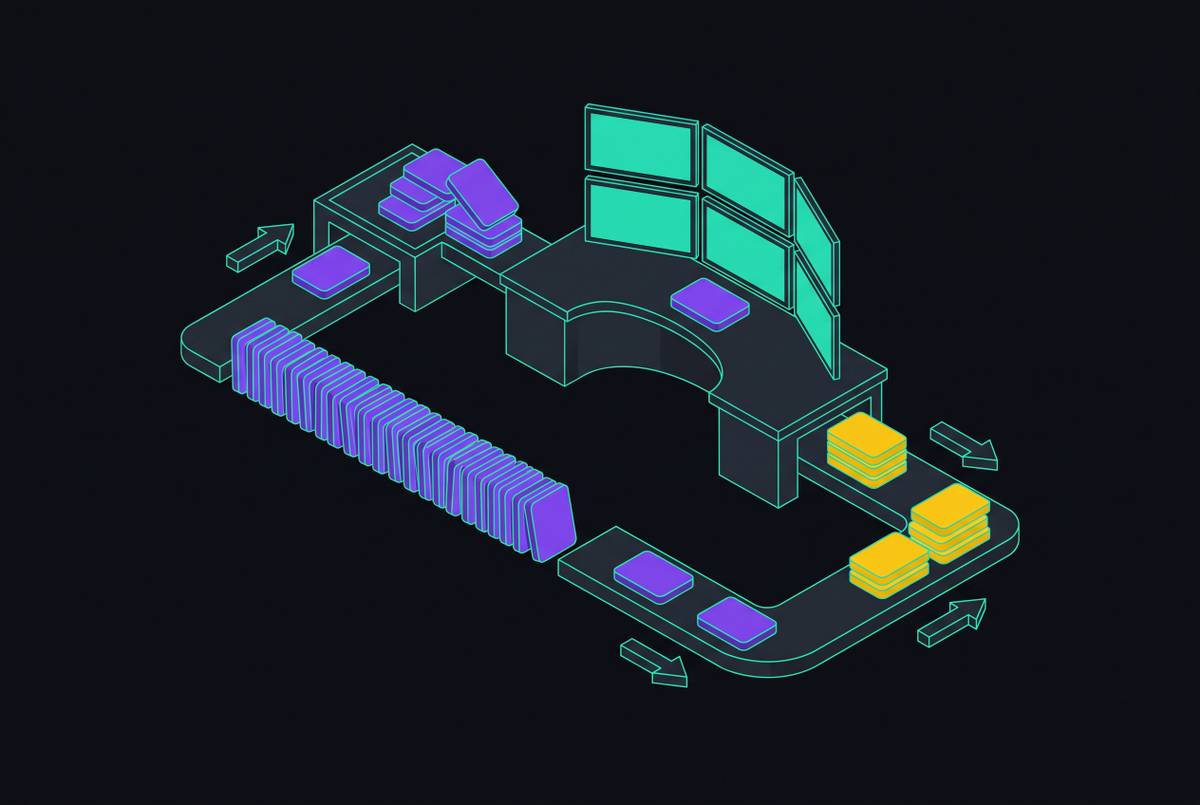
Traditional alarm monitoring routes unverified signals through a human queue. A sensor trips, a signal reaches a central station, an operator calls the premises, and dispatch follows. Each step depends on a person moving the process forward. Real threats must then compete with false and low-priority alarms for the limited attention of those people. The queue is the structural weakness, because it puts human effort ahead of the determination that an event requires that effort.
Adding operators increases capacity without removing that dependency. Constant exposure to noise also produces cognitive overload, slowing response and degrading judgment when a genuine threat arrives. The problem extends beyond the monitoring station. False alarms led cities to adopt verified-response policing policies when they stopped paying the cost of responding to unverified signals. That shift weakened the value of the relay model’s core deliverable, because passing an alarm onward was no longer enough to secure a police response.
If every signal must first reach an operator, any improvement remains constrained by the human queue. Filtering before that queue changes the work presented to operators, rather than merely increasing how quickly they process it.
What "human-in-the-loop" actually means as a system design choice
Human-in-the-loop is a decision about where human judgment is mandatory and what it authorizes. It does not mean that a person can intervene somewhere in the system. An override option or a weekly report review does not establish human control over alarm response. In this workflow, the required handoff occurs when a verified threat needs a response decision. The human approval gate sits after AI investigation.
Sentinel-RL formalizes a detect, investigate, recommend, and human-approve cycle in a security operations center architecture. Its relevance here is the separation of responsibilities. The AI completes a bounded investigative phase and presents its result for approval. Human authorization is a structural requirement. That distinction makes the architecture useful as a model for defining a monitoring handoff.
Response authority needs to be defined this firmly because dispatch, containment, and escalation affect what happens in the real world. A generated recommendation does not guarantee that an action is safe or consistent with the environment in which it will occur. A probabilistic system also cannot undo an intervention made by mistake. The operational commitment is therefore narrow and explicit, with AI responsible for preparing the decision and a human responsible for making it.
The AI agent's phase: continuous triage, context-based filtering, and alarm reasoning
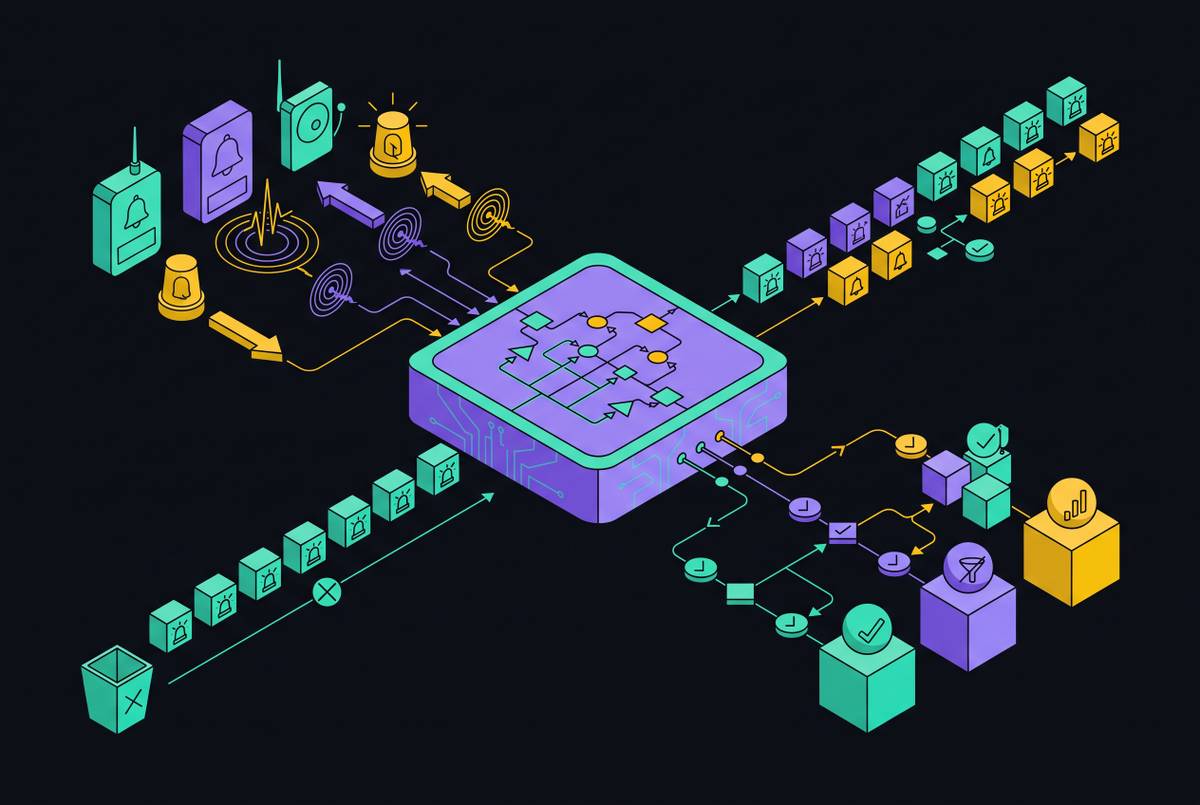
The AI agent keeps sorting alarms into verified threats that need a human decision and noise that needs no further action. It does that work across all the cameras without getting tired. Earlier surveillance AI often did search and tracking on its own but still passed each flag to a person. An agent instead investigates the situation before the operator sees it. Its initial work belongs to triage and investigation.
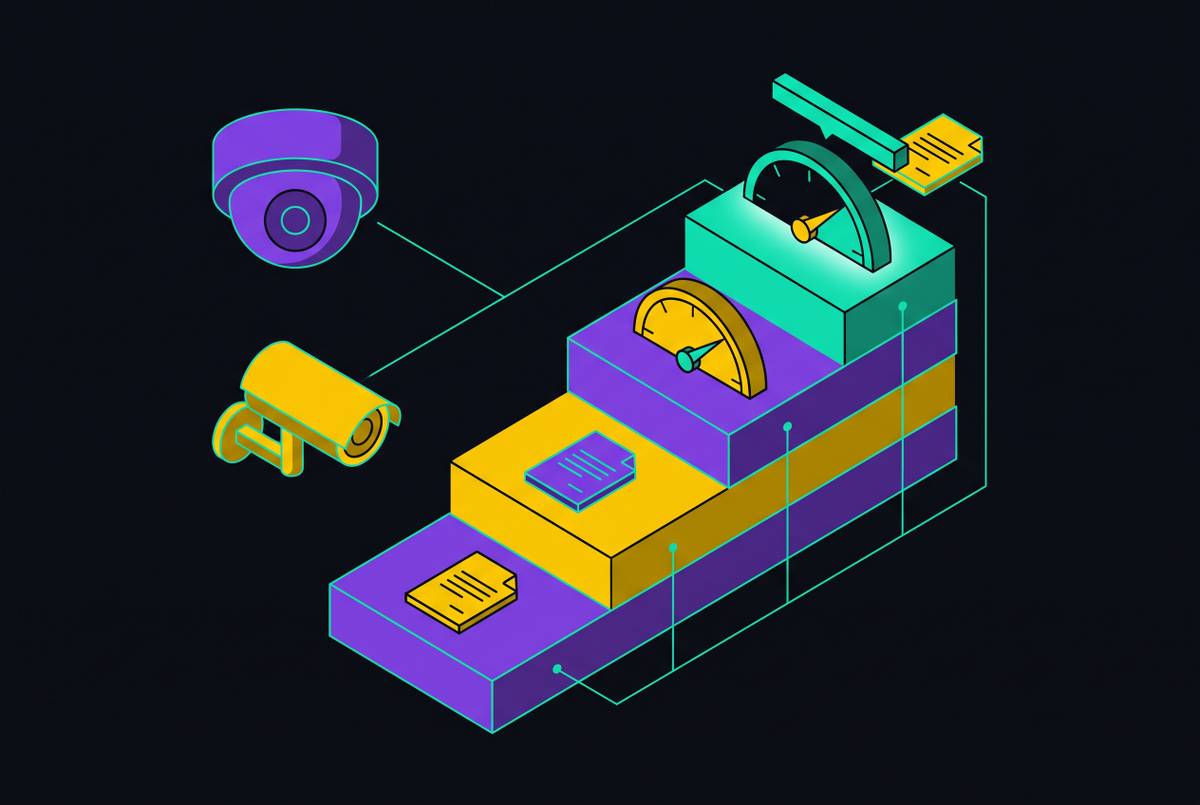
Context separates that investigation from a motion flag. Delivery schedules, authorized personnel lists, and site-specific protocols can distinguish a vendor arriving at 2 a.m. for scheduled restocking from an intruder. A detection rule without those inputs cannot make the same contextual distinction. Behavior over time is equally important. Distinguishing a resident briefly taking out trash from someone pacing a parking structure without apparent purpose requires temporal analysis.
Loitering and tailgating illustrate why a label alone is insufficient. The former depends on behavior over time, while the latter raises a question about authorized access. Site context gives those observations operational meaning. Without schedules, personnel data, and protocols, the agent is limited to pattern-matching on pixels.
Sentinel-RL separates constrained investigative action selection from the LLM’s production of analyst-readable narratives. That distinction illustrates why reasoning and explanation need not confer response authority. In video monitoring, the false-positive rate shows whether upstream filtering is doing its job. If too much noise gets through, the human queue comes back inside a system that looks newer. Scale only helps when the analysis reduces unnecessary operator work.
The human operator's phase: verified-threat response decisions and stakeholder communication
The operator’s phase begins when the verified event requires a consequential judgment. The question is no longer simply whether something happened. It is how the organization should respond to what happened, given the site, the people involved, and the active scene. Operators can decide whether to dispatch or hold, communicate with on-site staff, and provide law enforcement with a coherent verbal description. These responsibilities require more than classifying an alert.
Stakeholder communication can also resolve details needed for the response. An operator may contact administrators to confirm whether a particular individual is authorized or coordinate with facility managers about crews working in an area. That communication supports the operator’s judgment about a confirmed event.
The dispatch decision also creates a legal and liability record. Documented human review and timestamped response protocols can serve as evidence of reasonable security practice in negligent security litigation, while autonomous AI dispatch is harder to defend. Human involvement must therefore be substantive. Training moves from finding threats across camera tiles to judging verified events, talking with responders, and managing site-specific protocols. This elevates the operator into a more specialized, less fatigue-prone role.
Why the boundary between AI and human roles must be fixed, not situational
A handoff negotiated during live operations is vulnerable to pressure. If waiting for human approval adds latency, the agent may be allowed to make response decisions too. If too many alerts keep coming, operators may start accepting recommendations without checking them on their own because the outputs usually look right. These are different routes to the same loss of control. One removes the approval gate, while the other preserves its appearance and empties it of judgment.
The consequences of that drift are asymmetric. Escalating a false positive consumes operator attention, but suppressing a real threat or initiating an incorrect response can cost far more. The boundary must therefore govern both what reaches the human and what the AI is allowed to do. A vague promise of oversight leaves those responsibilities unsettled. It is weaker than an explicit design because it can imply protection that the operating workflow does not provide.
Sentinel-RL enforces its division by restricting the LLM to policy recommendations and analyst-readable narratives gated by a critic, with human approval required to complete the containment loop. The boundary is built into the architecture. Monitoring contracts need to be just as clear about which event they measure. Time-to-acknowledge can mean something very different from time-to-verified-response. A speed target cannot establish human oversight if its endpoint is an automated log entry.
What breaks when the boundary is wrong: three failure patterns
Under-filtering rebuilds the human queue. An AI system flags at high sensitivity, sends excessive noise to operators, and restores the conditions that produce fatigue. In first-generation AI systems for video surveillance, 30 to 60 percent of alarms were false alarms. In this failure pattern, the additional technology does not change who must separate routine activity from threats. The operator still performs the triage that the AI layer was supposed to absorb.
Over-filtering creates the opposite failure. A system tuned to minimize false positives can set confidence thresholds so high that real threats below the threshold are silently dropped. Operators never see those events and cannot judge what was withheld. Activu’s 2026 operational blueprint describes a parallel hospital command center problem as “silent alarms.” A local system records a crossed threshold, but the event never reaches the person able to act because no layer was designed to surface and escalate it.
Human-approval theater preserves a checkpoint without preserving a decision. Under time pressure, operators rubber-stamp recommendations instead of assessing the event and its response requirements. The extra step adds latency without adding judgment. All three patterns arise when the boundary is determined by what the AI happens to surface rather than what the human needs to make a real decision.
How a well-designed workflow specifies the division before deployment
Filtering criteria, handoff triggers, and response protocols must be specified before any camera goes live. The AI’s scope includes the site information it can use, such as schedules, personnel, and authorized activity windows. It also includes the confidence threshold that triggers escalation. Below-threshold alarms need an explicit disposition. Logging them, reviewing them on a cycle, or dropping them are different choices with different consequences.
The human handoff must be observable and repeatable. “When the AI is uncertain” does not define a sufficiently firm transfer of responsibility. A specified event type, confidence level, or alarm category can establish the condition that always requires human review. Response protocols then determine how the operator manages the verified event. This prevents the system from negotiating authority at runtime, when speed can displace oversight.
Those rules must reflect the individual site. A truck yard at 2 a.m. has different authorized-activity assumptions from a multifamily parking structure at the same hour. The AI needs that context before it can interpret activity correctly, and the operator needs it to make the response decision. A generic detection configuration cannot substitute for either requirement.
The record should follow the same division of responsibility. Logging each AI action, timestamping each escalation, and recording each human decision makes the handoff traceable. That record connects system behavior to SLA accountability and legal defensibility. It also distinguishes an investigated event from an acknowledged signal and an approved response from an automated recommendation.
What should buyers verify in an AI triage plus human response monitoring setup?
For buyers evaluating commercial camera monitoring, the practical test is whether the provider can describe and demonstrate the boundary. Buyers should first examine what the AI filters out as well as what it flags. Buyers should ask for a log sample as well as escalation metrics, because the operator’s queue does not show what over-filtering has kept out. Deployment context needs equal scrutiny. A system needs to know the site schedules, personnel, and authorized activity to have the inputs for contextual reasoning.
The SLA clock can measure different intervals: signal receipt to operator acknowledgment or signal receipt to verified-threat dispatch. Calling the first “response time” does not explain how long a consequential decision takes. Buyers should find out which response actions need human approval before they can take place. If the AI can initiate certain responses autonomously, buyers must evaluate that boundary before signing.
The operator’s working conditions complete the assessment. Buyers should ask whether the handoff provides the verified event, the site context, and enough time for an independent decision. A pressured rubber stamp is approval theater. A provider with a defined workflow should be able to explain these responsibilities specifically, rather than offer a general assurance of “AI-assisted human oversight.”
Skepticism after disappointing legacy monitoring promises is justified. Transparency about architecture can address that skepticism by showing what is filtered, what is escalated, who decides, and what the contract measures. Repackaged legacy monitoring changes the label but leaves the work divided the same way.