How AI Agents Reason About Security Alarms Versus Flagging Them
AI reasoning layers verify threats against site context before escalating to human operators.
AI triage plus human response for commercial video surveillance places a reasoning layer between camera detection and live operators. That layer evaluates flagged events against site context, authorized activity, and behavioral patterns before escalating threats for human response. The distinction is structural because it reduces the verification work that makes real threats wait.
Why traditional alarm monitoring produces mostly noise
The traditional alarm relay is a fifty-year-old design in which a sensor trips, a signal reaches a central station, an operator calls the premises, and police are dispatched. Its weakness is that an activation enters the response process before anyone has established whether it represents a threat. The overwhelming majority of police responses to burglar alarms are to false activations.
Better detection can reduce some of that noise without changing the relay underneath it. Hanwha Vision's 2026 outlook identifies low light, backlighting, and fog as causes of visual distortion, AI malfunction, and false alarms. Even when a detector correctly identifies a person or vehicle, that observation may describe ordinary, authorized activity. The operator still has to investigate before deciding what the event means. Detection quality matters, but it does not remove the investigation step.
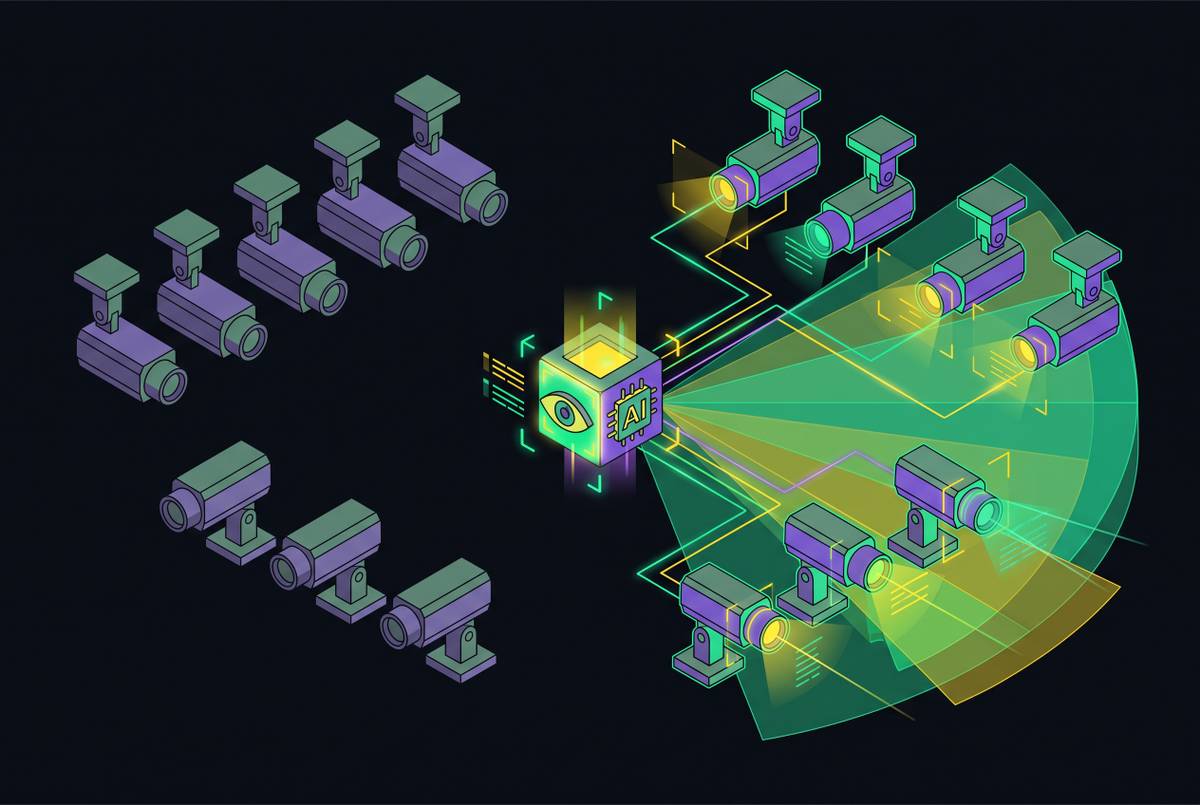
When flags arrive faster than people can check them, a queue forms and real threats wait behind routine activity. Adding staff gives people more time to check flags, while tuning changes which events enter the queue. With either change, a person still has to verify each flag that remains. Services such as Verdun address that architectural constraint by placing AI agents between detection and human response. The purpose of that layer is to change what reaches an operator.
What "flagging" actually does — and why it is not enough
Classical motion detection and first-generation AI detection both send a signal that something happened at a given time. An object detector, tracker, action or pose model, and anomaly head can produce an event with a bounding box, class, confidence, timestamp, and camera ID. Those fields give an operator a more precise starting point than a raw motion pulse.
The limit lies in what the output establishes. A bounding box locates an object, while a class describes what the detector believes it sees. A confidence score expresses confidence in that detection. After a detector identifies a person near a loading dock, someone or something else must establish whether the activity constitutes an intrusion.
If a human must decide each time whether activity is authorized, better flagging leaves most of the verification work in human hands. The operator may work through a cleaner queue, but the work still proceeds event by event. Verdun positions its reasoning layer at this boundary, evaluating site context and authorized activity before escalation. Faster triage is useful, but it is not the same as removing routine verification from the human queue.
What reasoning means structurally — the four-stage pipeline
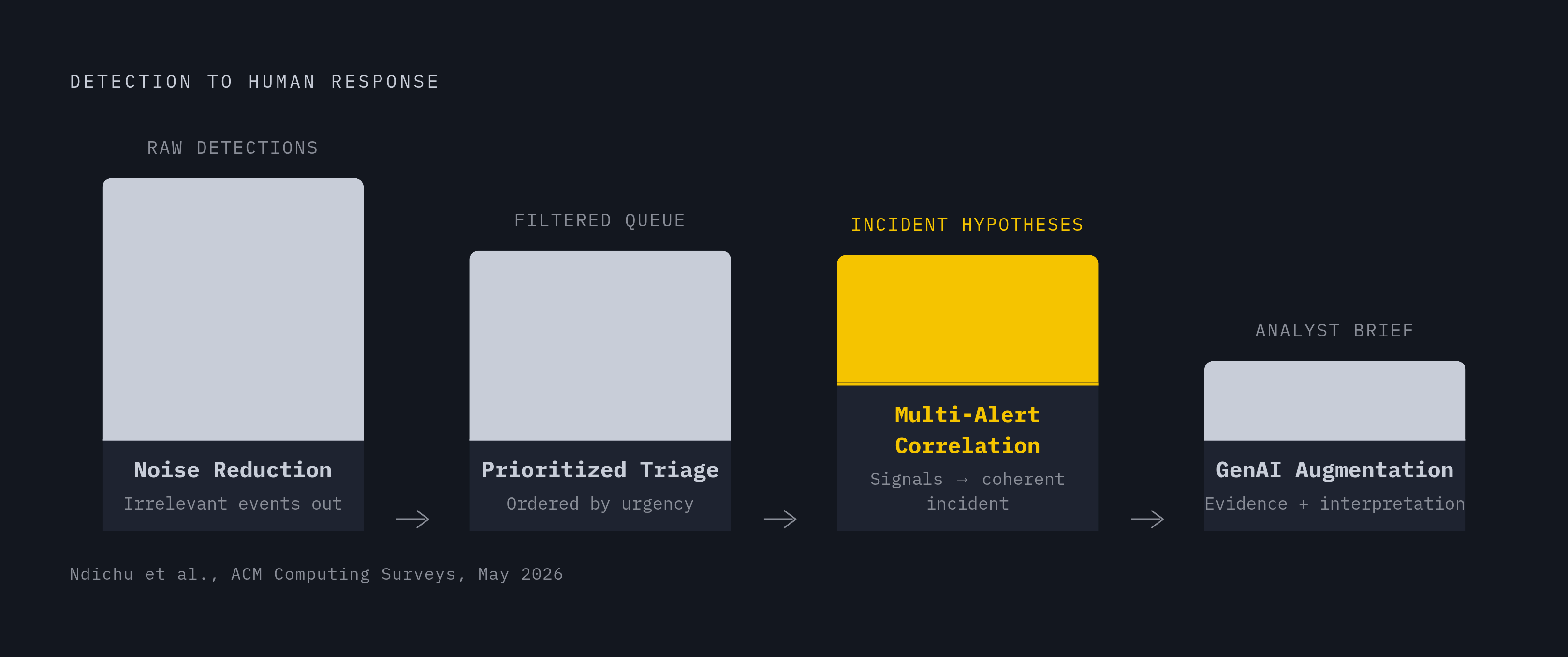
Reasoning begins after detection has supplied a candidate event. It evaluates that event against site context, behavioral history, and authorized activity before deciding whether a human needs to act. A vision-language model can serve as a second-opinion layer by examining the clip behind an alert and classifying it as real or false. Because this review is too slow and costly to apply to every frame, it operates on detector output.
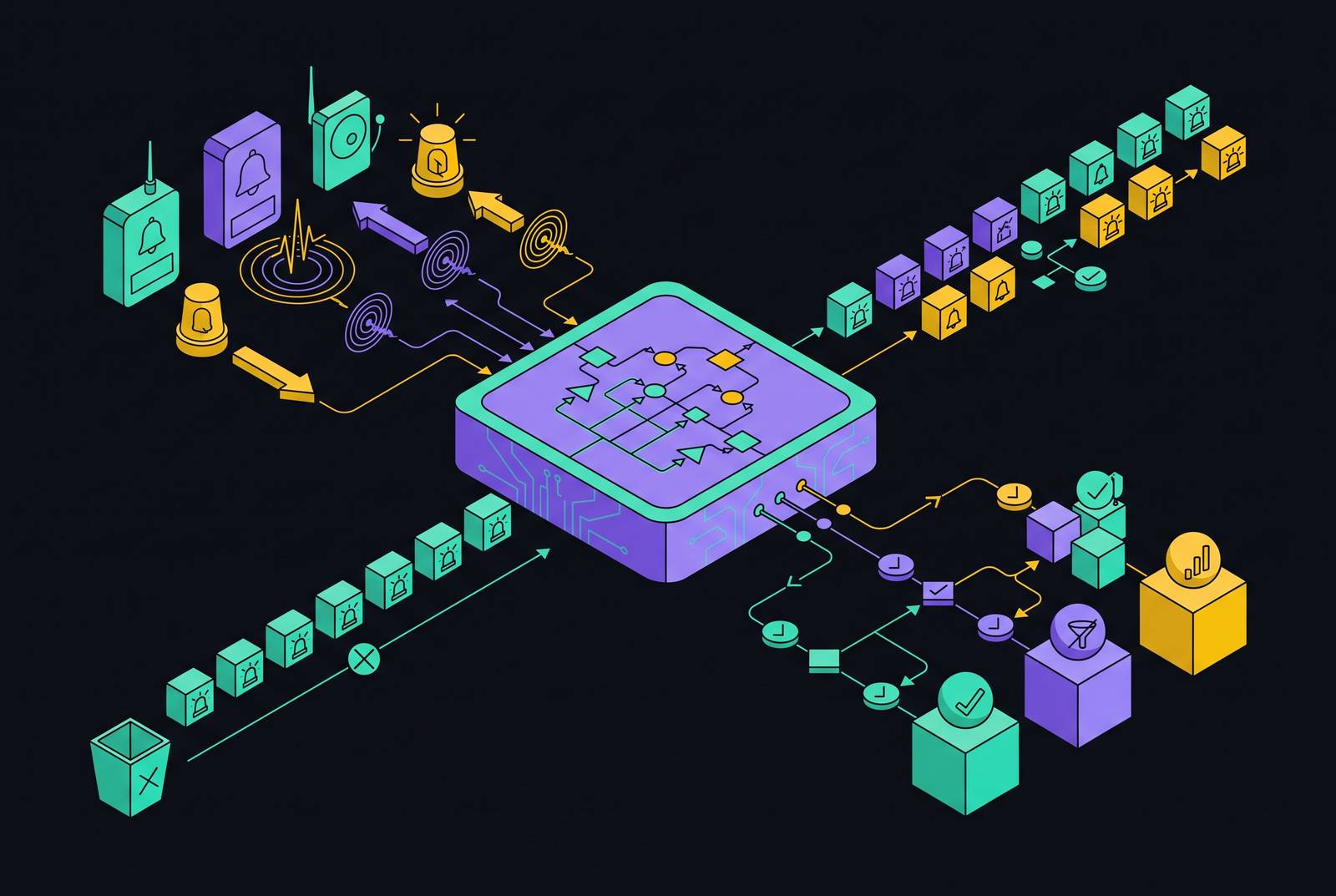
Ndichu, Yamada, Ban, Ozawa, Takahashi, and Inoue's May 2026 ACM Computing Surveys pipeline describes four sequential stages. Noise reduction first keeps events that do not matter out of the analyst queue. Prioritized triage then orders the remaining events by their need for attention. Multi-alert correlation assembles related signals into incident hypotheses rather than treating every activation as a separate problem. Generative AI augmentation finally supports the analyst's work with the resulting evidence and interpretation. Together, these stages narrow and structure the material that requires human judgment.
Multi-agent architectures share this work among agents with different roles, so one model does not have to handle every reasoning task. AgenticVAU, from Shandong University et al., August 2026, describes an explore–verify loop with agents responsible for visual-rule construction, search planning, video observation, and final decision. A shared evidence registry records whether observations support, oppose, or remain inconclusive about a candidate anomaly. AgenticVAU reports better performance than zero-shot inference and reinforcement-learning baselines on standard video anomaly benchmarks. That result supports the value of structured evidence coordination, rather than treating model quality alone as the explanation for better reasoning.
Why site-specific context is what separates reasoning from smarter flagging
A reasoning pipeline still needs an operational baseline against which to judge an event. It needs site-specific schedules, access logs, and behavioral patterns to reliably tell authorized activity from a threat. Context is therefore not an optional addition to verification. It supplies the conditions that make an observation meaningful.
Consider an illustrative pharmaceutical facility scenario. Temperature sensors detect a climate-storage spike in the early hours of a Saturday morning. The system cross-references access logs, finds no authorized personnel on-site, and identifies that a security camera was disabled shortly before. Together, those signals trigger a coordinated response that goes beyond a temperature alert on its own. No single sensor supplies the conclusion, because the concern emerges from correlation against the expected pattern of authorized activity.
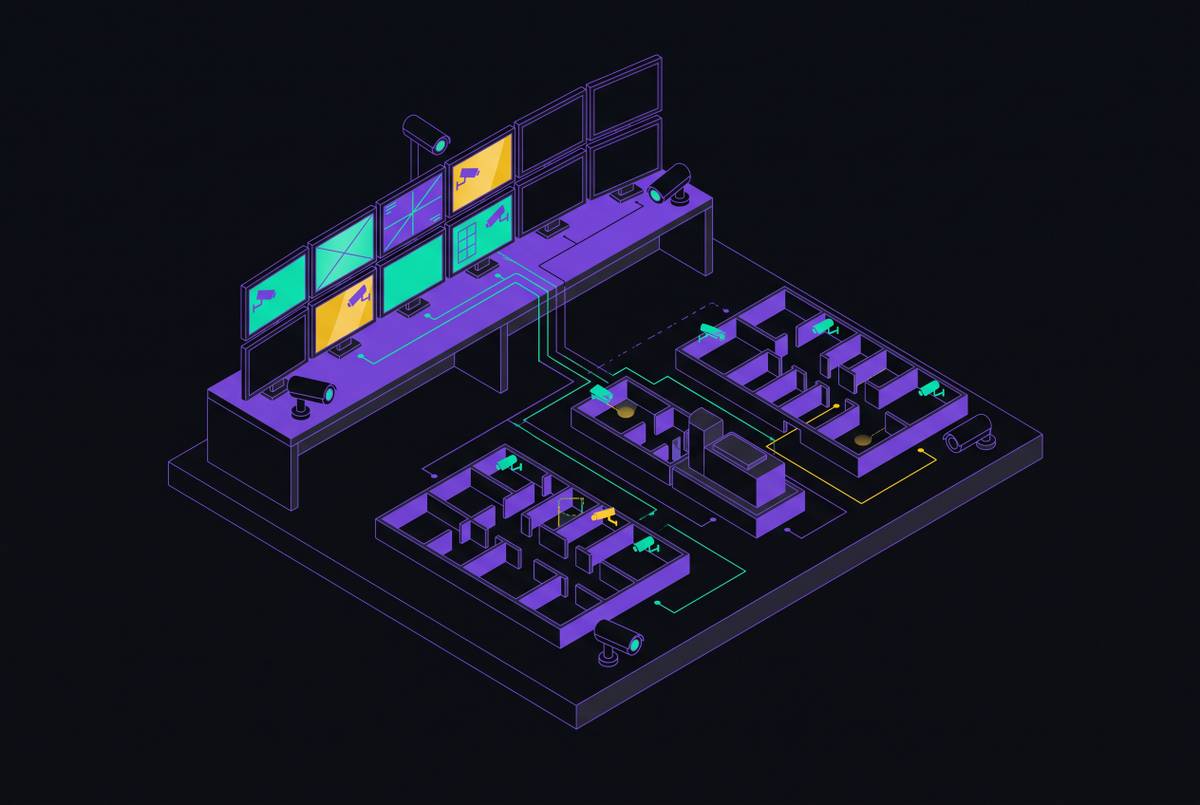
The required baseline differs substantially between properties. Commercial and industrial sites often center on a defined perimeter, including a fence line, loading dock, or server room entrance, with a small and well-defined authorized population after hours. Multifamily properties have multiple access points, semi-public amenity zones, mixed-occupancy parking, and residents who have good reasons to use common areas late at night. A loitering detection must distinguish a resident taking out trash from someone pacing a parking structure for an extended period without apparent purpose.
Those differences make protocol-level configuration part of the reasoning architecture. Schedules, authorized personnel lists, camera coverage maps, and site-specific response protocols define what the agent can judge. Brivo's 2026 surveillance trends describes how integrating video with access control and event management enables automated responses when a threat is detected. Access information can help explain what happened when video alone cannot. A system that lacks that context can accelerate review, but it cannot claim the same basis for verification.
How response speed changes when reasoning absorbs the verification burden
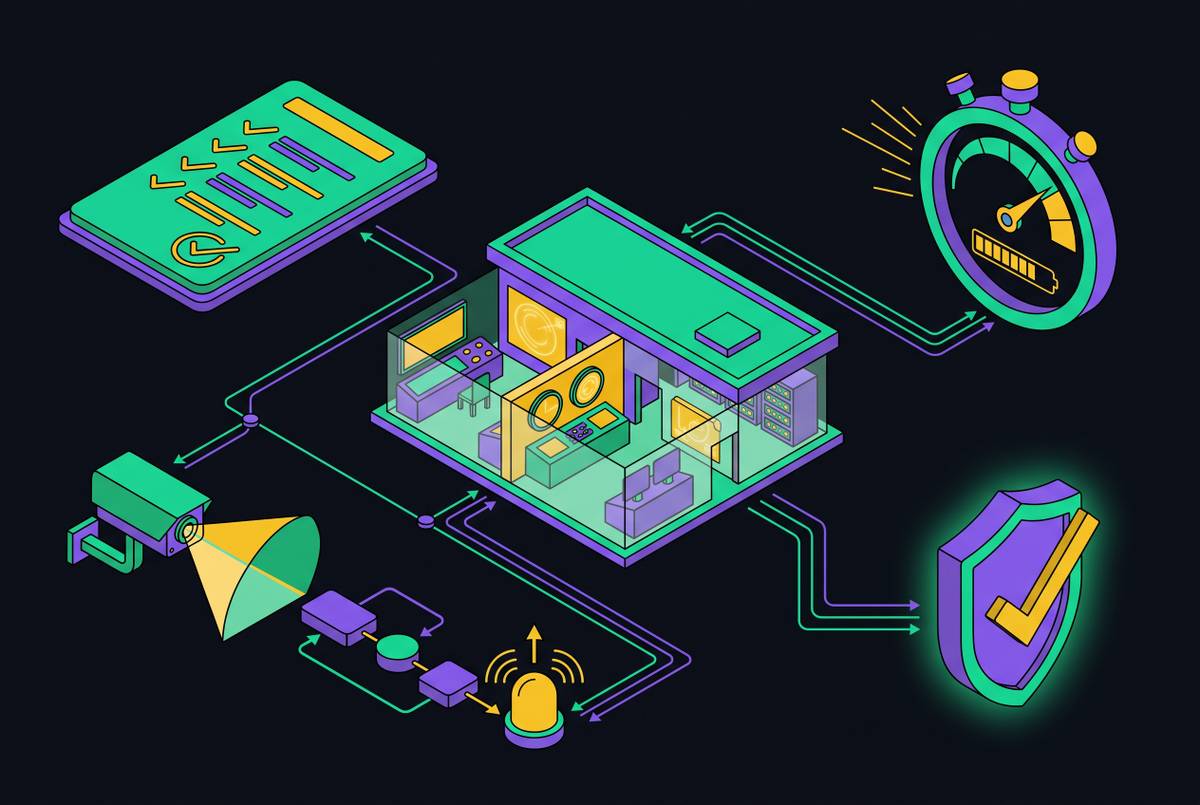
The operational measure is how long a real threat remains unverified. In traditional monitoring, the threat waits in the queue behind other flags that someone still has to check. Faster delivery does not remove that waiting time when the human verification step remains the bottleneck. Reasoning changes the sequence by assessing events before they enter the response queue. The operator receives a threat assessment.
That assessment must classify events as confirmed when evidence supports escalation, rejected when assessed as not requiring it, or unverified. An unverified event still lacks a resolved judgment and must not acquire the status of a confirmed threat merely because software processed it. The speed advantage comes from absorbing verification work. This is also why alert routing time and operator response time describe different parts of the process.
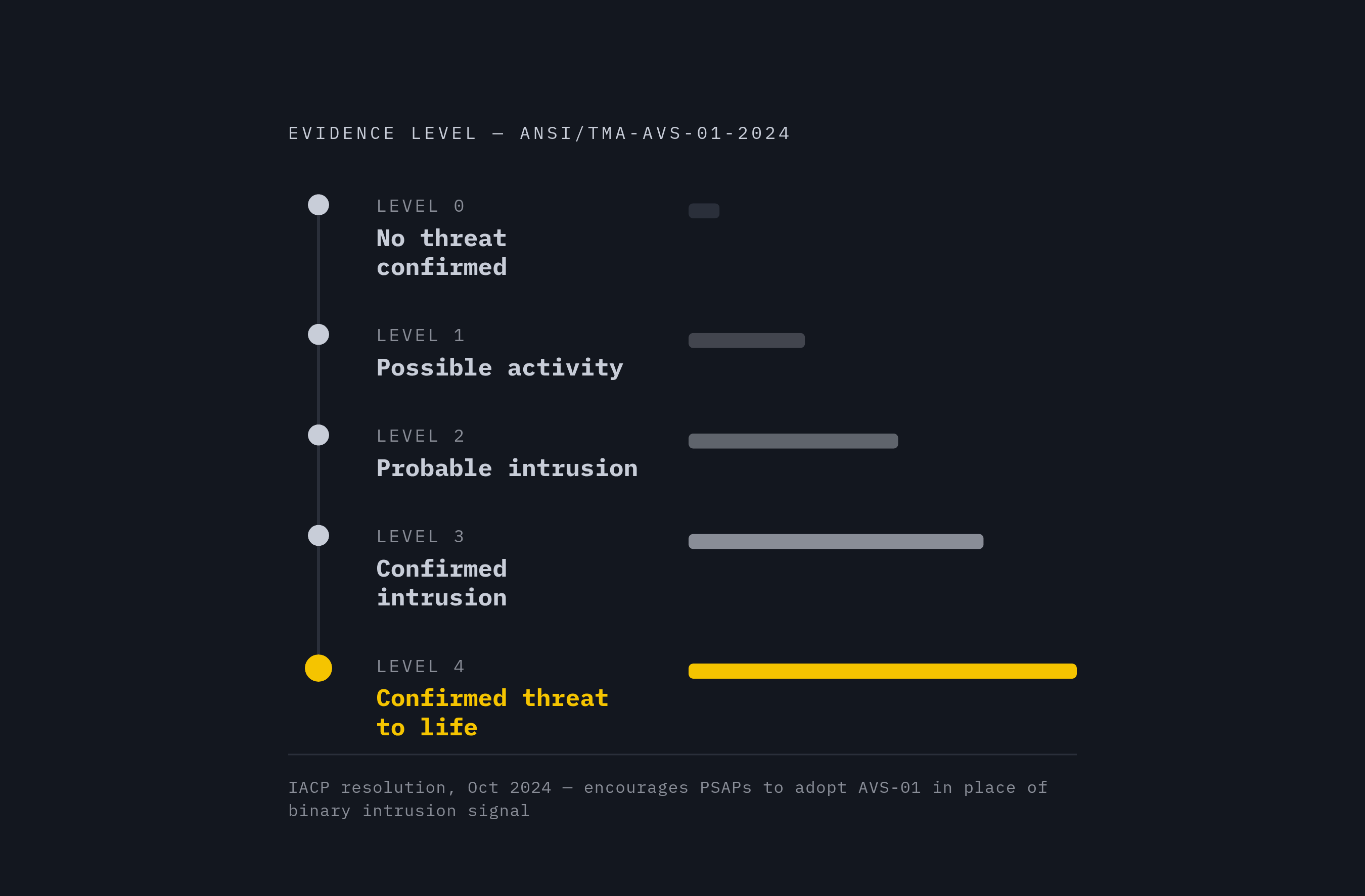
The ANSI/TMA-AVS-01-2024 standard gives evidence-based classification a formal role in alarm response. It replaces a binary intrusion/no-intrusion signal with a five-tier framework reflecting the evidence available at dispatch, from Level 0, no threat confirmed, through Level 4, confirmed threat to life. In late October 2024, the International Association of Chiefs of Police executive committee ratified a resolution encouraging public-safety answering points to use the AVS-01 framework. The policy direction reinforces the architectural distinction between an activation and an evidence-backed incident.
In a verified-response jurisdiction, dispatch is conditioned on verified visual evidence. A confirmed-threat classification with an attached camera frame supplies the kind of verification that requirement contemplates. The reasoning layer must send evidence that people can use as well as send the notification faster. If its output cannot distinguish events at Level 3 or Level 4, it cannot convey the severity distinctions the framework is designed to carry. Response speed depends on making the evidence actionable as well as getting it to a person quickly.
What the operator's role becomes when AI handles verification
Removing routine verification from the operator's workload concentrates human authority on events requiring nuanced judgment, contextual interpretation, and legal or ethical accountability. The agent evaluates the evidence and structures the decision. The operator determines the response where human judgment is required. This is the practical meaning of an AI triage plus human response model for commercial video surveillance.
Hanwha Vision's 2026 outlook describes operators becoming commanders who make final decisions that call for close analysis of the facts, the law, and the context. It also describes an AI governance role in which operators track and supervise autonomous actions and reasoning processes. Its intrusion example makes the boundary concrete. An agent assesses the intrusion and initiates a preliminary step such as sounding an alarm, then presents options about whether to call police. The operator makes that final call.
That checkpoint matters because an agent that can act on its own poses risks beyond a mistaken detection. Pustozerova et al.'s September 2026 research on compromised AI agents identifies agent memory, autonomy levels, and tool usage as key elements of incident reporting. Those elements show why oversight must cover what an agent can do as well as what it concludes. A reasoning-and-human design retains a decision boundary around serious responses rather than treating an automated assessment as unrestricted authority.
How Verdun builds the reasoning-and-human architecture in practice
Verdun applies this division of labor by having AI agents review every alarm before trained human operators receive it. The agents evaluate events against site-specific context and authorized activity, dismiss environmental noise, and escalate verified threats. Operators then respond under the site's protocol. This arrangement addresses the queue at its entry point rather than relying on humans to clear every detection after it arrives. It is a concrete implementation of reasoning before response.
Schedules, authorized personnel, and coverage maps let the AI distinguish activity that belongs at the property from activity that warrants escalation. Without those inputs, the same service would amount to faster flagging. With them, verification can happen before the event competes for an operator's attention. The intended reduction is in the time a real threat waits for investigation.
Verdun's model also differs from approaches that mute noisy cameras, offshore operators, or charge overage fees. Muting reduces what is watched, while staffing and pricing changes redistribute the cost of processing the queue. None supplies the missing reasoning step. Camera count and image quality cannot compensate for cameras that are not actively monitored. The value of the architecture lies in sustaining monitoring without making each routine activation another human task.
That difference matters at the retail stores, employee lots, truck yards, and multifamily properties Verdun serves. These sites have different patterns of authorized activity, but each can face time-sensitive after-hours threats. A 90-second response and a 20-minute queue represent materially different operating conditions. Those figures show what the wait can mean, without promising a service guarantee. The decisive capability is a system that filters with site-aware reasoning and routes verified threats to people authorized to act.