Fixing Alarm Logic at the Source Is the Only Reduction Strategy That Leaves Every Camera Armed
Context-aware alarm logic cuts false alerts without silencing cameras.
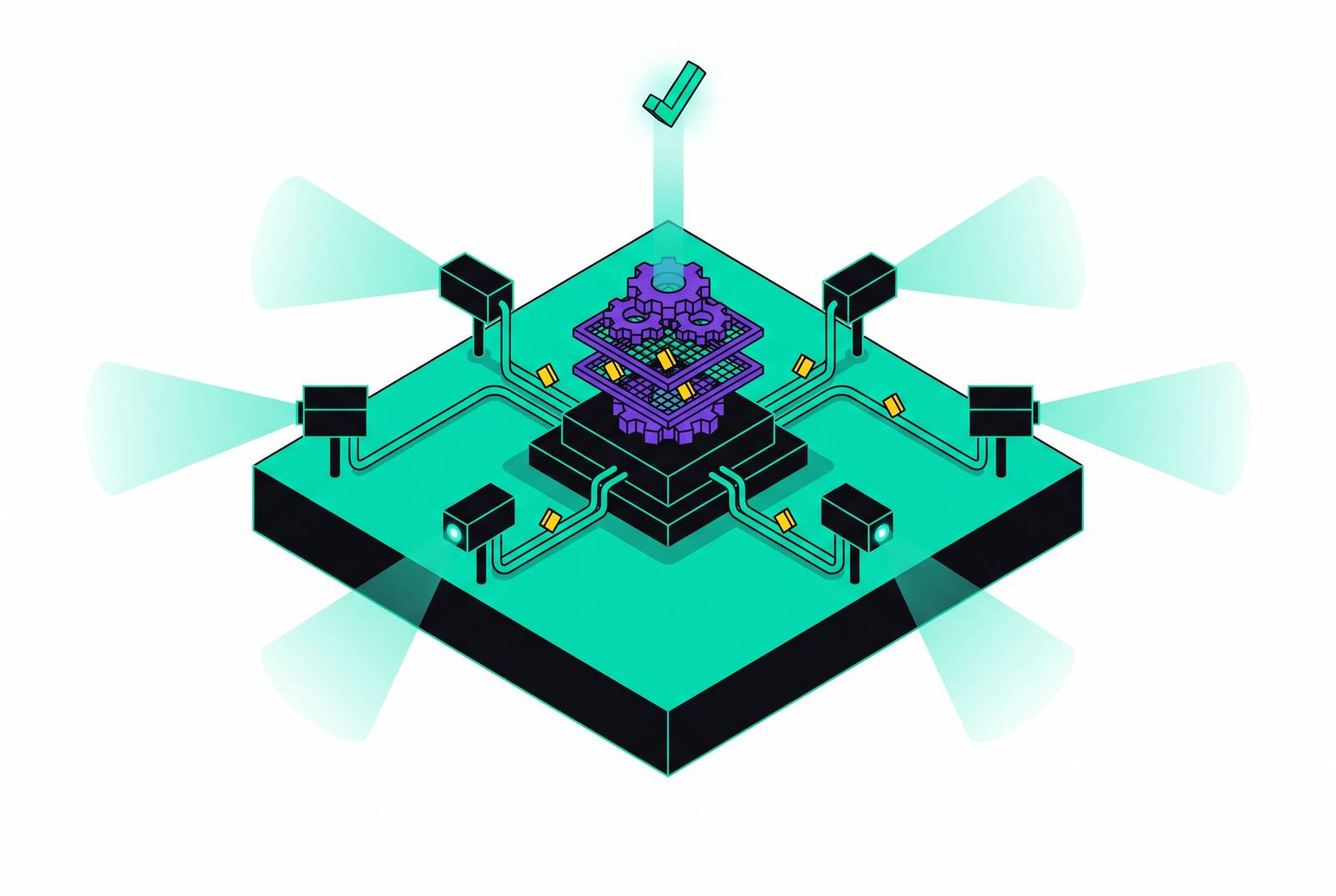
Muting noisy cameras is not a monitoring solution because it removes their alerts from real-time review while leaving the appearance of coverage intact. Raising detection thresholds leaves less in view, while cheaper review seats leave the same overload in place. Fixing alarm logic at the source, so events are assessed in context rather than merely detected, is the reduction strategy that leaves every camera armed.
Why alarm queues are structurally broken, not just overloaded
Object detection asks whether a person is present in a frame. Security monitoring asks whether that presence requires attention. Those are different tasks, with different consequences. A detector can correctly identify a person without knowing whether that person belongs in the location or whether the activity is unusual. When a system treats identification as sufficient grounds for an alarm, ordinary activity becomes work for an operator.
Fora Soft distinguishes object detection, which catalogues what is in frame, from anomaly detection, which judges whether activity is unusual for a zone and time. Without that distinction in the alarm logic, a person standing in a waiting room and a person standing in a restricted warehouse at 02:00 can trigger identical responses. The missing element is a model of normal activity over time. Detection errors involving shadows, headlights, bugs, and wind add another source of noise. Both kinds of event go into the same queue as a real threat.
At sites with many cameras, this architecture generates thousands of events per shift that have no security significance. The system is performing its assigned task, but that task is too narrow to support monitoring at scale. Lowering sensitivity changes which detections qualify for an alarm without changing how their significance is judged. The reasoning gap remains built into the queue.
What operators actually experience when the queue fills
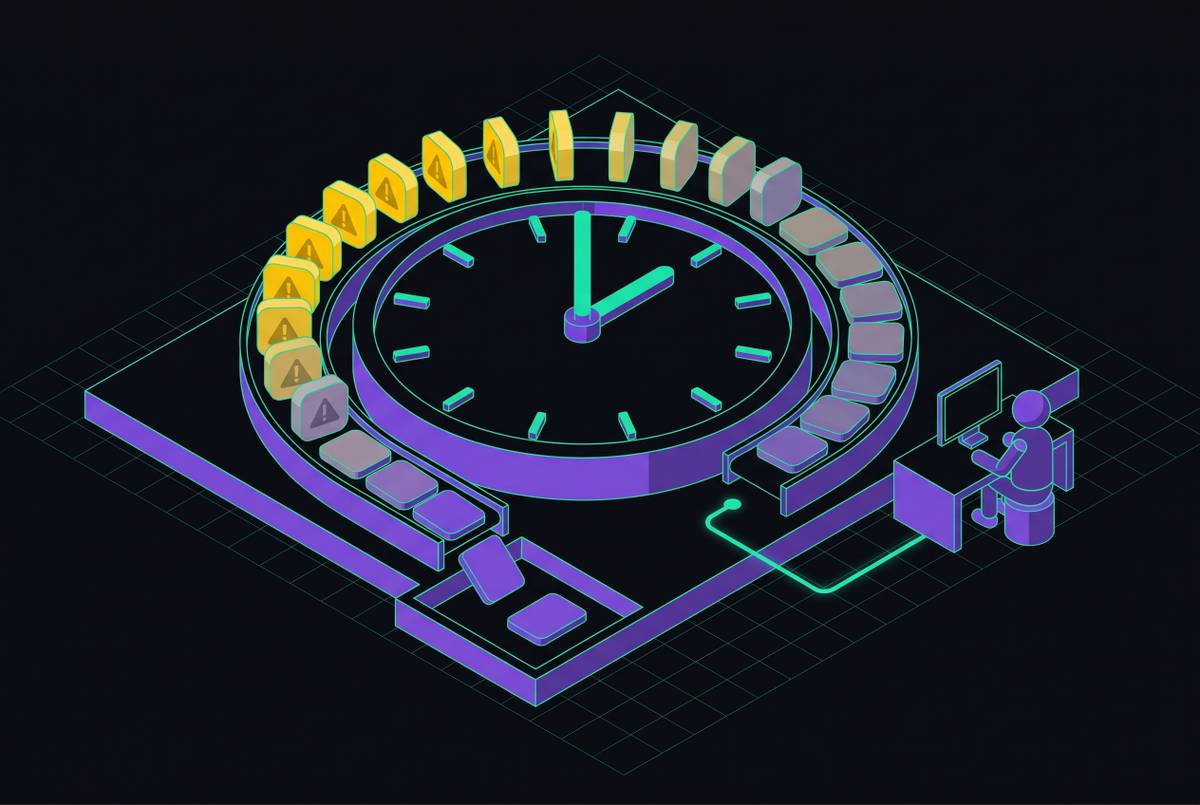
That gap transfers the task of interpreting every event to the operator. Each alert requires a decision about whether a detection represents routine activity, an error, or a threat. Repetition changes how people approach that decision. Once alerts stop correlating with meaningful events, operators begin treating them as noise. The shortcut that makes a repetitive workload tolerable can also cause a real threat to receive less attention.
Fora Soft describes guards losing trust in alerts within a month and warns that high false-positive rates can erode that trust in week one. This is not simply a gradual decline in enthusiasm. When operators no longer expect an alert to be useful, their working assumption changes. One operator covering dozens of sites, each with hundreds of events per shift, cannot look as closely at event number 800 as at event number one. Competence does not remove that cognitive constraint.
More staff can shorten the wait for review. It cannot supply the context missing from the alerts themselves. An operator facing a shorter queue must still make the same distinctions between ordinary activity and a security incident, repeatedly and with limited help from the system. Treating overload only as a labor shortage leaves the cause of distrust in place.
Why muting noisy cameras is not a monitoring solution, and what the other workarounds sacrifice
Muting, raising detection thresholds, and offshoring review are rational responses to a constrained monitoring operation. Each relieves a different immediate pressure on attention or cost. The problem lies in what each gives up. None changes the logic that turns an irrelevant event into work, so the relief comes from reducing coverage, narrowing detection, or making the same workload cheaper to process.
Muting a camera that sends hundreds of false alarms per night lets operators pay attention elsewhere. It also removes that camera from real-time alarm review. Recording may continue, which makes the loss less visible to the buyer, but recording is not the same service as detection and response.
Raising the detection threshold is a tradeoff that is harder to see. It excludes lower-confidence detections before they become alerts. Yet the threshold that removes a windblown tree branch can also remove a person moving quickly at the edge of the frame. Confidence in an object classification is not equivalent to confidence that an event is harmless.
Offshoring review seats addresses the labor bill instead. Routing alarms to lower-cost operators does not reduce the event volume or false-positive rate, and operators with fewer resources inherit the same overload. This can make the existing model more affordable without making its alerts more useful. Across the three approaches, the coverage-quality-cost tradeoff is relocated rather than resolved.
Why real-world footage makes detection-only AI worse, not better, than the benchmark suggests
A more accurate detector can reduce object-classification errors, so improving detection has genuine value. It does not, however, turn object recognition into contextual judgment. A correctly identified person can still generate an unnecessary alarm if the system cannot assess why that person is there. Better recognition narrows one source of error.
Fora Soft warns that benchmark accuracy does not show field accuracy because production footage has different lighting, angle, and resolution, and a wider range of scenes. Night and IR footage, backlighting, fog, motion blur, and harsh shadows at sunset expose that gap. These are ordinary conditions for outdoor monitoring. A loading dock, parking structure, or perimeter camera must work through them, rather than only under the conditions represented in curated footage. Model upgrades therefore need to survive both visual uncertainty and the separate problem of interpreting activity.
The operational test is whether operators keep using the alerts. Fora Soft calls false-positive rate the measure that defines the product because operators mute channels when the noise becomes too much for them. Once that happens, better detection on the muted channel can no longer help with real-time response. A better model may delay this loss of trust, but detection quality alone cannot prevent it. The alarm decision must also account for the zone, time, and behavioral context.
What reasoning-based alarm logic actually does differently
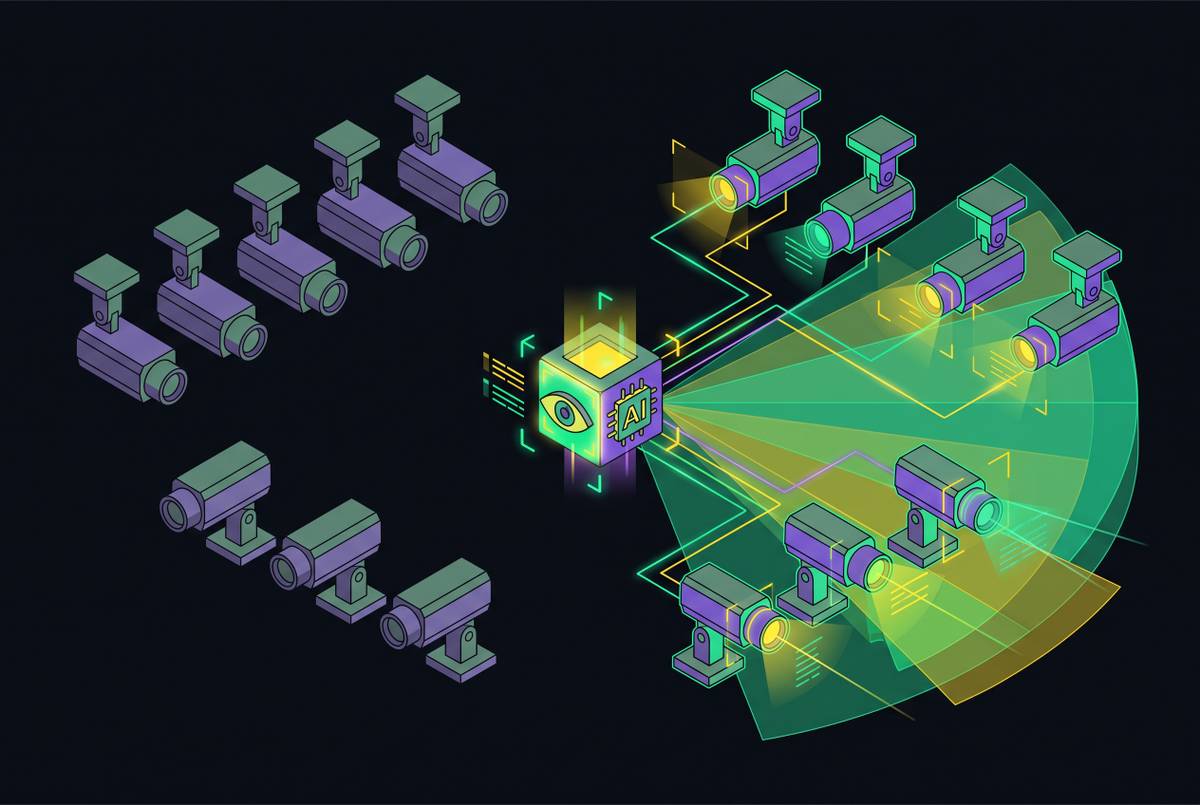
Reasoning-based alarm logic retains detection but changes what happens before an alert enters the queue. The system assesses whether the detected activity is anomalous for that zone, time, and behavioral pattern. Presence supplies evidence for the alarm decision. A person standing still in a waiting room can be normal, while the same pose in a restricted warehouse late at night warrants attention.
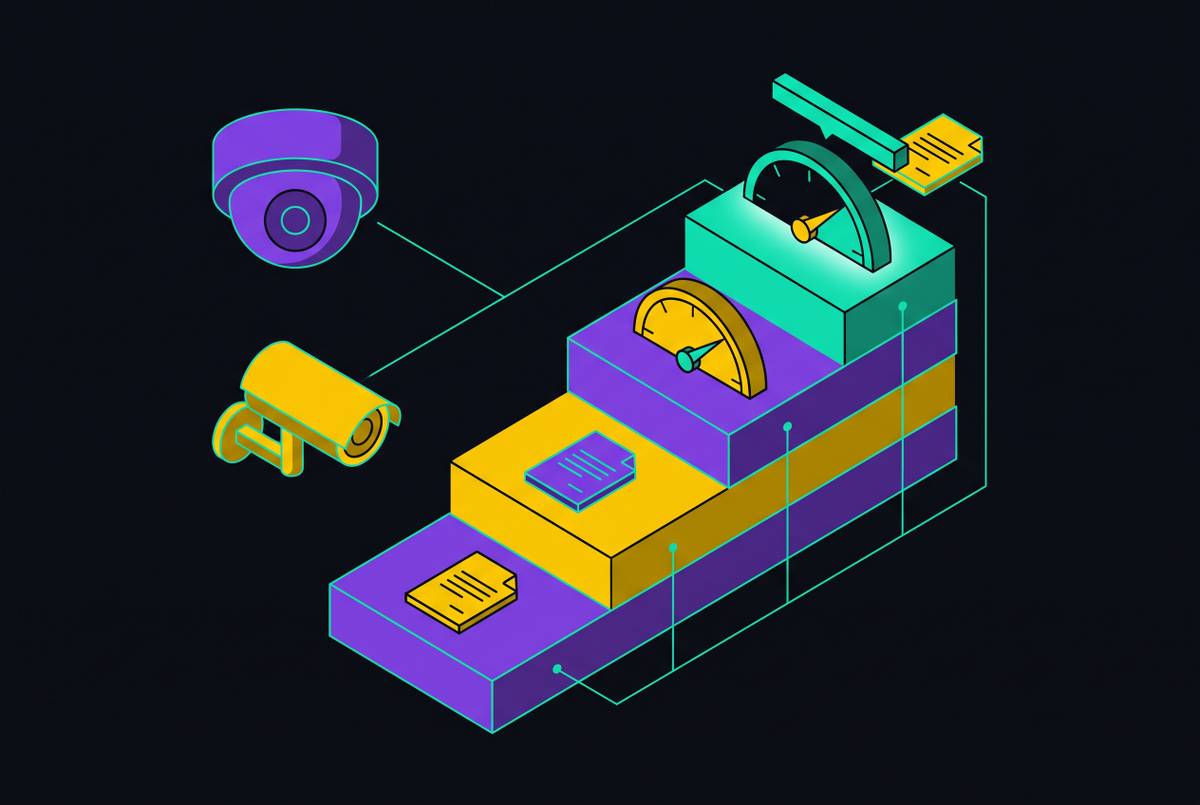
Fora Soft describes an architecture combining object detection, unsupervised anomaly scoring, contextual reasoning, and a metadata bridge into the VMS. Detection supplies the prerequisite information about what is visible. A per-zone model of normal behavior and a temporal reasoning layer then support judgments about deviations. Strong object recognition cannot substitute for the contextual stage or for getting the result into the monitoring workflow.
Operationally, this means routine activity can be resolved before it becomes an operator task. A camera producing 300 false alarms per night under detection-only logic does not have to be silenced to reduce its contribution to the queue. It remains active and continues detecting events. The reduction comes from evaluating those events against what is normal for the location and time window.
Where human judgment fits in a reasoning-first pipeline
Reasoning-based AI changes the operator’s assignment. Humans remain necessary when behavioral context is unclear, when the appropriate response requires judgment, or when an intervention could change the outcome. An audio warning or a dispatch involves deciding what to do in addition to concluding that something unusual is happening. The pipeline must preserve that distinction.
In detection-only monitoring, the operator provides the missing reasoning for every event. In a reasoning-first pipeline, routine cases are dealt with earlier, leaving fewer, harder cases for humans to review. That is a different use of expertise. Instead of repeatedly clearing ordinary activity, the operator concentrates on ambiguity and consequences. A threat that arrives with its context already assessed can be acted on without first waiting behind a succession of irrelevant detections.
There is still a limit to automated interpretation. Night and IR footage, low light, weather, and occlusion can make it hard for a reasoning system to be sure of what it sees. Those cases must go to a human, even if someone assumes the automation has finished the task. A claim that human review can be removed entirely avoids the hardest operational constraint.
What the false-positive rate looks like in practice when reasoning is built in from the start
In production, the useful outcome is a false-positive rate low enough for operators to sustain trust while cameras remain active. A benchmark score cannot establish that outcome by itself. If staff continue engaging with alerts after the initial weeks instead of muting channels or routing around the system, the alarm logic is supporting the workflow it was bought to serve.
Fora Soft describes object classification distinguishing a person from a raccoon rather than treating pixel changes as sufficient evidence for an alert. Contextual reasoning then addresses a different problem, namely whether the detected activity belongs at that place and time. These layers should not be conflated.
Site calibration controls how soon that distinction can help. A system calibrated to shift patterns, regular vehicle traffic, and the lighting cycle can reach acceptable false-positive rates faster and sustain them more reliably than one using generic thresholds. “Built in from the start” therefore includes both the deployment process and the software’s capabilities. Operator adoption after the initial weeks tests whether that preparation worked. Sustained use, with cameras still active, is the evidence that reduced review work has not been purchased by surrendering monitoring coverage.
How to evaluate whether a vendor's alarm logic is reasoning-based or detection-with-labels
For buyers, testing the alarm decision is the practical way to evaluate a system described as “AI-powered. That label applies to both object detectors and systems that reason about context. A catalogue of detectable objects proves only part of the capability. Fora Soft advises buyers to base their purchase on tests with their own cameras. Performance on curated footage does not establish performance on a loading dock camera in December at 02:00.
Buyers should first establish whether the system maintains a per-zone model of normal behavior or applies the same detection logic to every camera. Buyers should next establish whether an alert includes zone, time, and a behavioral description alongside a clip and category label. Terms such as “intelligent alerts” and “smart notifications” do not explain how routine activity is separated from an anomaly. A vendor should be able to describe the temporal and contextual logic behind that distinction.
Deployment evidence is the next test for buyers. Can the vendor provide a false-positive rate from a comparable site type? The evaluation should also establish what happens to alert volume after the first week and whether calibration is included in the deployment plan.
Finally, buyers should ask what happens when the system meets a camera it has not seen before, an uncalibrated site, and lighting conditions it did not see in training. The answer should go beyond what the system can detect to explain where its limits lie. If the vendor cannot explain how those conditions affect the alarm decision, the claim to reasoning remains unproven. A quieter queue is evidence of improvement only when it comes from better decisions while cameras continue to receive attention.