Overage Fee Structures in Video Monitoring Contracts
Overage fees exist because monitoring systems can't distinguish real threats from noise.
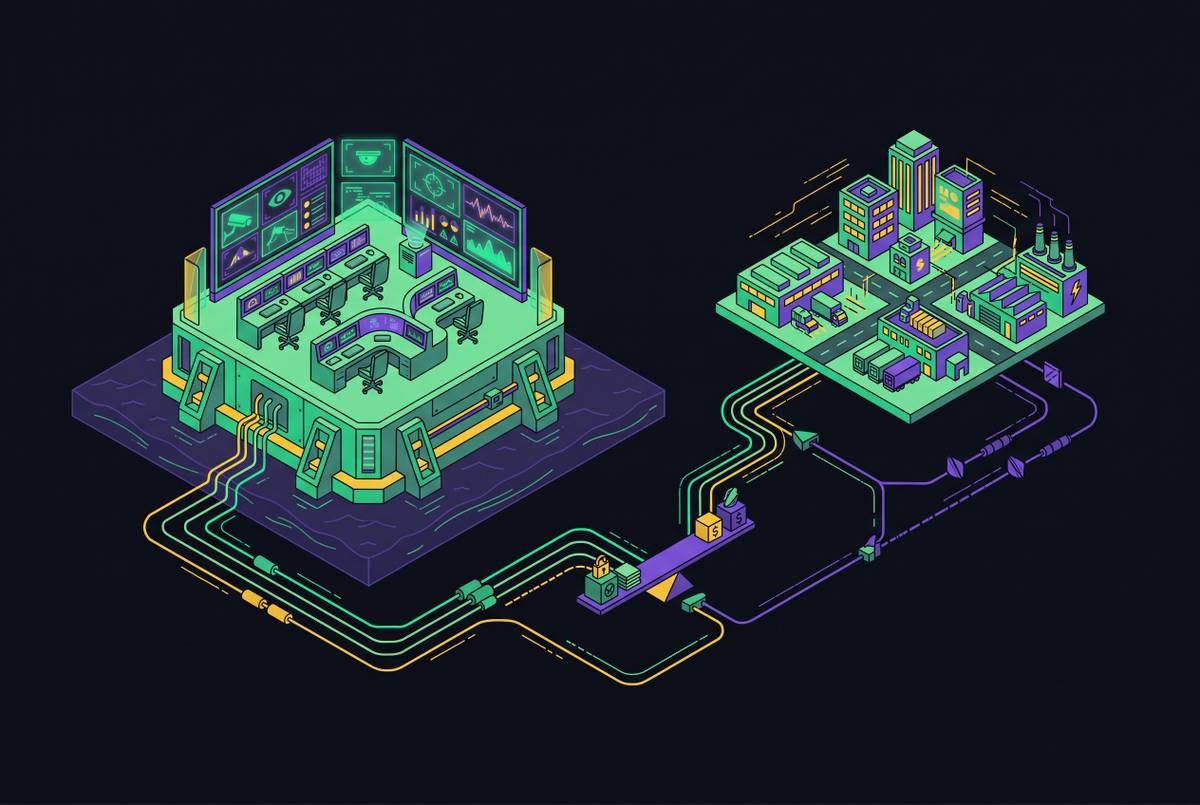
Overage fee structures in video monitoring contracts are not pricing decisions made in a vacuum. They are the financial residue of a system built for a signal volume that never matched reality. A monitoring queue fed by standard motion-triggered cameras receives alarms overwhelmingly dominated by non-events: animals crossing a lot, delivery trucks at the wrong hour, pedestrians on a public sidewalk, trees moving in the wind, insects on a lens. None of these bear any relationship to an actual threat, yet each one enters the same queue and consumes the same operator attention as a genuine intrusion. Safe4's 2025 analysis of alarm monitoring challenges names the false-alarm epidemic as the most critical issue facing the industry, with effects that reach past any single contract into emergency resource strain, eroded customer trust, and strained relations with municipalities. The queue itself is the choke point: every motion event competes for the same finite operator attention, so real threats wait behind noise, and the only lever a provider has left to manage that load is to charge for it.
How overage fee clauses are written into monitoring contracts
Overage fees rarely appear as a single disclosed cost. They appear as a cluster of clauses, each one narrow enough to look minor on its own, that together expose buyers to costs well past the advertised base rate. False alarm charges work as the most direct mechanism: a property crosses a threshold of verified false alarms, a per-incident penalty kicks in, and the charge grows larger the more often that threshold is crossed. Response protocol customization is another cost buried in the fine print. Base pricing usually covers one preset escalation path, so anything beyond that, custom rules for different zones, multiple escalation contacts, site-specific instructions, carries setup fees that rarely come up during the sales conversation. Storage and retrieval add a third layer: cloud storage past the default retention window, on-demand archive retrieval, and encrypted transmission for compliance purposes each add cost, recurring or per-incident, and buyers in regulated fields such as medical, financial, and industrial operations run into these charges at a far higher rate than a retail store or a warehouse would. After-hours technical support rounds out the picture, priced at a premium over standard rates, so the exact moments when a camera or connectivity failure matters most, nights and weekends, are also the moments when fixing it costs more. None of this reflects bad faith on the part of any single vendor. It reflects a pricing model built to recover cost from a volume problem, one the underlying architecture cannot solve on its own.
What SLA language measures
The service-level agreement is the part of the contract meant to hold a provider legally accountable, and most buyers assume it measures something close to "did a human look at this threat in time." It usually measures something narrower. Exida's analysis, cited by Safe4, identifies inadequate alarm prioritization mechanisms and insufficient data validation as systemic weaknesses inside monitoring center operations, and SLA language typically has nothing to say about either one, because SLAs are written to measure response initiation rather than the accuracy of what is being responded to. A provider can acknowledge an alarm and start the SLA clock the moment it lands in the queue, even if that alarm sits behind dozens of false positives waiting for the same operator. Under that structure, the SLA is being met in a strict, contractual sense while a real threat still waits its turn. Uptime metrics carry the same blind spot: they confirm a system is running, while the question of whether anyone is actively reviewing what it captures goes unanswered. A camera that stays online but goes effectively unmonitored because the queue is saturated still satisfies an uptime guarantee. This gap between what an SLA certifies and what security coverage actually requires is where overage fees inflict their deepest damage: a buyer who assumes the SLA guarantees timely, active review of every alarm ends up paying overage charges for a service performing exactly as the contract defines it, just not as the buyer pictured it when signing.
Contract lock-in as the mechanism that traps buyers inside the broken model
Multi-year contracts keep buyers locked in after they see the overage issue clearly, turning a flaw in the monitoring architecture into a financial commitment that runs for years. Commercial monitoring agreements commonly span several years, and early termination penalties are set high enough to make leaving expensive; often they are calculated as a large fraction of whatever remains on the contract. The logic reinforces itself: high false-alarm volume drives overage fees, overage fees create pressure to fix the problem, fixing the problem means switching providers, and switching providers triggers a termination penalty that can cost as much as simply staying put. A third layer of exposure sits entirely outside the contract. Cities increasingly fine properties that repeatedly trigger unverified alarm dispatches, with fines that escalate on repeat offenses, and some jurisdictions have adopted non-response policies that suspend police dispatch altogether for chronic offenders. The monitoring provider never absorbs that cost. The property owner does, on top of whatever the contract itself already charges. Put together, these four pieces form a closed loop: a model that generates too many false alarms, expresses that failure as overage fees, measures its own performance in terms that hide the failure from view, and then locks the buyer in place long enough for all of it to compound.
Why muting cameras and absorbing overages fail
The industry's standard responses to alarm overload, muting high-noise cameras, folding false-alarm fees into tiered pricing, moving operator labor somewhere cheaper, each solve a different problem than the one causing the overage fees. Muting or desensitizing a camera cuts down alarm volume by cutting down coverage: the camera keeps running and keeps up the appearance of monitoring, but the events it would once have flagged no longer reach anyone. Overage fee structures that escalate with alarm volume push buyers toward exactly this behavior, so the pricing model ends up rewarding lower sensitivity, even though that means worse security. Moving operator labor somewhere with lower costs changes the economics for the provider but not the architecture itself: more operators working through a queue still dominated by false alarms still means real threats wait in line, just at a lower labor cost on the provider's side of the ledger. None of these responses are irrational. Each one is a sensible reaction to the incentives the legacy model creates. Safe4's analysis points out that addressing false alarms requires both technological verification and changes to training and operations, because undifferentiated alarms start piling up at the point where they get generated, not at the point where operators process them. Fixing throughput downstream does nothing to fix generation upstream.
What AI agents do differently
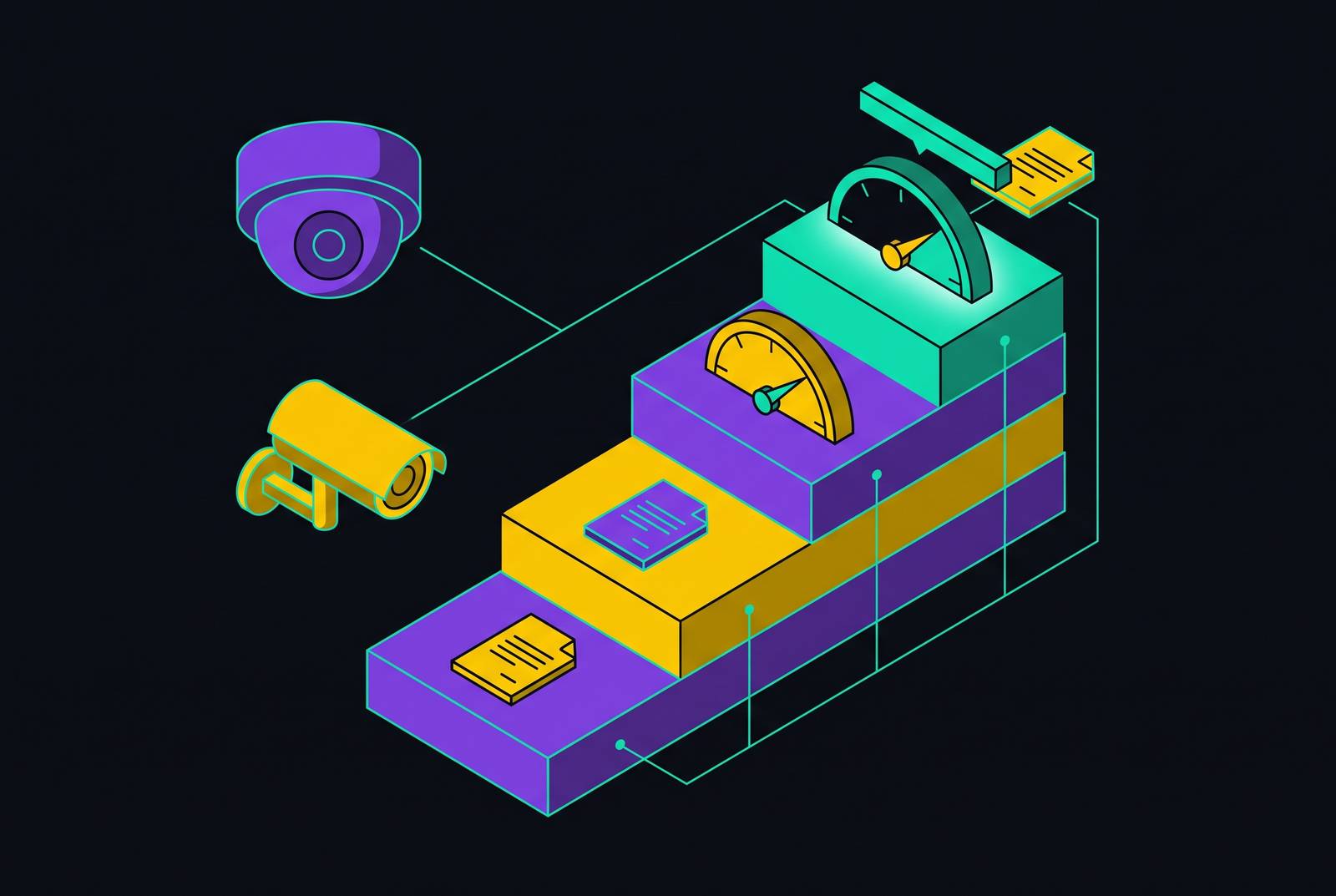
Eliminating overage fees at the source means moving alarm review earlier in the process, before anything reaches a queue, so that only verified threats ever reach a human being. Legacy video analytics detect an object class, a person, a vehicle, an animal, and pass the alarm along regardless of context. An AI reasoning system instead evaluates who is present, what they are doing, and whether that behavior is unusual given the location, the time, and the activity normally authorized at that specific site, producing an actual threat assessment from a pixel pattern. Context tied to the specific site is what makes that reasoning useful: a system that has learned a delivery truck arrives at a warehouse dock every weekday at 6 a.m. can tell that event apart from an unfamiliar vehicle showing up at 2 a.m., while a system without that context treats both as the same kind of alarm and sends both to the queue. The role these systems play is filtering and reasoning rather than simply reacting: the result of AI review is either a dismissed non-event or a verified escalation a human operator can act on immediately, with no backlog of noise to work through first. Hanwha Vision's 2026 analysis of surveillance trends describes this generation of AI agents as capable of autonomous situational analysis, independently assessing an intrusion, taking a preliminary step such as sounding an alarm, and then presenting the monitoring operator with final decision options, including whether to call the police. That marks a different role from earlier systems, which only lightened operator workload by automating repetitive tasks like object search, tracking, and alarm generation, leaving whether an alarm deserved attention unassessed.
What the AI-plus-human model means for monitoring speed
An AI-first monitoring setup can make response-time commitments the legacy queue model cannot support, because the bottleneck disappears once AI handles triage before any human sees the alarm. AI-integrated systems cut reaction time substantially once AI handles the initial triage and human operators only receive escalations that have already been verified, and the size of that gap has nothing to do with how skilled one operator is compared to another. It comes down to how deep the queue is before a human ever looks at it. A legacy central station starts its response clock once a signal reaches the queue, a clock that only begins after the alarm has already been sitting and waiting. An AI-first system starts that clock at the moment of detection, before a queue ever forms. Buyers negotiating an SLA should ask for time measured from detection to verified escalation, not time from alarm receipt to acknowledgment, since those are two very different clocks measuring two very different things. The contract should also spell out what happens to alarms during peak volume, and it should state whether "response time" refers to an operator acknowledging receipt or to a verified threat determination. A provider that can't commit to a response time measured from verified threat rather than simple acknowledgment is still running a queue-based model, whatever the sales conversation claims, and the contract language will show it even when the pitch doesn't.
How overage fee impact differs across commercial, multifamily, and industrial sites
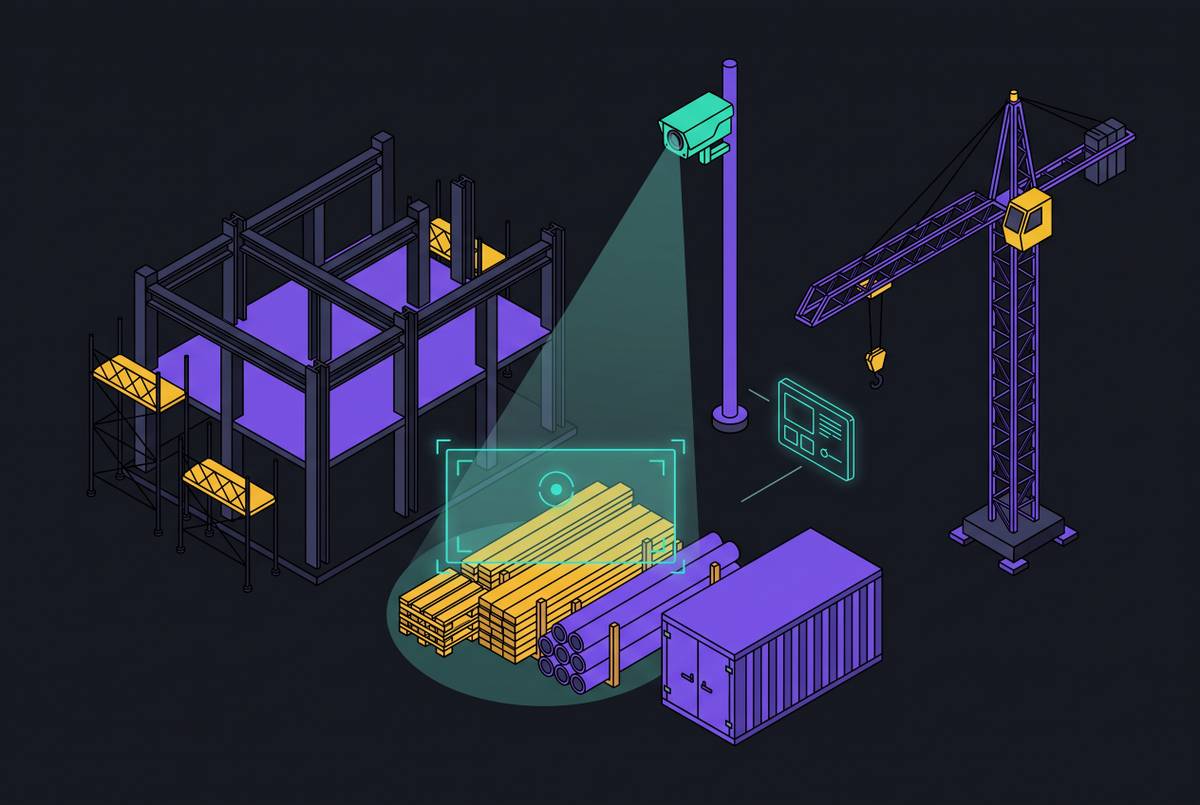
Alarm volume, exposure to municipal fines, and the economics of switching to AI-augmented monitoring all vary by property type, so the overage fee effect differs by site. A commercial or retail operator running multiple sites faces exposure that compounds across the portfolio, because false-alarm penalties and municipal fines apply per property. A single high-noise camera policy that is merely annoying at one location can turn into a serious cost problem once you multiply it across twenty or fifty sites. Industrial and construction sites tend toward the opposite failure mode: high perimeter activity combined with irregular schedules generates disproportionate alarm volume under standard detection settings, making overage exposure especially acute, and the case for AI filtering is strongest exactly where the ratio of normal, authorized activity to actual threat runs highest. Multifamily properties sit somewhere between the two, because resident and visitor traffic shapes alarm volume there in a way that looks very different from either a retail storefront or an industrial yard. Across all three categories, the financial logic is identical: the overage fee is a cost of using a monitoring architecture that cannot tell signal from noise, and that cost compounds for as long as a buyer stays locked into the legacy model that generates it.
Reading a monitoring contract as a diagnostic for the architecture behind it
A monitoring contract tells a buyer more about the underlying system than any sales pitch does, if read the right way. Escalating false-alarm penalties point to a provider whose detection layer cannot tell a stray cat from an intruder. Hidden fees for custom response protocols point to a system built around one generic escalation path. If an SLA is defined around acknowledgment rather than verified threat determination, the provider is still measuring queue entry, not queue outcome. Steep early termination penalties, stacked on top of these other costs, suggest a provider that expects buyers to need an exit and has priced that exit to be painful. None of these clauses are accidents, and none of them need reading as evidence of bad intent. They are what a queue-based architecture looks like once it has been translated into contract language, and the clauses that matter most reveal whether alarm review happens before a human ever sees the alarm or only after it has already waited its turn, a distinction that, more than any single number in the fee schedule, decides whether a buyer is paying for security or paying for the gap where security should have been.