The Short List of Monitoring Vendors Who Have Actually Named the Alarm Queue Problem
A handful of vendors admit the real problem is what reaches operators.
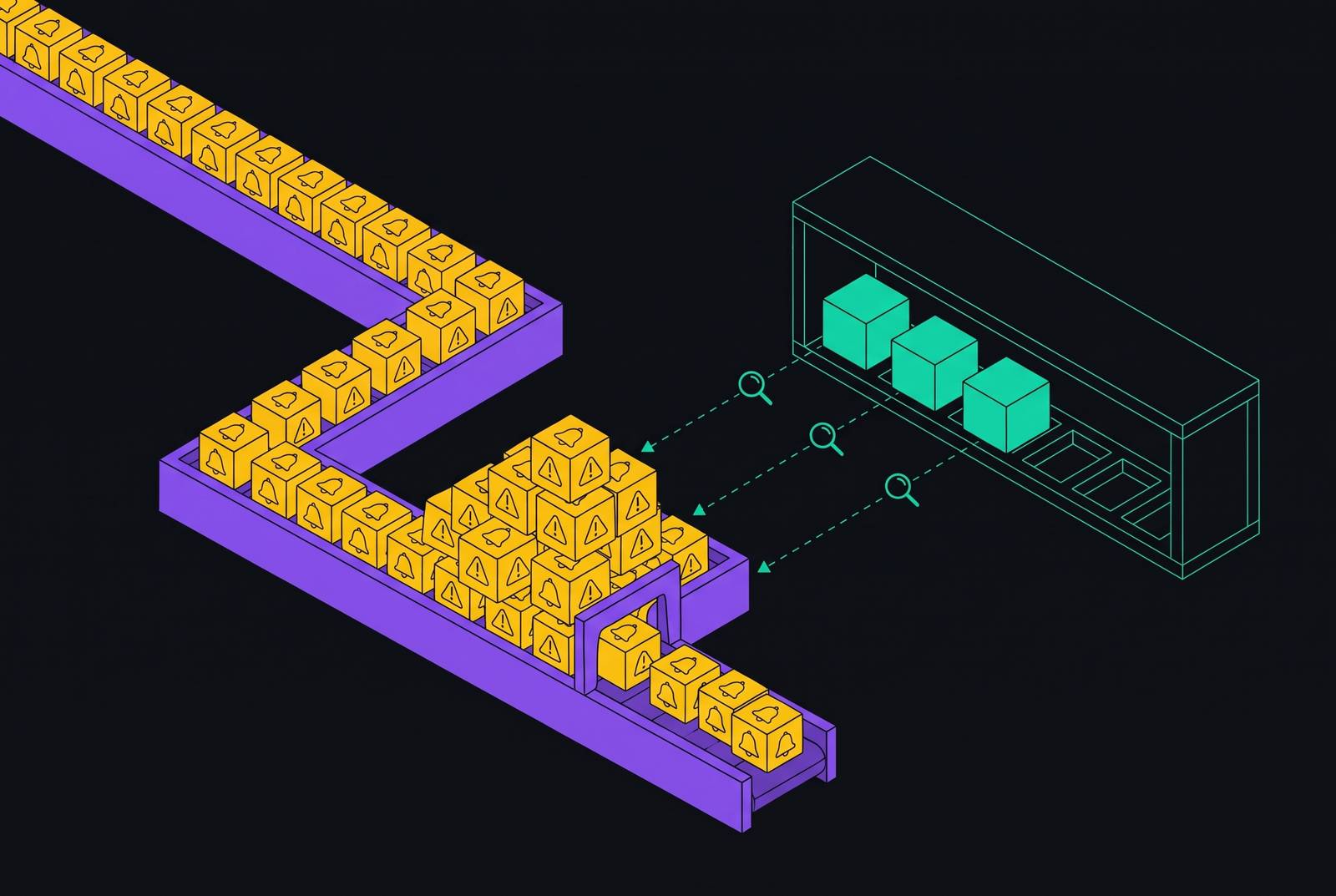
Alarm response time failure in traditional video monitoring centers is an architectural problem. Detection volume has grown without a corresponding redesign of the human queue, leaving real events waiting behind noise. The few vendors who have named this problem give buyers a way to judge an honest pitch: does the vendor explain what reaches an operator and change that flow, or just promise better detection?
Why monitoring centers fall behind on alerts, and why vendors avoid naming it
The alarm queue was never redesigned for the volume that modern detection generates. Cameras per site have multiplied while operator headcount has not, leaving downstream human capacity to absorb a growing stream of events. The bottleneck begins before an operator opens an alarm. It lies in what the system admits to the queue.
Legacy motion detection injects noise, while snapshot-based analytics classify images without the temporal context needed to distinguish activity from a developing threat. Fragmented VMS environments contribute separate streams of alerts. Weather compounds these weaknesses, especially outdoors and on IR/night-vision footage. Operators then face that volume while watching many feeds, and after several hours, attention fatigue shifts their situational awareness from looking into events to reacting to them.
That shift creates a self-reinforcing trap. More alarms take up attention, operators who are overwhelmed start filtering by feeling rather than logic, and real events wait behind noise. VideoraIQ describes this process as alert fatigue converting false positives into false negatives. The failure is therefore not confined to wasted review time. It also changes which events receive attention at all.
The consequences extend beyond the monitoring center. The Electronic Security Association cites Urban Institute data showing that false alarms account for the overwhelming majority of police alarm calls. The ASU Center for Problem-Oriented Policing finds that an alarm notification has a very low probability of indicating a real threat. These findings establish the public-safety cost of poor alarm quality, although they do not by themselves isolate video queue performance.
For vendors, naming the architecture is commercially awkward. Camera and site counts are easy to present as evidence of coverage, while detection counts make a system appear productive. Queue quality asks a different question, which is how much of that output supports timely action. A product can improve the first set of measures while worsening the second.
Why naming the problem requires a vendor to say things that undercut their own legacy pitch
Naming the queue means conceding that camera count is not a safety metric. More coverage does not ease the work caused by alerts that lack context. VideoraIQ states that deploying more cameras without solving alert quality accelerates the fatigue already degrading the team. That concession undercuts a pitch built around expanding visibility without explaining how the resulting events will be handled.
The same distinction applies to object detection. Classification is not security reasoning, because identifying an object does not establish whether its presence requires intervention. A vendor that promises more detections has not yet explained how its system separates actionable events from routine activity. Without that separation, faster detection can create noise faster.
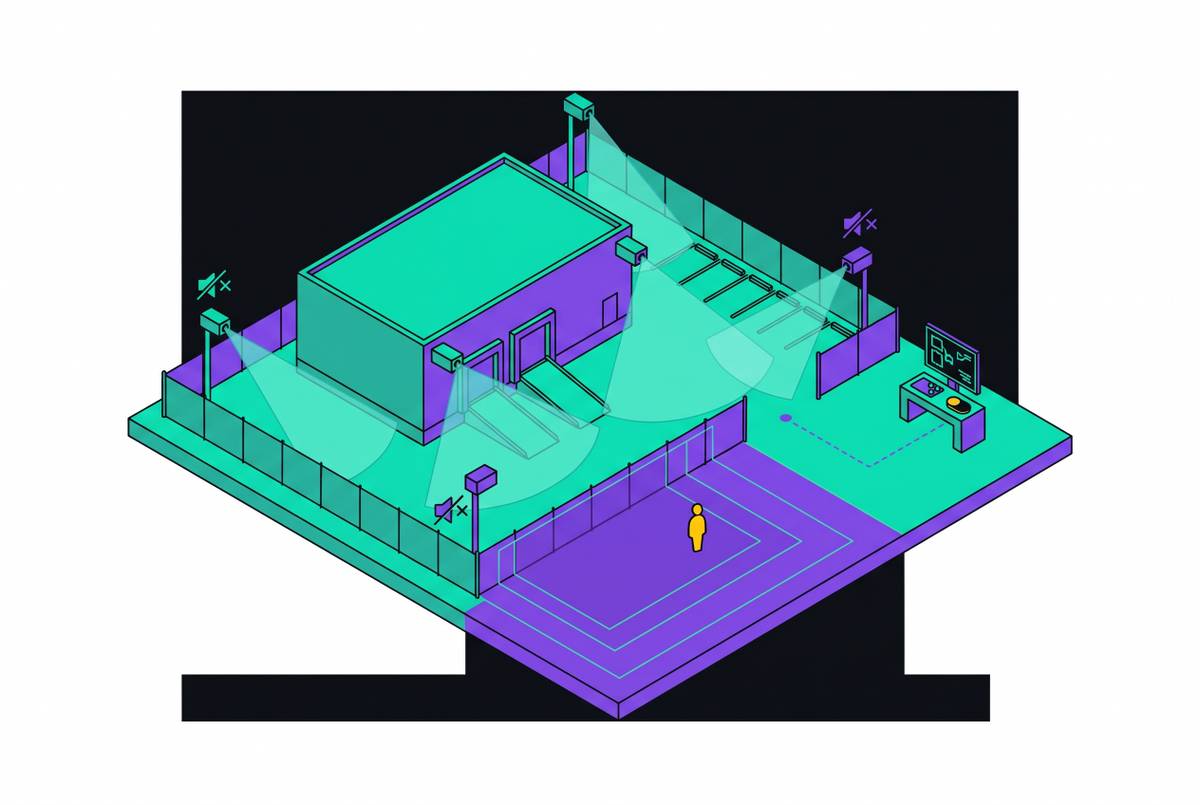
Naming the architecture also exposes the limits of familiar workarounds. Muting noisy cameras suppresses input without resolving its meaning, while overage fees move the financial burden to the customer. Cheaper offshore seats cut the cost of labor but leave what enters the queue unchanged. Each leaves the central problem intact.
A business priced by site or camera count has reason to emphasize expansion rather than acknowledge that unfiltered expansion can overload its service. Its marketing can therefore celebrate events caught without accounting for how many are actionable or how quickly operators resolve them. Honest positioning has to connect those two measures.
A vendor can discuss nuisance alerts extensively while blaming customer error or old hardware, leaving the detection-to-queue relationship untouched. Naming the structural problem requires identifying how the product's output becomes the operator's workload. False-alarm acknowledgment is common, but that admission is much rarer.
What honest naming actually looks like in vendor positioning: the cases that clear the bar
ArcadianAI locates the failure at the injection point. Its formulation, “if garbage goes in, garbage overwhelms the operator queue”, makes operator overload a consequence of incoming alert quality. Ranger is positioned as an AI filtration layer upstream of Immix and SureView, which ArcadianAI describes as platforms designed for a pre-AI era. Its policy-based monitoring framing calls the modern bottleneck not “seeing” but “deciding”.
The company also names conditions that degrade the evidence. Ranger is said to spot scenes that are obscured or cannot be trusted and to trigger alerts based on camera health, IR bounce, or low-visibility confidence. That is a specific acknowledgment that night-vision and IR cameras remain vulnerable to weather. At a retail strip-mall site, autumn leaves were triggering more than 300 alerts per night. ArcadianAI reports a large reduction in false positives there, grounding its positioning in an upstream noise source.
Intellisee names the labor economics behind the queue. It distinguishes four operating models, which are reactive alarm monitoring, human remote guarding, AI-triggered remote monitoring, and on-site AI proactive detection. Its argument is that AI-triggered remote monitoring scales better than remote guarding because it does not price by the watched hour. Intellisee cites Los Angeles moving to require alarm verification after finding that the overwhelming majority of annual alarm calls were false, costing millions in lost patrol time. Its framing links verification to the cost of maintaining human attention.
Surveillant points to the failure to act in time in truck and logistics yards. Its examples include organized theft rings breaching fences, loitering near trailers, and moving trailers without a scheduled pickup. It positions AI video analytics as watching every camera in real time so that theft can be stopped while it happens. The queue implication is direct but implicit. Evidence available only for later review has not supported intervention in time.
RAD Security makes the sequential workflow explicit through SARA. Its agentic framing names the operator process it seeks to replace, including review, verification, calls, waiting, and continuation through a punch list. Those steps consume time in sequence.
Bold Group points to a missing verification step in the work of a central station. Its Manitou software has partnered with Sentry AI to provide real-time, AI-enhanced video monitoring, with the stated goals of reducing false alarms and adding a verification point for police response. This is a narrower acknowledgment of the problem. The partnership describes a verification layer within an existing workflow rather than fully naming the upstream injection architecture. It clears the verification standard without establishing that the entire queue has been redesigned.
VideoraIQ names the operational cost of context-poor alerts. It describes security operations teams triaging “possible” events and then overreacting or underreacting, treating both outcomes as system failures. It also states the trade-off in raising thresholds to reduce volume, which can turn false positives into false negatives that become compliance gaps and audit findings. The actionable unit it describes is a short video clip with a precise location tag and exact timestamp delivered in under three seconds.
What the vendors who clear the bar have in common, and what that reveals about the ones who don't
These cases share a distinction between detection and decision. Their emphasis varies from upstream filtration to labor economics, sequential work, verification, and the context needed for action. They do not all name the architecture equally fully. What makes them useful evidence is that each identifies a specific failure between seeing an event and responding to it, rather than presenting detection alone as the outcome.
The strongest accounts of the architecture show where the input goes wrong, explain how that affects the workflow, and describe a change to the process. A claim about reducing false alarms addresses only part of that chain unless it explains what reaches a person afterward. Likewise, adding verification may improve evidence while leaving the same queue to be worked.
Candor about degraded footage strengthens that account. ArcadianAI's discussion of weather, IR bounce, and unreliable scenes shows when the evidence itself needs a closer look. These limits matter to queue design because uncertainty has to be dealt with somewhere. A positioning statement that explains only favorable detection conditions leaves that burden unexplained.
The Electronic Security Association describes verification as an evolution from human-reviewed video toward AI-assisted confirmation. That names a genuine gap, but it stops short of specifying the upstream architecture. The ANSI/TMA AVS-01 Alarm Validation Scoring Standard makes that omission operationally consequential. It replaces a binary intrusion/no-intrusion signal with a five-tier classification framework, requiring operators to classify alarms using the available evidence.
That evidence may include context, video, audio, sensor history, and metadata. Without upstream pre-classification, a richer response standard places more interpretive demands on the same downstream queue. AVS-01 therefore acts as a structural forcing function, making the quality of evidence arriving with an alarm central to the feasibility of handling it.
How a buyer can use this standard to evaluate vendors they are actually talking to
Ask what percentage of alarms reaching an operator are actionable and how that percentage is measured. Detection accuracy and camera resolution do not answer that question. The answer should describe the workload actually presented to a person.
Then ask what happens during a high-volume period. A shift change, weather event, or seasonal surge makes the question concrete. Does triage logic change, or does the queue just grow? A useful answer states how much the system can handle and explains what happens when more work comes in than it can cope with. A promise of scalability without that explanation leaves response-time failure unaddressed.
Footage conditions deserve the same specificity. Ask how the system handles night/IR imagery, bad weather, and cases tied to a site, such as staff moving around after hours. Lab-condition accuracy does not explain those situations. A vendor that has named the problem should be able to discuss uncertainty without assigning every difficult case to camera quality, customer behavior, or the operator.
The economics provide another way to test the explanation. Ask whether alarm spikes lead to overage fees or muted cameras, because both show a model built to manage the volume while leaving its cause in place. Consolidation makes this question timely. GardaWorld took over Stealth Monitoring in October 2024 to expand remote video analytics, while Alarm.com bought CHeKT for remote video monitoring. Those moves signal that the market is pricing the structural shift into acquisition strategy, so buyers should ask where a prospective partner sits within it.
The final test is the role assigned to human judgment. The agentic model reasons about every alarm and routes ambiguous or high-stakes cases to a person, rather than making human review the default destination for AI-flagged clips. A vendor describing that workflow is explaining how the queue changes, while one describing only another review step has not yet established that the architecture is different.