Site Context Configuration for AI Alarm Triage Agents
Configuring rules and schedules transforms motion detection into reliable security triage.
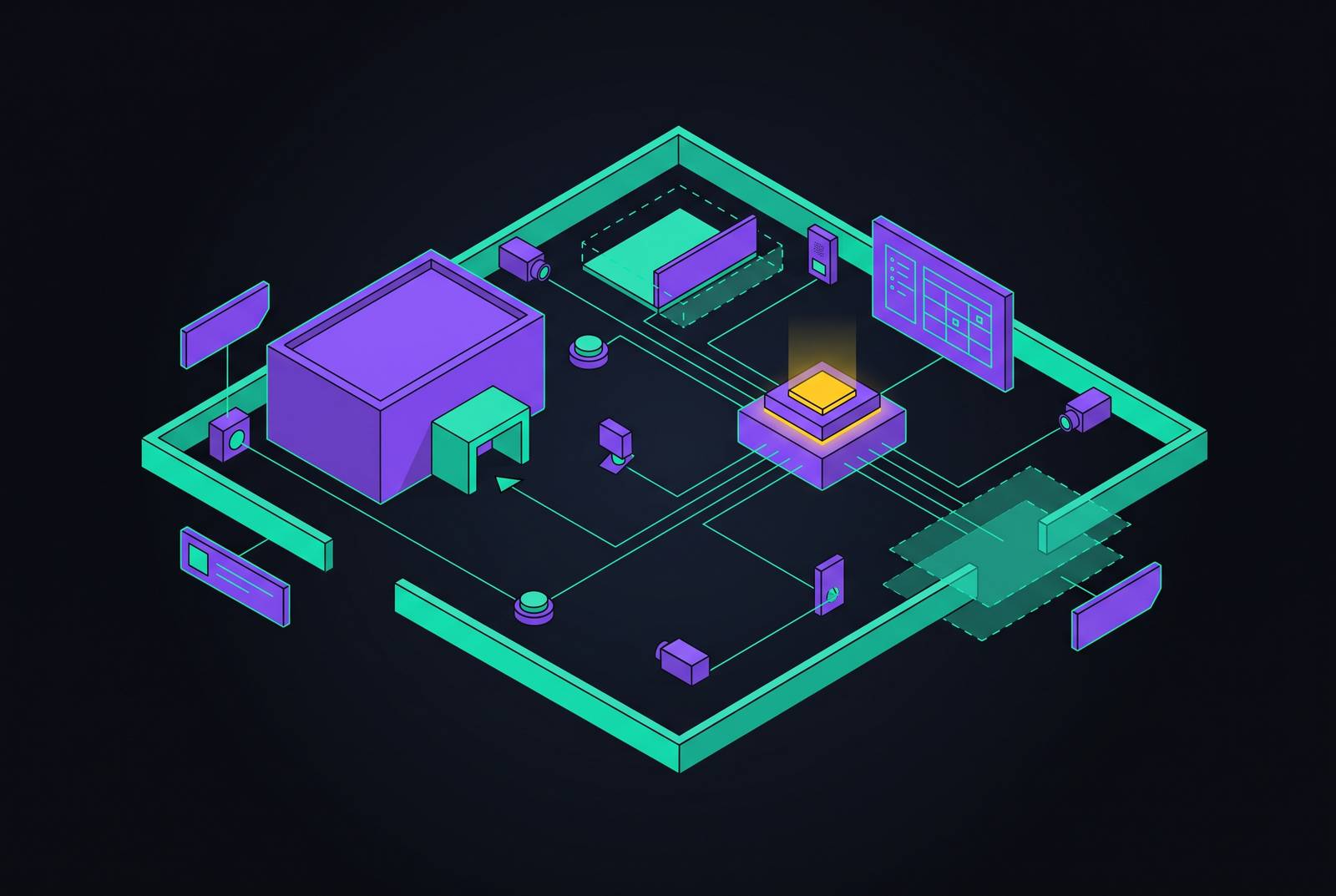
An AI triage plus human response model for commercial video surveillance uses automated analysis to filter camera alerts before routing events to live operators for judgment and response. Reliable filtering depends on site context configuration, including schedules, authorized activity, spatial rules, and operating protocols. Detection establishes what is visible. Site context establishes whether it belongs there and whether a human needs to act.
Why an AI triage agent without site context is just a motion detector
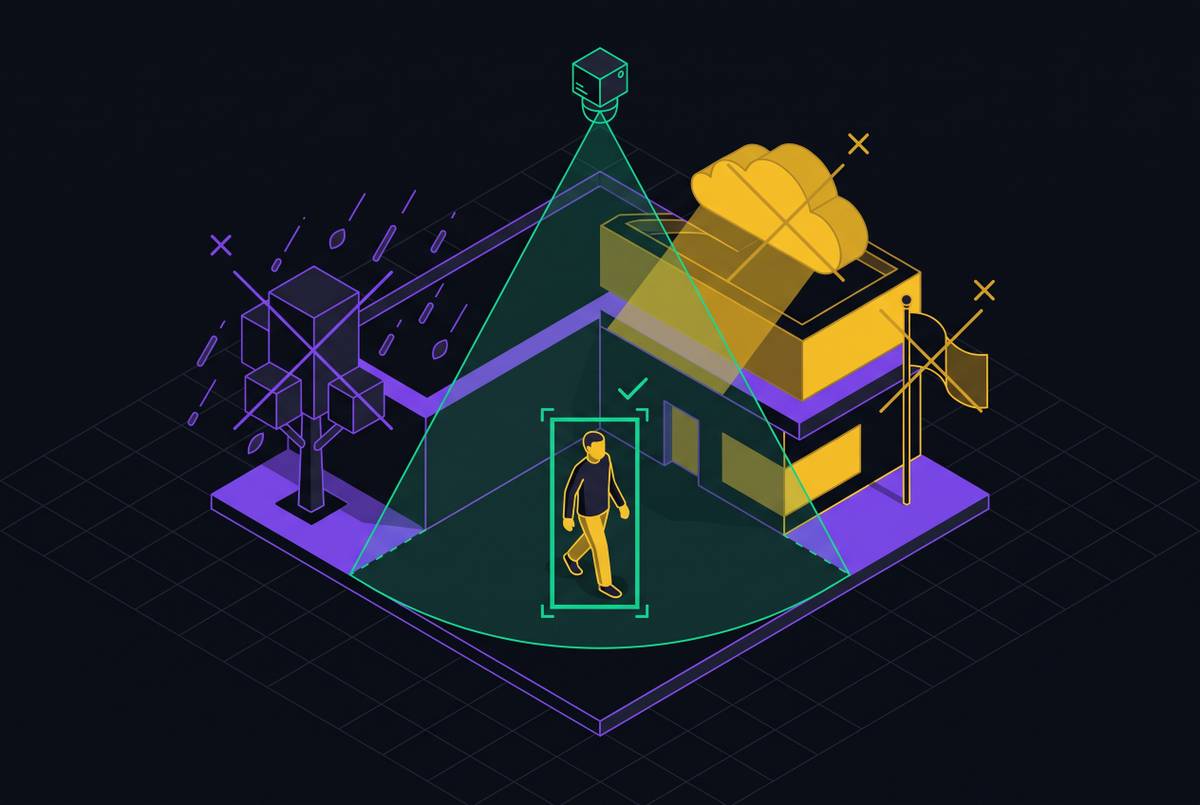
A detector can identify a person accurately and still produce an unreliable alarm. The missing fact is permission to be present. A person near a loading dock might be making an authorized delivery or entering a restricted area, and the image alone does not establish which interpretation applies. The agent needs the dock’s access rules and schedule to distinguish the two.
This gap is not a model-quality problem. Even a highly accurate detector generates noise when every presence is treated as suspicious because the system has no definition of normal activity. From an operator’s perspective, an escalation for authorized activity is a false positive regardless of how accurately the person was detected. Better recognition cannot supply an operating rule that the site has never provided.
What site context configuration actually is
Site context configuration is the structured set of inputs an AI triage agent uses to judge whether an event is expected or anomalous at a particular place and time. It has schedules, zone rules, authorized-activity definitions, and operating protocols. These inputs describe the site. They give the reasoning layer explicit facts against which to assess an event, supplementing a learned baseline with rules that footage alone cannot establish.
The inputs fall into four main layers. Temporal context defines when activity is expected, while spatial context defines where it is permitted. Identity and authorization context describes who may perform which activities, with permissions that can change by time and zone. Cross-sensor context supplies other data streams that confirm or contradict the camera’s view. Operating protocols connect those interpretations to the conditions under which an event should reach an operator.
How schedule-based rules eliminate the noisiest alarm class before scoring begins
can be detected as a person at a dock overnight, but without a delivery schedule, the agent has no basis for treating that presence as routine. With a mapped 5–7 a.m. delivery window, the same presence can be classified as expected activity. The camera has not become more accurate. The agent has gained the fact needed to avoid an unnecessary intrusion escalation.
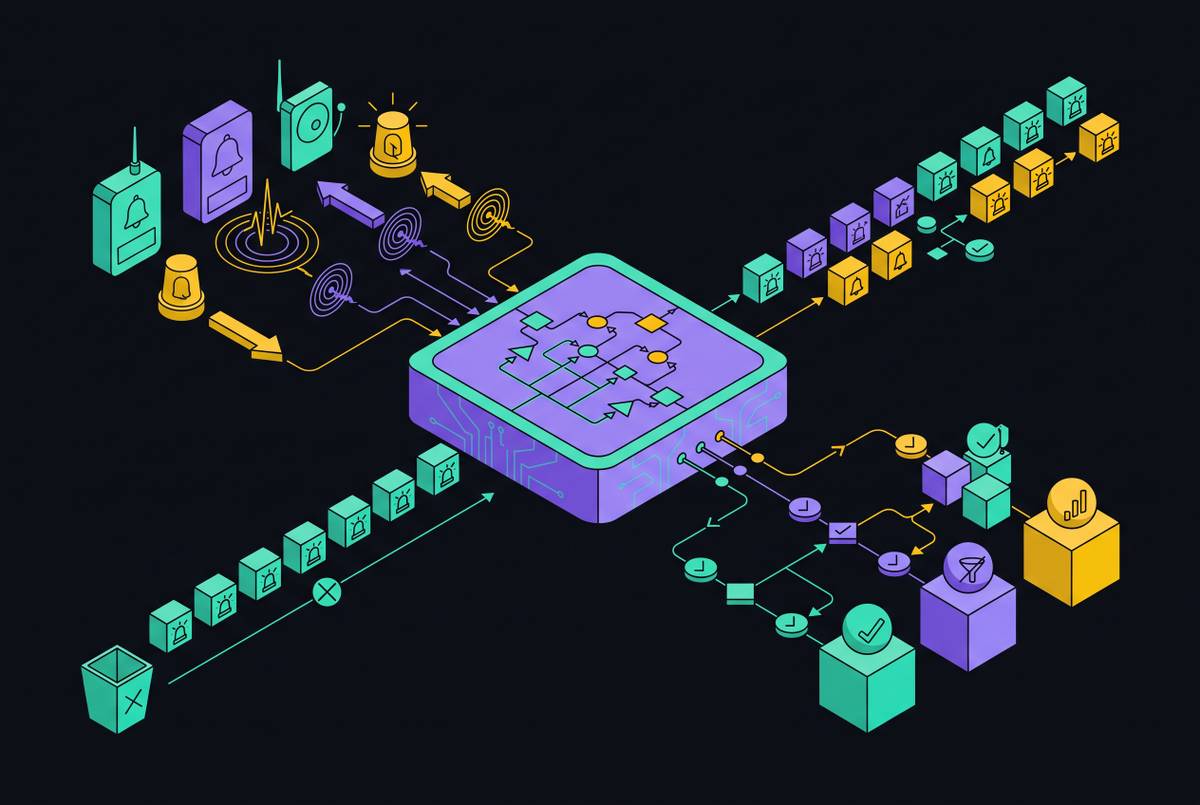
Temporal anomalies are inexpensive to detect but noisy without calibration because routine operations repeatedly cross simple after-hours rules. Fora Soft’s 2026 detection guide identifies temporal anomalies as the highest false-positive class without scene calibration. Schedule mapping supplies that calibration for expected arrivals, departures, and service visits. It prevents routine events from entering the threat-scoring queue simply because they occur outside general business hours.
The same principle applies at shift boundaries. A known staff-arrival window at 6 a.m. prevents expected movement from appearing as multiple simultaneous perimeter breaches. Contractor and maintenance windows also keep regular service visits from triggering escalations each time. These rules need their location-specific limits, because permission for a delivery at the dock does not establish permission elsewhere. A complete setup gives every routine operation a temporal rule so the operator can stop dismissing the same anomaly over and over.
How zone classification shapes what counts as suspicious in each part of a site
A retail property’s map contains more than camera locations. Its public parking structure, corridors, cash-handling area, and loading dock differ in who is expected to have access. Presence in the parking structure may be routine, while unscheduled presence in a cash-handling area demands a different assessment. The visual event can be the same. Zone classification supplies the access rules, risk level, and authorized population that change its meaning.
Transitional zones are the spaces between public and restricted areas. Corridors and stairwells are easy to overlook because they connect destinations. Yet dwelling in a corridor near a restricted entry is different from moving through it, just as loitering beside that entry differs from loitering in a public lobby.
Zone rules also tell the agent how to judge wrong-direction movement and perimeter breaches. Without an expected route or boundary, the behavior lacks a site-specific reference. Once the zone hierarchy is defined, the agent can connect an event’s location to escalation priority. An incursion into a high-risk zone warrants faster escalation than motion in a low-risk area. Schedule and location therefore work together, especially at a loading dock where deliveries are allowed during a set window but access is restricted after hours.
Why authorized-activity definitions are the hardest configuration layer to get right
Authorization requires operational knowledge that a map and timetable cannot provide. A contractor may be permitted on a loading dock during business hours without being permitted in the server room. The person has not changed, but the applicable permission has. A useful definition must connect the authorized population to an activity, a location, and a time rather than classify someone as universally permitted on-site.
These permissions overlap in ways that resist simple rules. Staff, supervisors, contractors, and maintenance personnel can be in the same place but have different access rights or windows for service visits. A supervisor’s authorized after-hours office access is not equivalent to an unrecognized individual appearing in the same space at the same hour. The distinction comes from the customer’s operations. No improvement in person detection can replace that knowledge.
Cross-sensor verification makes those definitions usable during triage. Access control logs can establish whether an authorized credential was used at the relevant time and location, giving the agent evidence beyond visible presence. That evidence must still be interpreted against the permission for the zone and activity.
Maintaining this detail is a genuine operational burden. However, omitting it transfers the burden to operators through repeated false escalations and declining trust. The practical response is to treat the site context file as a living document, updated on the same cadence as access-control and schedule changes.
How multi-signal verification turns site context into a triage decision
At the moment of an alarm, site context gives each signal a role in the decision. Camera footage establishes a person’s presence and behavior within a zone. Access control logs show whether an authorized credential was used at that time and location, while schedule data establishes whether the activity falls inside an expected window. Environmental sensors, including motion, temperature, and door contact, can add or subtract confidence. Corroboration is the basis for a stronger escalation.
The loading-dock example shows how these inputs work together. A person arriving during the delivery window is consistent with the schedule, but that fact alone does not establish authorization for every action or nearby space. Access records and footage give more evidence of whether the site’s permissions allow the activity. A contradictory signal changes the assessment. The reasoning task is to interpret the evidence against the configured rules, accounting for the different information each detection supplies.
Fora Soft describes a four-pillar stack in its 2026 detection guide, comprising edge object detection, an unsupervised/self-supervised layer, foundation-model reasoning, and a VMS + SIEM bridge. Site context is applied in the reasoning layer. For the buyer, the important distinction is between recognizing an event and determining whether it deserves attention. A stack that detects accurately but lacks site-specific reasoning leaves that second task with the operator.
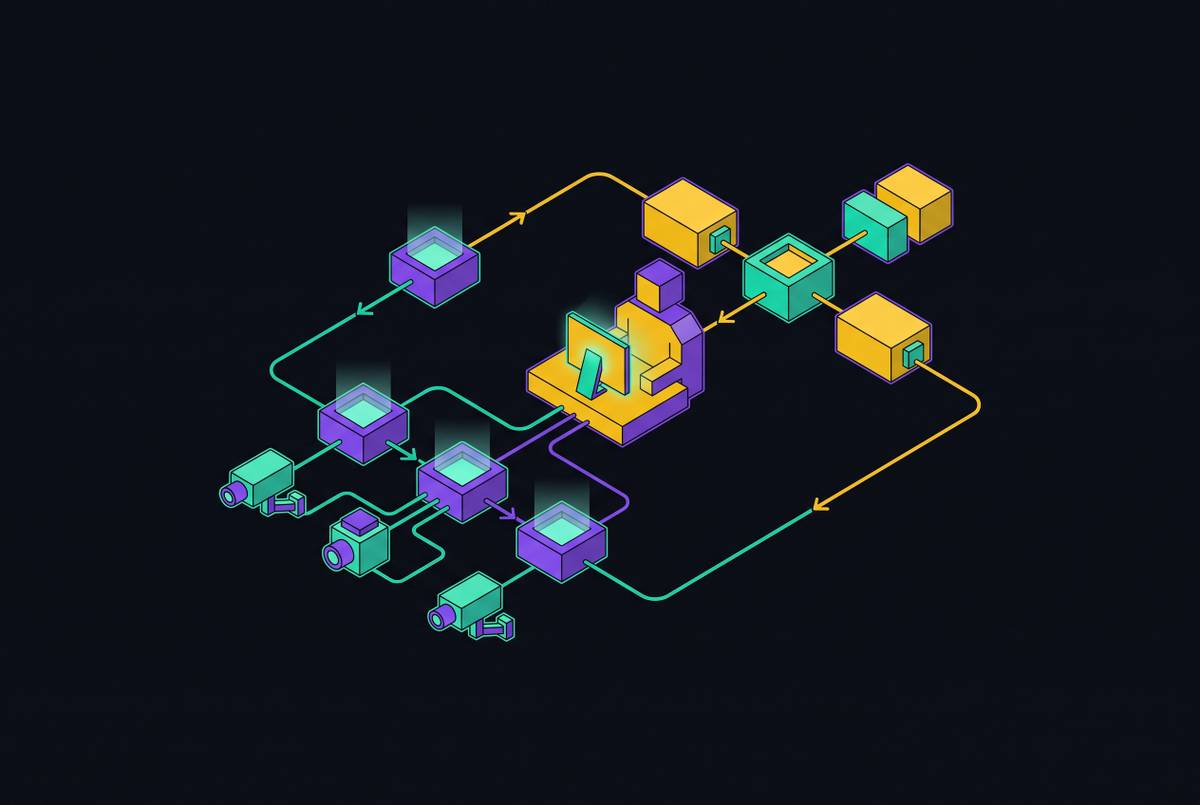
Fora Soft’s buyer playbook states that getting false alarm rates below the 3% threshold requires human-in-the-loop verification, with trustworthy AI pre-filtering keeping that queue manageable. The agent filters and corroborates events under the site’s escalation rules, and the operator applies judgment to those that reach review. The two roles are complementary because evidence-based filtering reduces the routine ambiguity humans would otherwise have to resolve.
How site context requirements shift across commercial, multifamily, and industrial properties
Commercial properties make role-based access across time a central configuration challenge. An office building’s supervisor, contractor, and maintenance personnel may have different permissions even when their work brings them through the same space. In retail, areas open to the public also sit beside restricted cash-handling and service areas. One schedule cannot describe all of those permissions. The configuration must distinguish the role, zone, and access window that make each activity legitimate.
Multifamily properties need more focus on transitional spaces. Parking structures, stairwells, building entries, and corridors need loitering and dwell-time rules grounded in normal resident behavior. A person loitering in a parking structure at 3 a.m. is a candidate for escalation, while an authorized resident returning home at the same hour is expected activity. The hour alone cannot distinguish them.
Industrial and warehouse properties have large areas and shifts that keep activity going around the clock. Different shifts have different authorized populations, and parts of the perimeter and areas next to equipment need their own risk rules. Fora Soft’s detection guide identifies appearance anomalies, including missing PPE in factory zones, as a separate class requiring scene-specific calibration.
These differences grow when the service covers more than one facility. A single operations center can use the same configuration framework, but each site needs its own schedules, zone map, and authorization definitions. Applying one facility’s shift expectations to another leaves routine activity looking anomalous and undermines the filtering that makes centralized human response workable.
What it takes to configure and maintain site context over time
Site context falls out of date when operations change but the configuration stays the same. New tenants, changed schedules, contractor rotations, and access-policy changes can leave once-accurate rules out of date. The system may still appear operational. The discrepancy instead emerges as returning false positives, which operators can interpret as model failure even when detection remains accurate. A stale permission or schedule can produce the same practical result as poor recognition.
For a security buyer, the operational requirement is to tie context maintenance to the changes it describes. Schedule and access-control changes should trigger updates on the same day they take effect, ahead of the next quarterly review. Physical changes should lead to zone reclassification, including when a new tenant moves into a previously restricted space or a loading dock becomes a parking area. Suppression rules also need periodic comparison with the false-positive log. That audit should establish whether they exclude expected activity without masking real threats.
The monitoring provider must handle this feedback loop as part of its work. Human operators see which escalations were valid, and that experience supplies evidence for updating configuration when activity patterns change. The agent applies the rules, while operator review helps keep them in step with the site. A provider that treats configuration as static leaves this relationship incomplete.