What Monitoring SLA Terms Actually Guarantee
Most monitoring SLAs guarantee uptime, not how fast operators act.
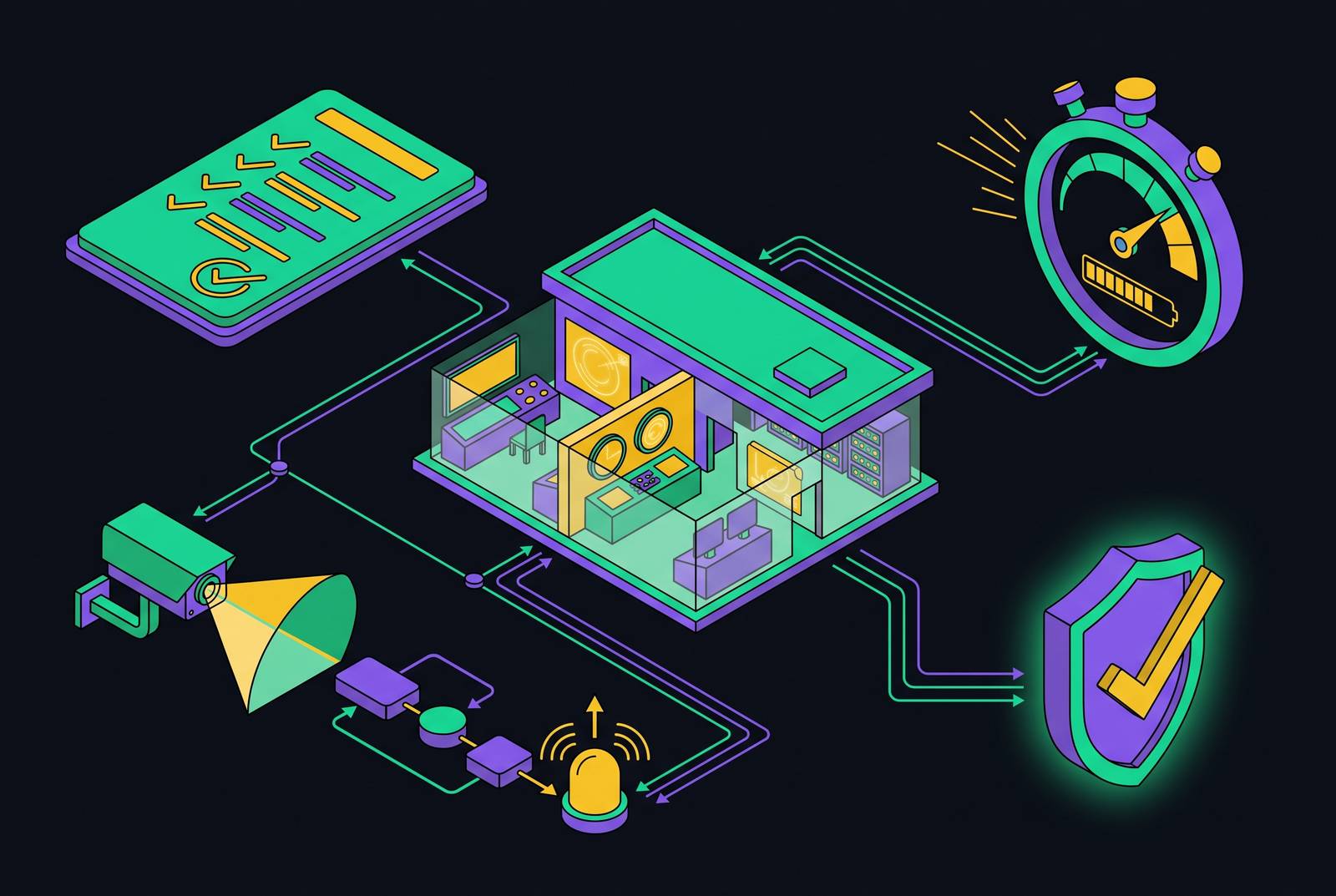
Muting noisy cameras is not a monitoring solution because it suppresses notifications rather than distinguishing false alarms from threats, reducing alert coverage where notifications are muted. Routine activity can instead be filtered before it reaches human operators, while camera notifications stay on. Monitoring SLA terms should make that distinction measurable, but most guarantee facility standards and uptime without guaranteeing how long a verified threat waits for human action.
What SLA terms in monitoring contracts are actually designed to measure
A service level agreement is a formal contractual commitment to measurable service standards. Its basic purpose is to define what a provider promises, how performance is measured, and what happens when the provider misses a commitment. Standard components include service availability, support response time, issue resolution time, performance metrics, security measures, remedies, and reporting mechanisms. Each component describes a particular part of the service rather than guaranteeing the service’s entire operational outcome. Reading an SLA therefore starts with identifying the boundaries of each promise.
Service availability expresses how much of the time a service is operational, while support response time concerns the provider’s response to a support issue. Neither term necessarily measures how long an operator takes to review a security alarm. Likewise, a resolution commitment needs a defined issue and a defined endpoint before its practical meaning becomes clear. The contract should tie its terms to work that the buyer can identify and measure.
The remedy is a separate part of that agreement. Most SLAs offer service credits for breaches, typically capped at a small fraction of monthly fees. Reporting mechanisms set out how the provider’s performance will be recorded and checked against its promises.
What facility certification and uptime guarantees actually cover in a monitoring contract
A UL 827 credential establishes compliance with facility standards. UL conducts annual audits of each UL Listed monitoring company to help confirm continued compliance. That is a real, auditable assurance, but it does not specify how quickly an individual alarm moves through an operator queue. Certification and alarm handling measure different things.
Uptime guarantees establish another meaningful but limited commitment. They specify the percentage of time services are operational. A system can be fully operational under its SLA while alarms remain backlogged for minutes. Availability describes whether the service is running, whereas throughput describes how much work it can process. One does not establish the other.
This distinction matters when evaluating services such as Verdun, an AI-powered remote video monitoring platform that separates infrastructure guarantees from response-time guarantees. The latter concern how quickly a verified threat reaches human judgment. A facility can hold a credential and meet its uptime target while its operators face a growing backlog. Buyers who establish only certification and availability have not yet established a limit on their alarm’s waiting time.
Where monitoring SLAs go silent — the queue wait that no clause covers
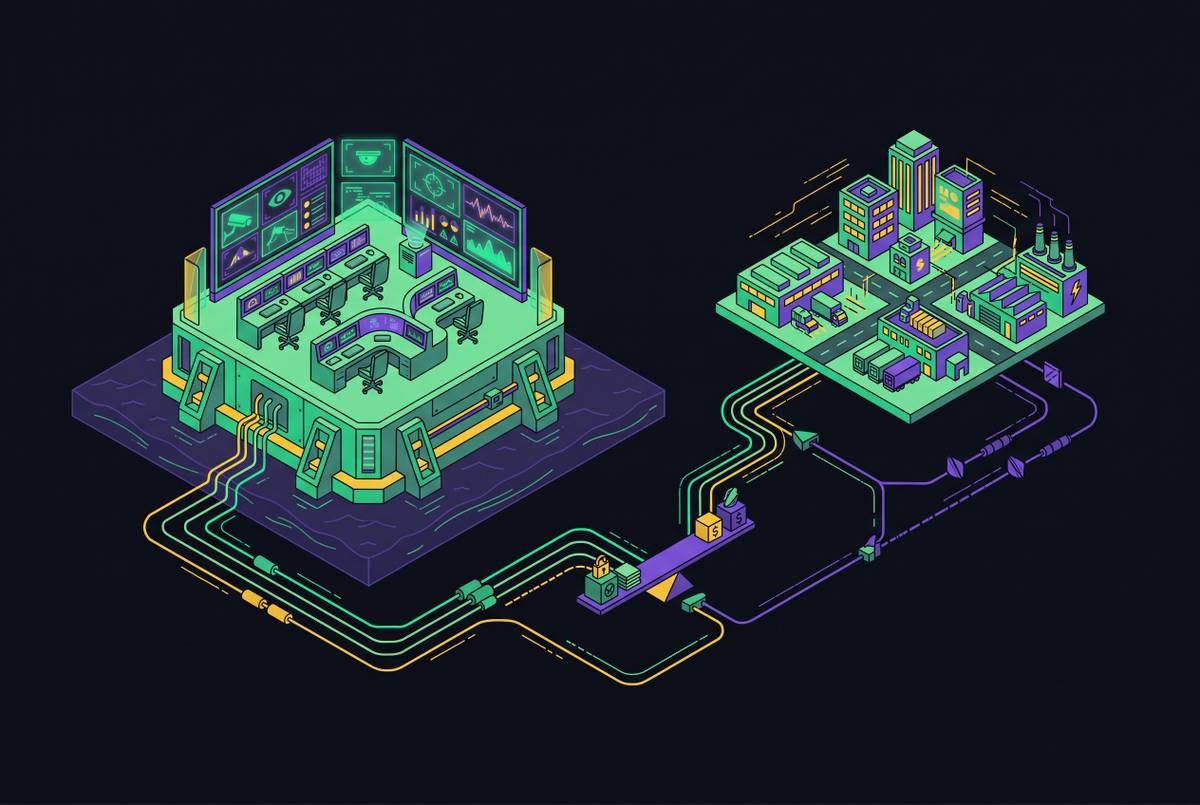
The gap begins after signal receipt. A central station places an incoming alarm in a queue and retrieves the associated customer information. An operator reviews the event when an operator becomes available. Receipt is therefore not review, and successful delivery into the monitoring system is not evidence that someone has assessed the threat. The delay between those stages can remain outside the contract.
The most consequential omission is how long a verified threat waits before a human acts on it. Monitoring SLAs almost never define that interval, even when they specify other performance thresholds. A receipt threshold can be satisfied at the moment the alarm enters the system, leaving the subsequent wait unconstrained. Measurements in the contract can stop before the scarce resource, human attention, becomes available.
Separate response clocks make that omission visible. MTTD measures time to detect, MTTA measures time to acknowledge, and MTTR measures time to respond or contain. These clocks describe different stages, so a commitment to one cannot stand in for the others. Nor does acknowledgment, by itself, establish that an operator has completed a meaningful review. Without a defined queue-wait commitment, a contract can describe prompt signal handling while leaving delayed human action entirely unguaranteed.
Why do operator queues get worse under peak load
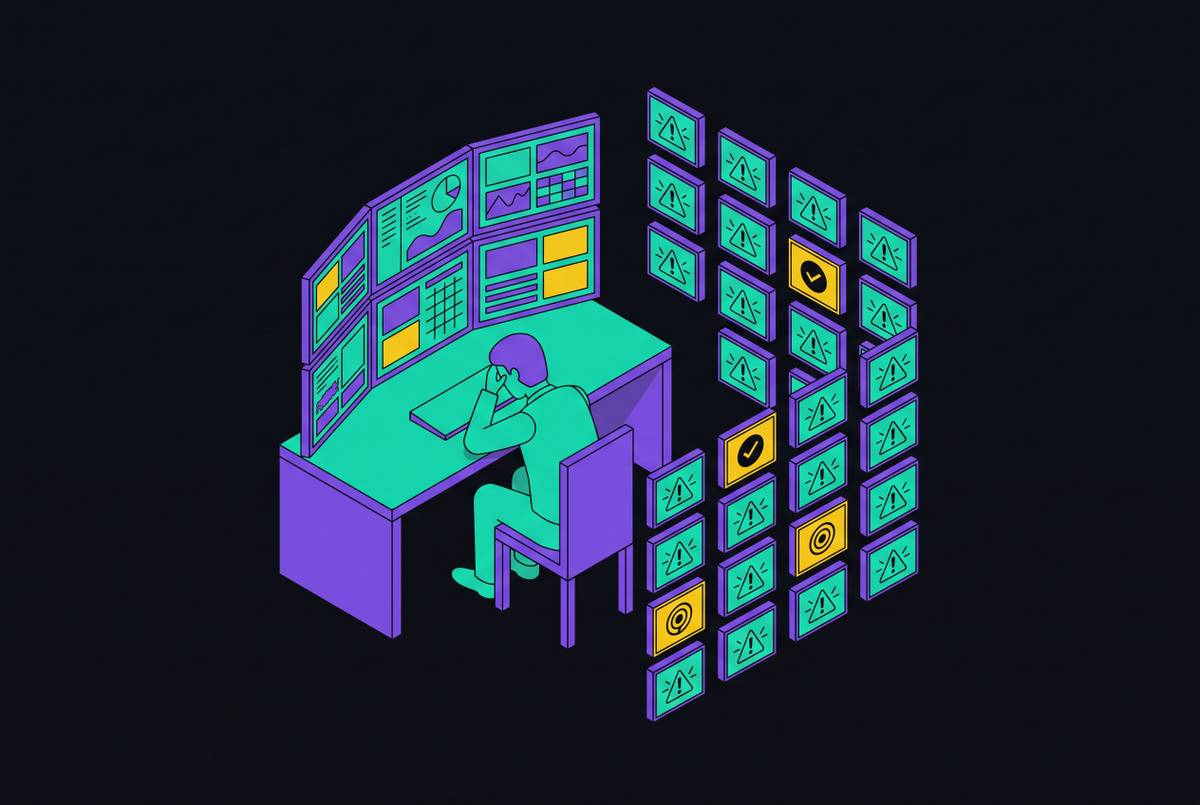
A queue that humans review grows when alarms arrive faster than operators can process them. Security systems send many false alarms that still need to be checked, so routine activity and genuine threats compete for the same attention. Unless the system distinguishes the events before they enter that queue, noise consumes review capacity. Real alarms then wait behind work that will ultimately be dismissed. This is an arithmetic constraint.
Peak volume also places greater demands on the people draining the queue. Continuous monitoring creates excessive cognitive workload, reduces situational awareness, and can weaken decision quality. The operator who eventually reaches an alarm deep in the backlog may therefore be working under worse conditions than the operator who handled the first event. Waiting time and judgment are separate problems, but sustained volume can degrade both. When people do all the screening, those problems largely stay the same.
Staffing increases during high-risk hours can add capacity, but peak alarm events are not fully predictable. More operators or geographic distribution do not remove the requirement for a person to screen each incoming event. Muting high-alert cameras takes a different shortcut by suppressing notifications, but it does not determine which events deserve attention. AI-first filtering, including Verdun’s approach, instead dismisses false positives before they enter the human queue.
What a genuinely protective SLA clause looks like, and what metrics it must specify
A protective clause defines the response pipeline rather than treating response as one undifferentiated activity. It separates detection, acknowledgment, initial triage, human review, and response or containment into measurable commitments. Alert-to-triage needs a metric separate from full resolution time. Otherwise, fast handling of easy events can obscure slow handling of consequential ones. The contract must make the waiting stage visible in its own right.
Severity tiers then connect those measurements to the significance of the event. A well-structured SLA distinguishes P1 critical events from P2 high-severity events and assigns different MTTR targets to each. It also specifies a maximum queue wait before an operator reviews a flagged alarm, particularly for critical events. Separate service credits for missed tiers make the distinction contractual. A blanket average cannot establish how long the most consequential outlier may wait.
The remedy must also be examined independently of the target. Credits capped at a small percentage of monthly fees do not compensate for a missed threat, so buyers should ask how credits are calculated and whether they are the only remedy available. The contract review should establish whether MTTD, MTTA, and MTTR are separately defined. It should also establish whether critical events have distinct targets, whether operator review has a maximum waiting time, and whether penalties attach to missed performance metrics as well as outages. Those are criteria that buyers can apply to any provider.
How AI-first monitoring architectures change what each SLA metric can realistically promise
AI-first monitoring changes the work that reaches the operator. Advanced analytics can distinguish people, vehicles, animals, and environmental movement more accurately than earlier motion-based systems. With the necessary context, initial review can dismiss environmental noise and authorized activity before a human sees the event. That reduces competition for human attention at the point where a conventional queue becomes constrained. It makes tighter queue-wait commitments more achievable, though the contract must still state them.
Verdun divides the work this way, using AI agents to review every alarm and filter events before they reach the operator queue. Verified threats then reach trained human operators for judgment and response. The architecture supports a defensible response clock by reducing routine work ahead of the operator. It is not, by itself, proof that a particular maximum response time has been promised.
The downstream stages remain important. As more jurisdictions require visual confirmation before police dispatch, a notification containing a detection image, camera location, timestamp, and threat classification can support the required verification. APCO International and The Monitoring Association jointly developed the Automated Secure Alarm Protocol used in ASAP-to-PSAP. It delivers verified alarm details digitally into the PSAP’s computer-aided dispatch system over the Nlets network, shortening the downstream dispatch path. A meaningful SLA should account for that end-to-end pipeline without treating monitoring-center review and law enforcement response as the same commitment.
How site-specific context shapes whether any SLA commitment can be honored in practice
Filtering is only useful if the system can distinguish a credible threat from permitted activity. Monitoring centers ordinarily look at event codes, sensor type, zone activity, and account history to judge the event before dispatch. Site context can shorten that analysis or leave more work for an operator. A precise queue-wait target is therefore incomplete without the information needed to make the first-pass decision.
For AI agents, that information includes authorized schedules, known personnel patterns, and where the restricted zones are. Without those distinctions, detecting a person or vehicle does not establish whether the activity is a threat. The system may simply produce a different kind of noise and escalate it to humans. Muting the resulting notifications avoids the decision. Context-aware review addresses alert fatigue by separating authorized activity from events that need action.
Once an event is confirmed, the operator follows the site’s predefined playbook. The steps can include live voice intervention and can differ for perimeter breaches, loitering near entry points, restricted-zone activity, and after-hours vehicle activity. The Monitoring Association developed the AVS-01 Alarm Validation Scoring standard with input from public safety representatives to formalize validation and escalation. Higher validation scores based on visual confirmation and site context lead to different response paths. Context determines not only whether an alarm is credible but also what should happen next.
Talk-down capabilities, virtual patrols, and site-specific post orders support earlier intervention. Buyers should ask whether the provider creates and keeps those post orders and schedules up to date, and whether its AI layer can access them while reviewing an alarm. Without that access, a tight queue-wait target may be unachievable in practice.
What buyers should demand from a monitoring SLA before signing
The first demand is separate, measured commitments for detection, acknowledgment, and response. Buyers should insist that MTTD, MTTA, and MTTR are defined distinctly rather than accepting a single response-time label for all three. They should then require severity-tiered targets and a maximum interval from alarm receipt to first human review for P1 events. Penalty triggers should be tied to missed metrics, and the terms should clearly explain which remedies are available.
A provider should explain whether it maintains site-specific post orders and schedules and whether its AI layer uses them at the moment of review. A generic description of intelligent detection does not answer that question. The relevant capability is distinguishing activity that is authorized at this site from activity that calls for intervention. Without that capability, routine events can return to the human queue regardless of how the service is described.
Buyers should also ask how the provider handles peak alarm volume. Adding staff alone still leaves people to screen more events, while muting camera notifications cuts alert coverage and leaves false alarms unresolved. AI-first triage addresses the queue before headcount becomes the limiting factor, provided it has the context needed to filter meaningfully. The contract tests the promise, and delivering it when protection matters depends on the architecture.