The Coverage Map Lie That Muted Cameras Tell Your Security Program
Muting cameras quiets the queue but leaves real threats undetected.
Muting noisy cameras is not a monitoring solution because it removes notifications without fixing detection quality. The camera remains on the coverage map even when its events no longer reach an operator. For coverage to work, it needs verified detection and human attention as well as hardware, so cutting false alarms must still allow real threats to be found and escalated.
How a camera becomes invisible by staying on the map
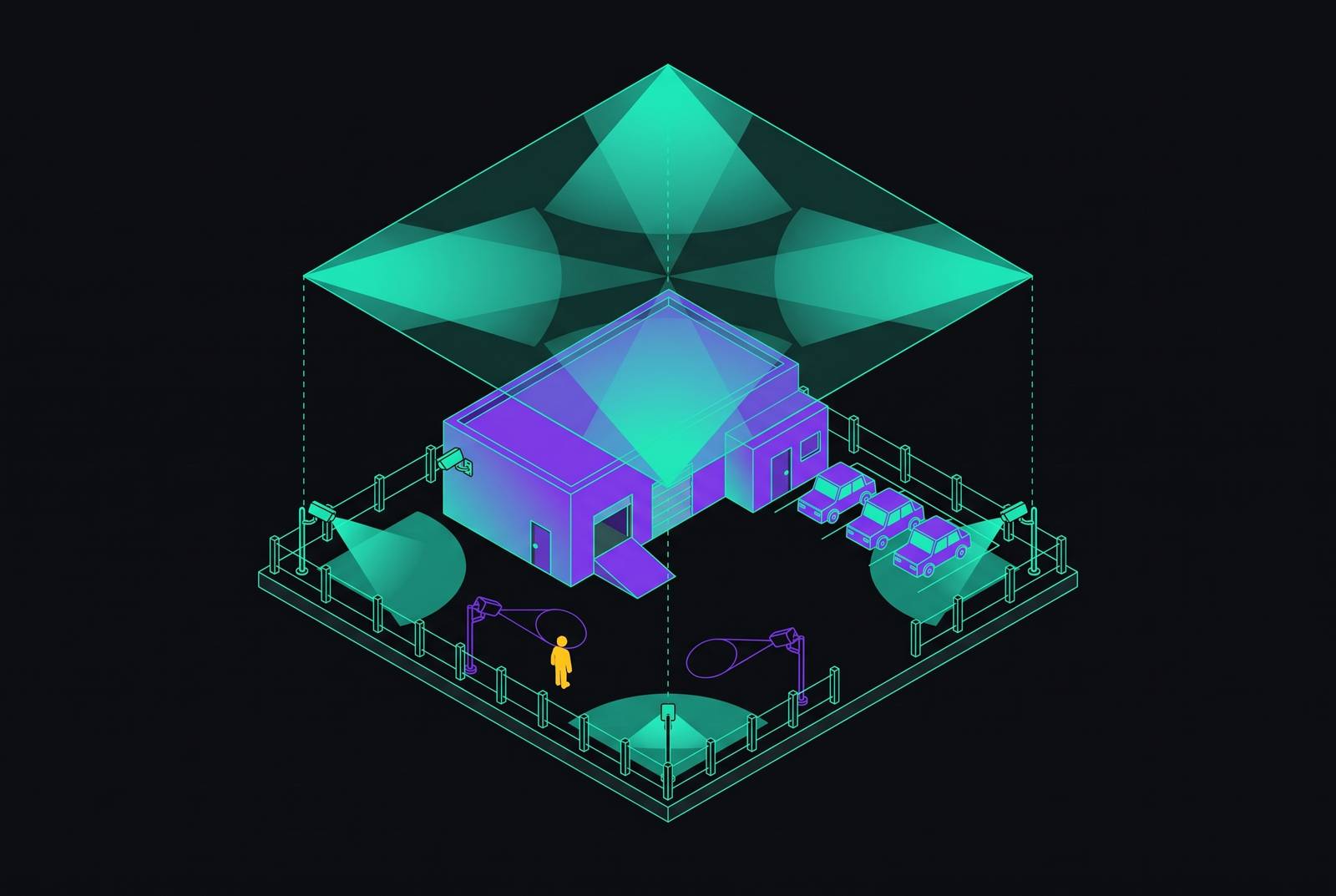
A security director preparing for a board review pulls up the coverage map for a large camera deployment. The site appears protected, with cameras positioned across its perimeter, approaches, and working areas. Every icon reinforces confidence in the investment. Yet the map does not show which cameras have alerts that people act on and which have activity that no one watches.
That is the map’s central blind spot. A suppressed camera can retain its place on the site plan, appear in quarterly reports, and pass an audit limited to counting devices. The apparent completeness of the map conceals the gap between equipment installed and protection delivered.
Why pixel-based motion detection produces an alarm queue no operator can trust
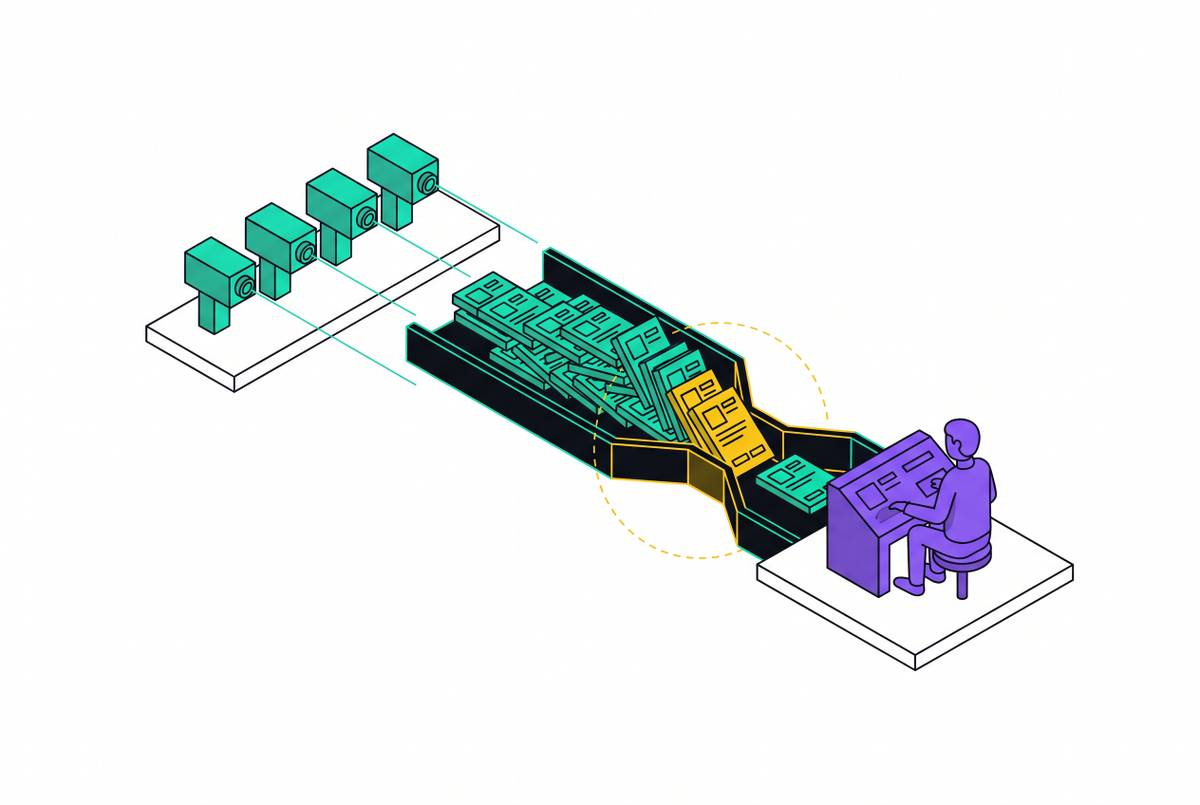
Legacy motion detection asks whether enough pixels changed between frames. Wind-blown foliage, headlights sweeping a parking lot, rain on a lens, and shadows shifting across a facade can all satisfy that condition. So can a person scaling a fence. The detector has no model of what caused the change, so it cannot distinguish an environmental disturbance from an intrusion on that basis.
Everyday outdoor conditions keep drawing an operator’s attention even when there is little reason to suspect a threat. These conditions are part of the scene the camera must monitor, making the resulting noise a detection problem that training cannot remove.
Muting stops a camera’s notifications from reaching that queue while allowing it to continue recording. It is an understandable response to a broken signal, but it leaves the signal broken. An operator treating every environmental activation as a serious event spends attention on the detector’s inability to distinguish causes. Suppression becomes attractive because it offers immediate relief where the detection layer offers none.
The attention collapse that turns alert volume into active harm
The harm begins before anyone changes a setting. Sustained, high-volume alerting with little useful information erodes the attention available for genuine threats. Operators see again and again that an alarm usually means there is nothing to act on. That experience teaches them to distrust the queue.
Alarm blindness is the operational result of that learning. The next alert may represent a real intrusion, but it arrives through the same channel and in the same form as the noise preceding it. Training cannot make every alert equally compelling indefinitely when daily experience teaches the opposite.
Turnover compounds this loss because site knowledge develops through continuity. A control room that repeatedly replaces operators loses familiarity with the ordinary activity against which an anomaly becomes recognizable. Retention is therefore a security concern. A large deployment with an untrusted queue can provide less effective protection than a smaller deployment whose alerts reliably direct attention to meaningful events.
Why muting noisy cameras is not a monitoring solution, and why the other workarounds also reduce coverage
Operators and administrators generally seek quiet through three changes, namely raising sensitivity thresholds, shrinking or eliminating detection zones, and muting the noisiest cameras. Each reduces the work entering the queue. None, by itself, teaches the detector to distinguish an intruder from an environmental trigger.
When a threshold is raised, activity that once triggered an alert may no longer do so. The camera remains operational, but its detection behavior changes. Shrinking a zone creates a different loss. A fence line, loading bay corner, or stairwell approach may still be in the image but outside the area that triggers alerts.
Muting is the most complete form of suppression. The camera records, but its notifications no longer summon attention to what it sees. Recording may preserve footage for later examination, yet that is not equivalent to monitoring an event while it unfolds. The reduction in false positives can therefore come at the cost of missed threats.
The map does not show that exchange. Its camera icon shows that hardware is in place but leaves out the current threshold, active zone, or notification state. This is a false assurance produced automatically by a design that was never built to represent suppression.
Why the coverage erosion stays invisible in every dashboard and review
Standard reports track camera uptime, alert volume, and dispatch counts. Those measures describe availability and activity, but they do not establish whether the system can detect the events it is meant to catch. A muted camera can show full uptime. A camera with a reduced detection zone can still appear to cover its entire field of view.
Low alert volume is particularly ambiguous because it can reflect either good discrimination or extensive suppression. Both produce a quieter dashboard. Without suppression states and detection quality, a quarterly review cannot reliably tell whether performance has improved or coverage has been lost. The reporting instrument lacks the information needed to make that judgment.
Response counts have a related limitation. When operators triage possible events without sufficient context, overreaction appears as response activity, while underreaction can disappear as a non-event. Alarm blindness can reduce the actions visible in reporting. An audit limited to camera counts and uptime logs can therefore approve the equipment while leaving its effective protection untested.
What verified response policy reveals about the real value of an unverified alarm
The Urban Institute and the ASU Center for Problem-Oriented Policing identify false activations as the overwhelming burden in police responses to burglar alarms. An alarm is not useful evidence merely because a detector produced it. Responders need a credible basis for treating it as a threat.
Verified response policies make that distinction explicit by requiring confirmation before a response under the policy’s terms. Adoption, however, is not dependable enough to make regulation the foundation of a monitoring design. Only a small fraction of U.S. law enforcement agencies have formally adopted verified response, and at least eleven that tried it reversed course. The need for verification exists even where the mandate does not.
The Electronic Security Association reports that cities with false alarm reduction plans, including fees and verification procedures, saw a clear drop in false alarms. Consequences change how alarms are handled. If the detection layer cannot produce an event that can be verified, the site lacks a credible alarm to send beyond its own control room.
What object classification and behavioral rules change about the alarm, before it reaches anyone
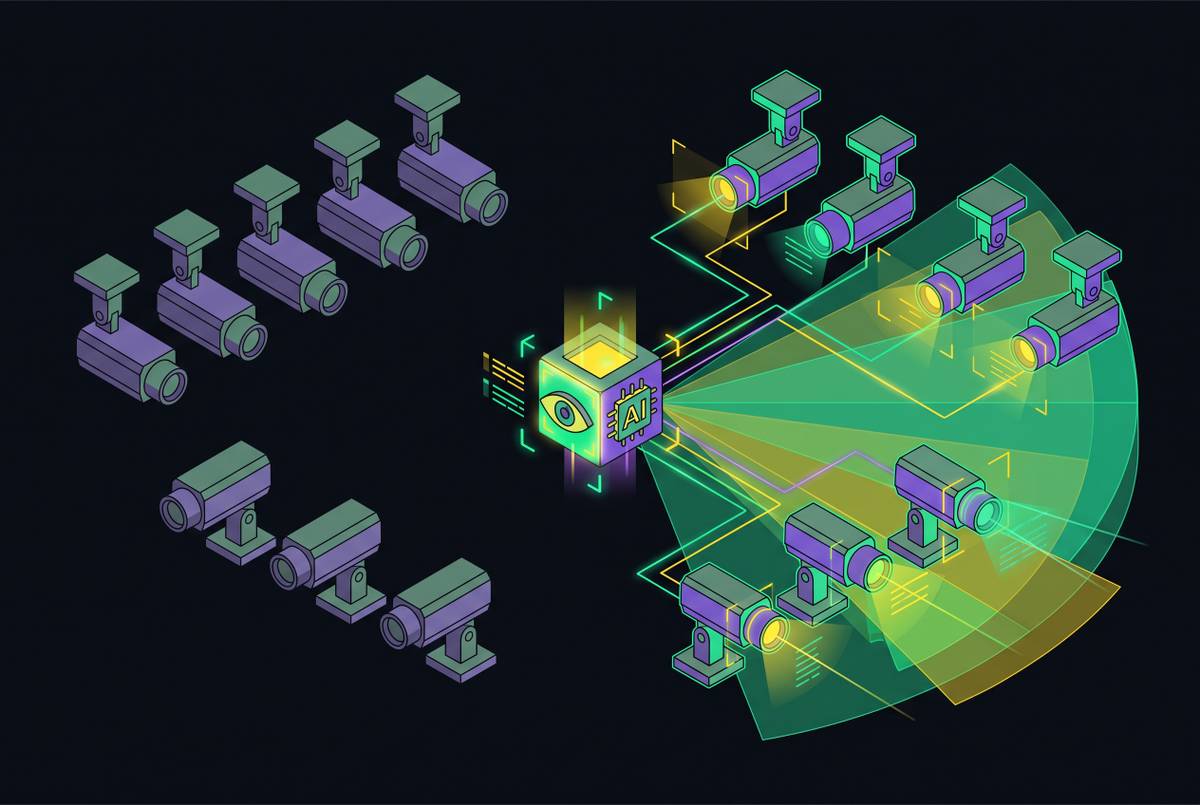
Computer vision changes the question from whether pixels moved to what moved and whether its behavior meets an alarm rule. Object classification labels a person, vehicle, animal, or noise artifact with a confidence score. Movement gains a usable description. A swaying tree no longer has to enter the queue as though it were a person approaching a fence.
Behavioral rules then narrow down which of the classified activities need attention. A tripwire can exclude a vehicle idling nearby from its triggers and activate when a person crosses a fence line in a specified direction. An intrusion zone can exclude movement in the corridor outside it from its triggers and activate on a breach.
The association describes analytics that distinguish people, vehicles, animals, loitering duration, and direction of travel as a way to separate important activity from nuisance notifications. A short video clip with a precise location tag and timestamp then supplies the context needed to assess the event without searching through cameras. Classification does not itself prove a threat, but meaningful detection and accessible evidence make verification possible without rebuilding the scene from an unexplained notification.
Where AI detection fails at night, in weather, and at range — and why that matters for the map
AI classification remains dependent on the footage it receives. Night scenes, low light, rain on a lens, motion blur, and IR-only feeds can degrade performance. Clean, well-lit benchmark footage does not show how well the system works under those conditions. A camera that classifies people reliably during the day may provide a different detection envelope after dark.
Range adds another limit that an icon cannot show. Visible-light classification can degrade as subjects become harder to distinguish, particularly in low light. Thermal cameras address darkness by detecting heat signatures rather than reflected light, supporting classification of people, vehicles, and animals. IR-assisted detection is another way to help cameras see, but the technology behind each icon must suit the conditions where it works.
The practical response is to match detection technology to the site and evaluate it on actual footage. Thermal detection works well for outdoor perimeters and yards, while IR-augmented visible-light detection can work in covered areas. Tests must include the conditions the system works in, as well as examples that make it look good. Otherwise, an AI-enhanced map can repeat the muted-camera failure through a different mechanism, showing coverage where detection quietly degrades at night, in rain, or at range.
How agentic AI triage changes what reaches a human operator — and what does not
Object classification improves the detection layer, while agentic AI changes the triage layer. The agent evaluates activity across the full camera view, resolves routine events it can classify with confidence, and escalates ambiguous or high-stakes events. Better detection reduces irrelevant activations. Agent-first triage also reduces the routine review work that would otherwise remain after detection improves.
In a traditional review model, each detected event becomes a clip for a human to assess. In an agent-first model, routine activity such as a cashier, a delivery, or a shadow can be resolved before it enters the human queue. The distinction is not simply faster clip review. It changes which events consume human attention in the first place.
That architectural difference is essential when a threat is waiting behind unverified alerts. Against a 90-second standard, a real threat at position 20 in a queue represents deferred attention. Human judgment remains necessary for ambiguity, high-stakes decisions, and unfamiliar edge cases. Reserving attention for those events addresses alert fatigue without using notification suppression as a substitute for discrimination.
How to audit a coverage map for suppression, detection limits, and invisible gaps
A team auditing coverage should begin with suppression state. Detection zone configurations, sensitivity thresholds, time schedules, and mute states should be inventoried with the hardware count. Each setting defines what can reach an operator. Recording that state lets reviewers compare a camera’s view with its monitored area.
What each camera actually detects under operating conditions must be established next. A review of site footage at night, in rain, and at the camera’s working range reveals limits that a field-of-view drawing cannot express. Vendor benchmarks cannot answer that site-specific question. The evaluation must establish whether the intended category of event remains detectable where and when protection is required.
Studying the alert queue and talking with operators give evidence that works together. A low alert rate needs an explanation grounded in detection quality. Operators describing a camera as “too noisy to watch” or reporting that a zone has been turned off identify coverage losses that uptime reports cannot reveal. These findings also support liability management because false negatives can become compliance gaps, audit findings, and fines.
The standard is that every camera on the map should be able to produce a verified, contextualized alert for the events it is positioned to detect. If it cannot, it serves only as a recording device. The map is wrong because coverage has been defined as hardware presence, and changing that standard to verified detection capability gives the audit a practical gap to close.