Why Operator Capacity Is the Hidden Ceiling in High-Volume Security Monitoring
AI filtering lets operators focus on genuine threats instead of alert fatigue.
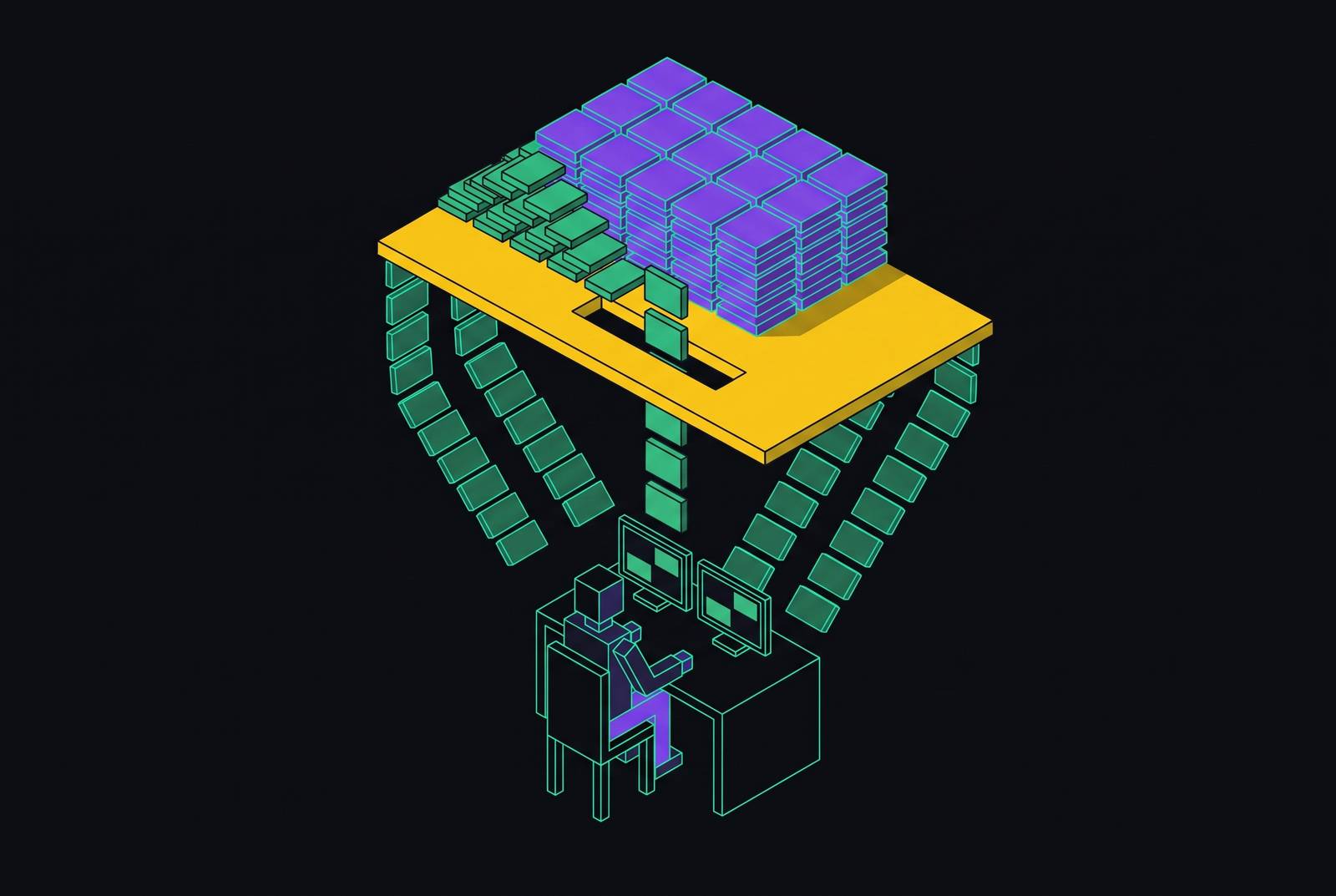
Alarm response time in traditional video monitoring centers starts to fail when more raw alerts arrive than people can pay attention to and review. Genuine threats wait behind nuisance alarms while fatigue slows verification. More staff can distribute the workload, but cannot remove the physiological limit. The structural solution is to filter alarms before they enter the human queue, reserving operators for evidence review and response decisions.
Human attention has a hard physiological ceiling that no monitoring center can staff around
Traditional monitoring asks operators to stay alert for a full watch period, often while watching dozens of feeds. Human physiology cannot reliably meet that demand. The UK’s National Protective Security Authority describes the vigilance decrement, a decline in sustained attention during monotonous observation that begins after roughly 20 to 30 minutes of continuous monitoring. Training does not remove it.
A peer-reviewed study published in Applied Ergonomics found that 42 working video monitoring operators, all experienced professionals, detected only about half of target behaviors during a 90-minute video review task, with a high rate of false alarms. Night shifts, simultaneous feeds, and the consequences of a missed threat add pressure to an already demanding task. Additional staff can divide the work, but the architecture still depends on sustained attention that every operator has a limited ability to provide.
Why do monitoring centers fall behind on alerts during high-volume periods?
Motion detection and simple rules trigger alerts for shadows, weather, and delivery vehicles, so this environmental noise enters the same queue as real threats. Operators keep checking events that need no response. Their expectations adjust to what the system delivers.
When most alerts turn out to be harmless, operators start to treat new alarms as less urgent. That adaptation is understandable, but it weakens the monitoring function. Real threats become harder to pick out from the background, and more alarms wait as review slows down. Any detection layer that passes nuisance events directly to humans creates these conditions, even in well-configured centers.
The resulting workload also accelerates burnout and turnover. As staff leave, the center has even less capacity to handle the workload that drove them out. Security leadership is left with a system in which this behavioral loop has a measurable operational consequence, because every unreviewed alarm adds work ahead of the next real threat.
The queue math and how fatigue delays response when a threat is real
A genuine threat does not receive faster attention simply because it is genuine. Until someone verifies it, it remains another unreviewed alarm. Its waiting time depends on the work ahead of it and the capacity available to complete that work. When alarms arrive faster than operators can assess them, the backlog grows.
This separates internal monitoring delay from police response time. An alarm waiting 20-plus minutes in an overloaded review queue is waiting for operator attention. Verification also determines the evidence available for escalation and the priority the event can receive. Speed of internal review therefore affects more than the time at which a call begins.
Fragmented tools lengthen that review further. An operator who must move manually between VMS, CAD, and SIEM platforms has to assemble context before deciding what happened. This “swivel-chair” work consumes capacity on every investigation, including nuisance alerts. Adding operators without changing those tasks leaves the same verification burden attached to each alarm, and a surge can still overwhelm the process.
What monitoring standards require versus what fatigued operators can actually deliver
UL 827 sets a minimum threshold for central-station acknowledgment of an alarm signal. Acknowledging receipt does not establish how quickly or accurately an operator understands what the alarm means. A center can therefore meet a signal-handling requirement while the evidence needed for a useful response remains unassembled.
ANSI/TMA AVS-01-2024 sets out a more demanding model through a five-tier alarm classification framework, from a canceled alarm at Level 0 to confirmed threat to life at Level 4. Higher classifications require richer evidence. Under queue pressure, a fatigued operator working across fragmented systems may struggle to assemble that evidence while the threat is still developing.
Faster transmission helps only after there is something useful to transmit. The ASAP-to-PSAP digital dispatch path bypasses voice handoff, allowing the full process to take seconds rather than several minutes through traditional methods. It does not recover time already lost before verification. The distinction is between acknowledging an alarm, establishing its significance, and routing an actionable account of it.
Why offshoring and alarm muting work around the limit rather than raise it
Offshoring changes the cost and location of review. For video events, operators still have to watch footage, spot patterns, check what is visible, and decide whether to escalate. The vigilance decrement travels with that work. Lower labor costs may make additional staffing affordable, but they do not change the noise presented to each operator.
Muting noisy cameras takes a different route. It shortens the queue by removing alerts rather than improving assessment, trading coverage for quiet. A genuine threat at a muted camera can no longer enter the alert workflow.
Overage fees make peak-volume costs visible without increasing the rate at which operators can review alarms. These approaches deal with different business pressures, and they can be assessed without judging what a particular provider intends. They share a limit in how they are built, because raw alarm review still depends on how long people can keep doing it. A structural fix must change what reaches the operator, rather than only who reviews it or how the work is priced.
What AI agents can do that additional operators cannot, filtering before the queue
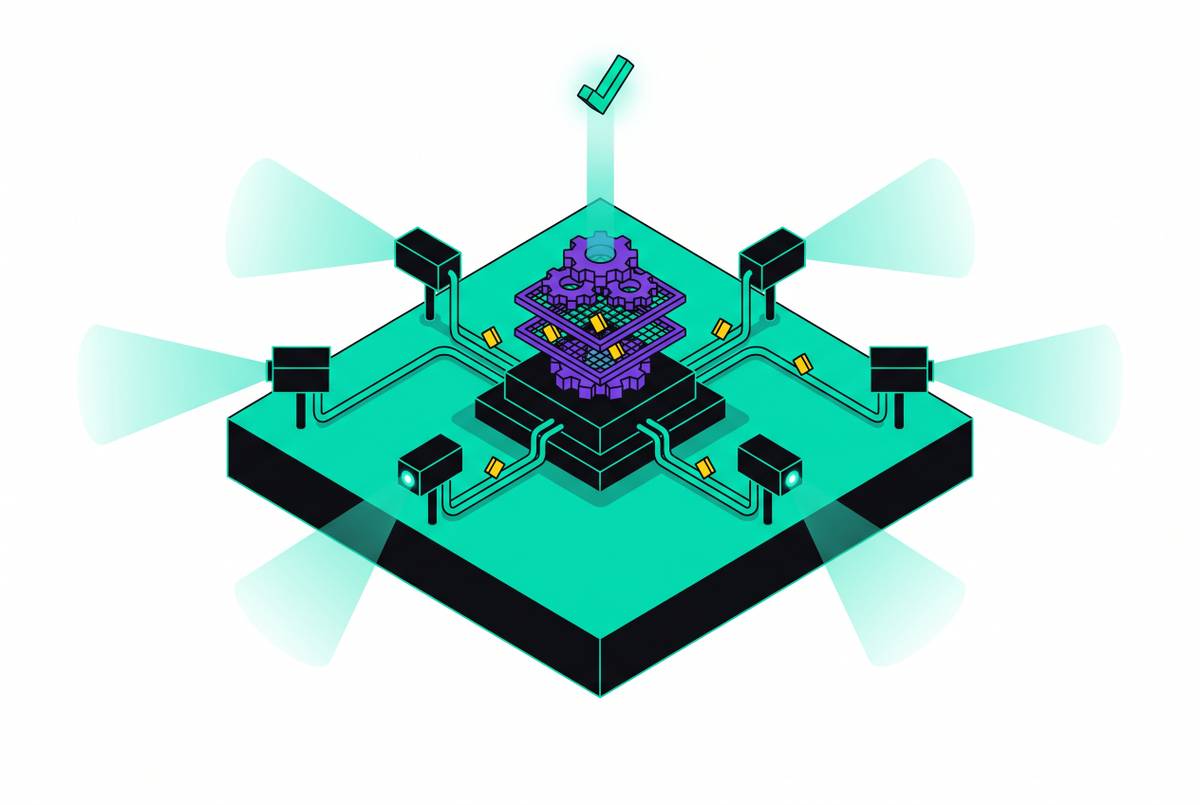
An AI-first architecture places investigation before the human queue. AI agents review alarms as they come in, dismiss nuisance events, and escalate those that need human judgment.
Classification tools can identify motion or objects without establishing whether the activity is authorized or threatening. Reasoning systems can bring together what is in a scene, the rules for the site, and patterns across events and time windows. Vision language models enable descriptions of what is happening alongside pixel-level flags. That helps filter out animals and weather events before operators have to spend time on them.
A vehicle circling a perimeter once may appear unremarkable, while the same vehicle returning to the same fence line on consecutive evenings may warrant review. Shift-based operators can each see an isolated event without recognizing the pattern. An agentic workflow can retain that context across the separate observations.
The architecture also moves correlation ahead of escalation. Bringing together VMS information, sensor data, and site context leaves less for the operator to piece together by hand. This makes human attention limits less decisive by removing repetitive noise review from the role.
Why the human operator remains essential in an AI-filtered workflow
Calling a subscriber, contacting the PSAP, or dispatching a response has legal, relational, and contextual consequences. An operator reviewing AI-derived evidence is better positioned to make that decision than one starting with a raw motion alert. The division of labor matches volume processing to automation and consequential judgment to people.
Research from Luleå University of Technology and Dongguan University of Technology identifies agentic reliability risks including goal misalignment, flawed planning, conflicts between agents, and breakdowns in human–AI collaboration. Those risks support human authorization at escalation. They do not require people to repeat every preliminary filtering task.
The operator’s work consequently becomes more demanding in judgment but less dependent on continuous visual vigilance. The AI layer supplies correlated evidence, while the human evaluates the event and authorizes the response. In the AVS-01 framework, that evidence supports the classification needed for human-authorized escalation, a defining part of the architecture.
How site-specific context determines whether AI filtering reduces noise
An AI agent cannot distinguish authorized activity from a threat without knowing what authorization looks like at that site. An employee working late and an intruder may both appear as a person after hours, so distinguishing them requires context. Operating schedules, authorized personnel, expected vehicle patterns, and after-hours protocols provide the baseline for a meaningful first-pass assessment.
Without that baseline, AI can reproduce the original false-positive problem in a different form. Operators still have to resolve ambiguous alerts, and the promised capacity gain disappears into manual review. Site context must therefore shape both the decision to escalate and the evidence sent with it. A generic notification cannot supply the evidence required for Level 3 or Level 4 classification.
Procurement teams should require a demonstration of the exact evidence package moving from camera frame to monitoring center to PSAP. Abstract descriptions of AI capabilities are insufficient for that test. Because ASAP-to-PSAP adoption and AVS-01 handling are not uniform, the monitoring partner must also navigate differences in receiving jurisdictions. UL Solutions’ ANSI/TMA AVS-01 Alarm Validation Scoring Certification gives buyers a baseline for judging the quality of a monitoring center’s evidence, so they have more to go on than an AI label alone.
How the capacity limit plays out across commercial, multifamily, and industrial sites
After-hours theft, trespassing, and vehicle crime can occur during predictable windows, so a backlog at 2 a.m. can delay review precisely when intervention is needed. Multi-site retail portfolios intensify the pressure when alarm volume grows with location count but staffing does not grow proportionally. The incident can also lead to insurance and legal risks and harm the business’s reputation.
Multifamily properties add a direct trust obligation. Residents increasingly expect security as a baseline amenity, while frequent false alarms and slow verified responses undermine confidence and create liability exposure for the property operator. When coverage depends entirely on guards, it is also at risk when staff leave. AI-filtered remote monitoring can do work that used to need multiple roving guards, so coverage no longer depends entirely on staffing those roles.
Industrial and unmanned sites present the opposite-looking workload with the same underlying constraint. Long quiet periods and high camera-to-event ratios make sustained attention difficult, even when the number of genuine incidents is low. A brief threat must stand out against prolonged inactivity. With AI detection and site-specific protocols, a remote operator can review events across a portfolio without continuously watching each location.
What a monitoring model built above the limit looks like in practice
The practical model is defined by sequence. AI reviews alarms first, applies site context, and assembles evidence before a human makes the escalation decision. Its performance measure is the time from alarm receipt to verified human review. Signal acknowledgment alone does not establish that the threat has received meaningful attention.
Universal review is an architectural requirement in this model. Every alarm must pass through assessment rather than disappear through camera muting, and the AI layer must support that volume economically and operationally. The first-pass decision must take account of site schedules, authorized activity, and after-hours protocols. Otherwise, automation merely moves the same unresolved questions into another queue.
A 90-second verified escalation and a 20-plus-minute queue wait represent different response conditions. The shorter interval is useful because a human receives evidence while there is still an opportunity to act. It is not established merely by adding an AI component.
For buyers, the practical test is what reaches a human operator, how quickly it arrives, and what that operator does with it. A monitoring partner should demonstrate a specific time from alarm receipt to verified human review, the evidence package sent to the PSAP, and a protocol for each site type. Those demonstrations distinguish a structural upgrade from a relabeled workflow. The decisive change is that human attention is spent on response decisions rather than exhausted before a real threat reaches review.
Sources
- The Evolution of the Station Command Center: 2026 Trend Analysis - Activu Corporation
- From Failure Modes to Reliability Awareness in Generative and Agentic AI System
- Towards Agentic Investigation of Security Alerts
- AI-Driven Security Alert Screening and Alert Fatigue Mitigation in Security Operations Centers: A Survey