When the Queue Is the Culprit Not the Operator the Structural Root Cause Legacy Monitoring Ignores
Unclassified detections clog alarm queues, so classify first.
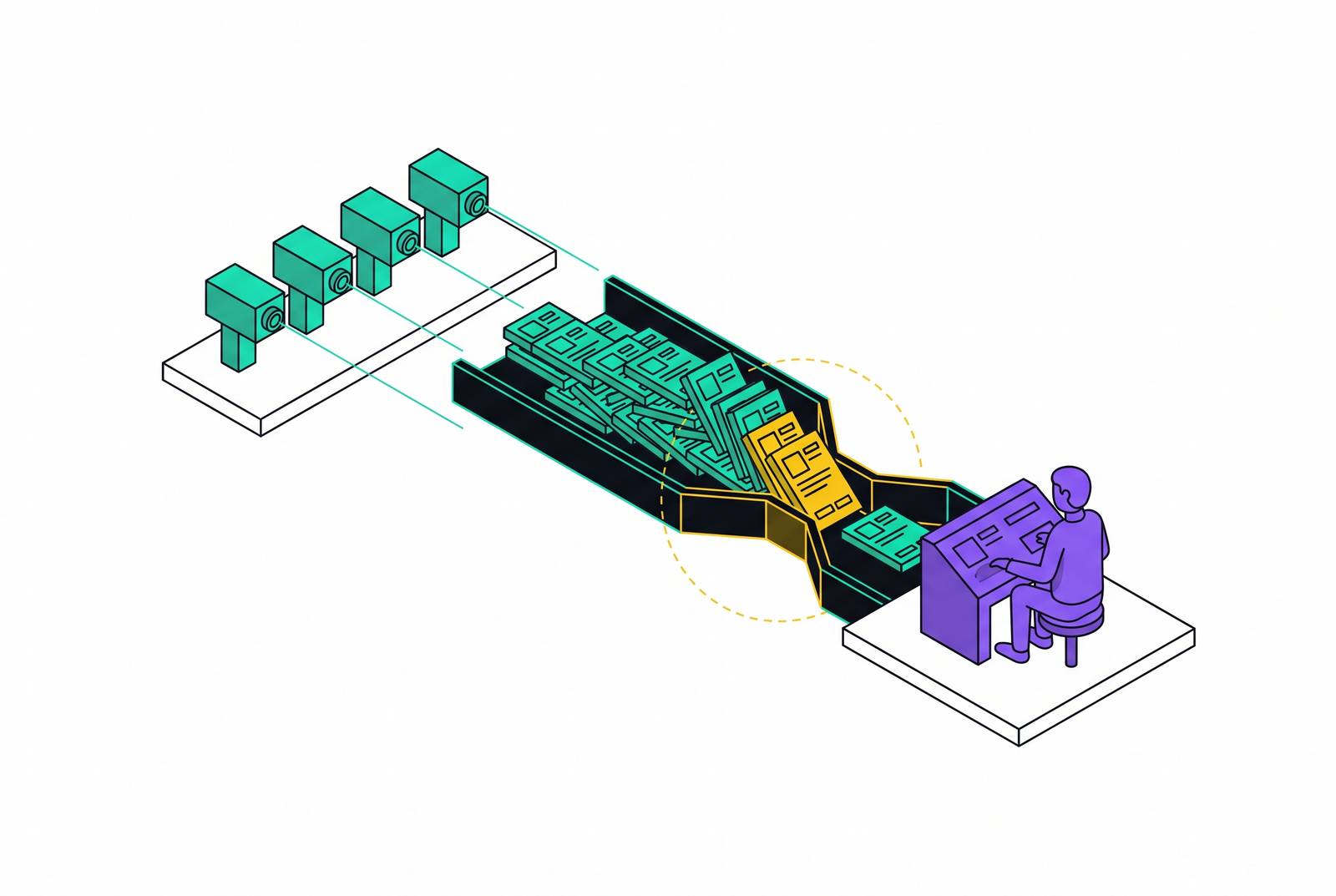
Alarm response time starts to fail in traditional video monitoring centers when raw detections enter the alarm queue before anyone decides whether they need action. Operators must clear non-events while real threats wait behind them. Fixing that failure requires classification before the alert.
Why the alarm queue in legacy monitoring is a structural failure, not a staffing problem
The alarm queue is a holding place for events awaiting human review and response. Its original purpose was reasonable. A door contact or glass-break sensor produced a relatively sparse event with implicit context, so reviewing each activation was a workable model. The queue organized work that already had some claim on an operator’s attention.
Camera-based motion and object detection expanded the event surface without preserving that assumption. A change in pixel value or a detected silhouette could generate an entry without explaining why the activity warranted intervention. The queue inherited a different kind of work. Instead of organizing a limited set of meaningful alarms, it became the place where operators had to discover whether detections meant anything at all.
Traditional monitoring models can produce false alarm rates as high as 98% of activations representing no real incident. It is a queue filled with work required to establish that no response is needed. The structural failure lies in admitting that work without prior classification.
How the detect-and-notify model puts classification work on the wrong side of the alert
Legacy detect-and-notify systems send an alert when motion or object detection picks up a change that meets the rules for an alert. The operator then receives a clip or live feed and assesses the event’s need for action. Human review adds the context that is missing from the alert.
That missing context is the central decision. A detected person could be someone entering a restricted zone, a delivery driver or a cashier. A motion trigger could be a shadow. Recognizing a change in the scene does not establish whether it is a security event, yet each unclassified entry demands attention before its urgency can be judged.
Classification consumes the same operator time that response requires, while the next detection is already demanding review. The operator cannot recover that time by deciding an event is harmless because reaching that decision was the work.
A faster reviewer can reduce the time spent on an individual entry. That does not change the order of operations. The system still asks a human to justify an alert after issuing it, rather than establishing a reason for the alert first.
Why security monitoring centers fall behind on alerts during high-volume periods
Alert volume in this model scales with camera count and scene activity. Operators do not control that incoming volume. Once it grows beyond what operators can classify, real alarms wait behind detections that may need no action.
Adding staff increases the capacity available to review entries, but it leaves the composition of those entries unchanged. Each operator must still spend attention to establish that an event is noise. Skipping that review could mean missing a real event. More seats consequently increase the cost of processing non-events without improving the ratio of noise to useful signal.
Lower-cost or offshore seats change the economics of that work. Operators still have the same classification work to do, and paying less for that work does not by itself make it more accurate or speed up the response. Changes in staffing meet the demand that the queue creates without changing what creates that demand.
Other workarounds make the trade-off more visible. Muting noisy cameras cuts coverage to get fewer alerts, while overage fees make the customer pay for the excess volume without cutting its cost. Neither moves classification ahead of notification. When activity rises again, the same architecture generates the same kind of backlog, even if the center has changed who pays for it or who reviews it.
What alarm fatigue does to operator judgment as the queue fills
A queue dominated by non-actionable alerts changes more than waiting time. Repeated false signals teach operators to expect another non-event, so they respond less readily when a real alert arrives. The signal environment teaches the reviewer that most interruptions do not require action.
The Joint Commission identified reducing harm associated with clinical alarm systems as a 2014 National Patient Safety Goal. That recognition comes from a different monitoring context, but it establishes that alarm-related harm is not merely a question of individual diligence. An operator reviewing a long run of false signals is not approaching the next clip with the same expectations as an operator reviewing only a few.
The consequence is a second failure beyond delay. A real intrusion deep in a noisy queue reaches someone whose attention has narrowed and whose threshold for escalation may have shifted. Marginal signals become easier to discount. Queue depth therefore affects both when an event is reviewed and the quality of the attention available to review it.
Experienced operators may learn to triage faster, but faster triage under sustained noise compresses attention. Training cannot reverse the sequencing decision that put unclassified detections in front of them. Treating fatigue as an operator defect misidentifies the cause and leaves the source of the pressure intact.
How law enforcement response policies have already responded to queue-driven false alarm rates
Municipalities and law enforcement agencies have responded to persistent false alarms through verification requirements, fines and changes in dispatch priority. Alarm credibility now affects the response pathway. A notification is not necessarily sufficient grounds for the same treatment as evidence of a crime in progress.
These policies distinguish a detection from an event supported by evidence. For a site relying on unverified alarms, that distinction can slow emergency response when a threat is genuine. The delay does not end when an operator finally reaches the event.
False alarm fees also increase operating costs, but the more consequential issue is the loss of response priority. A monitoring service exists to accelerate intervention, yet repeated unsupported notifications can undermine that purpose outside its own control room. How fast the center reviews alerts therefore tells only part of the story of how well it works. The evidence that responders receive also affects what they do next.
False alarm reduction plans that combine fees and verification procedures set terms for when an alarm can call on public resources. Their logic is to require stronger grounds for escalation, reinforcing the need for classification before an alarm proceeds through the response chain.
What a structurally different triage model has to do before an alert is issued
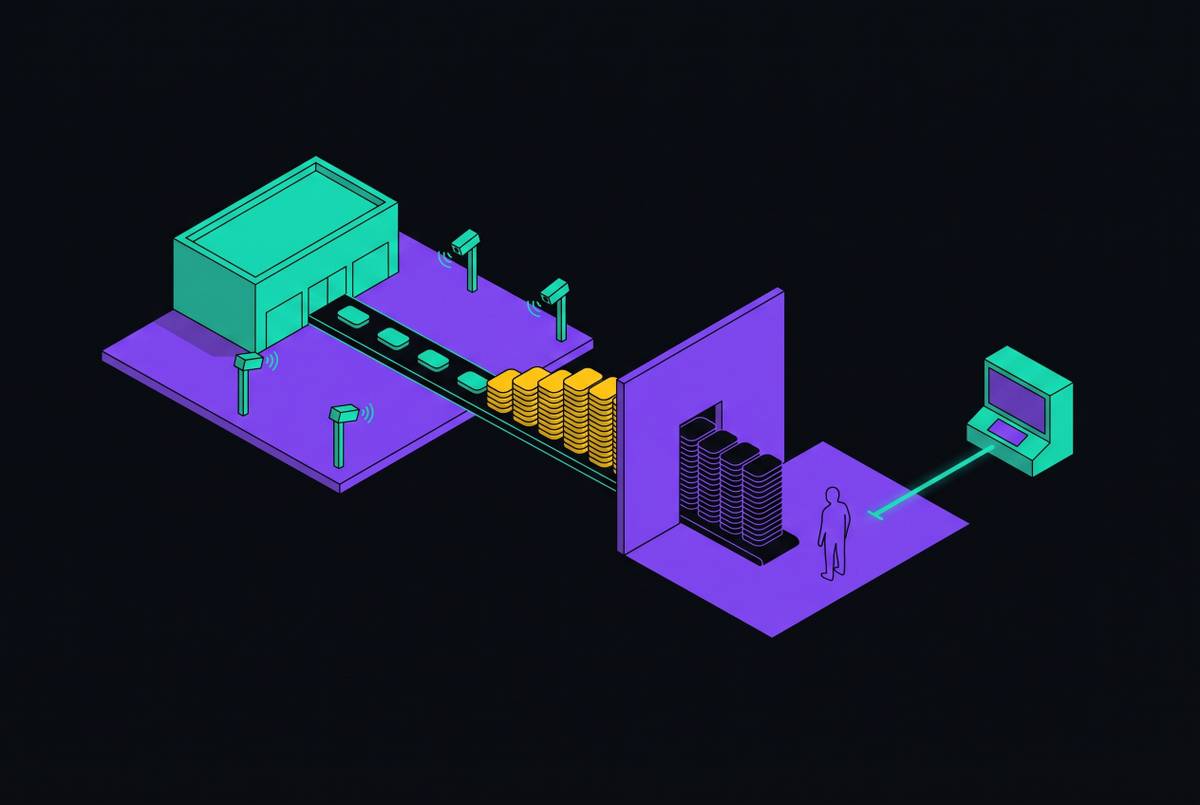
A different architecture begins by assessing context before an event enters the operator queue. Its task is not merely to reduce the number of notifications. It must decide whether the detected activity needs a notification. That moves the classification decision to the point where it can prevent unnecessary review rather than consume the attention reserved for response.
Filtering and reasoning perform different functions here. Sensitivity thresholds, zone masking and time-of-day rules can reduce volume, but they do not by themselves explain an event. They may remove genuine signals with nuisance detections. Contextual reasoning instead considers whether a person is in a zone they should not occupy, whether the timing is anomalous and whether the behavior is consistent with a threat.
Verification then turns a raw detection into a candidate for escalation. The Outlook describes combined audio and video verification as the gold standard for alarm monitoring. Audio covers the full space and can detect activity before it can be confirmed on video, while video gives emergency responders the confirmation they value. The report separately attributes near-elimination of weather- and animal-related false alarms to AI-powered video analytics, rather than to the audio-and-video combination itself.
Operators review events that the reasoning layer has flagged as unclear or high-stakes. Their role is defined by the need for judgment. It is not defined by how much raw volume the system can place in front of them.
Why AI-native triage has to prove itself on the footage conditions that broke the legacy queue
Moving classification upstream is useful only if it works on the footage that generated the noise. Night and IR footage, weather, occlusion, low-light blur and dynamic backgrounds are central operating conditions. Clean demonstrations cannot establish that capability. A model that succeeds on clear images may still misclassify the activity that overwhelms a real monitoring queue.
Controlled benchmarks can overstate production performance because scripted events do not reproduce the full range of environmental triggers. Foliage moved by wind, moving shadows and partial occlusion by vehicle mirrors give the model a different kind of activity to classify. These conditions are particularly relevant to outdoor and logistics deployments. Testing only clean examples leaves most of what causes nuisance alerts untested.
Configuration remains part of that problem. Wrong sensitivity settings and sensor placement are known causes of monitoring failure, so adding an AI layer does not by itself fix misconfigured zones or poorly placed cameras. The model inherits the available view. Its reasoning must be assessed against that view.
The practical evaluation should therefore focus on false positives under the site’s night, IR, weather and high-traffic conditions. The wrong model can do worse, producing AI-generated false positives in place of motion-trigger noise. A trustworthy division of labor lets agents resolve activity they can classify reliably and directs genuine uncertainty to operators.
What operators and security buyers should expect from a monitoring model that claims to have fixed the queue
A claim to have fixed the queue should be testable through operational outcomes. Muted cameras and raised detection thresholds can lower alert counts without improving understanding. Fewer notifications are not sufficient proof. The service must show that it has cut needless review while keeping coverage and finding activity that calls for action.
For operators and security buyers, the first evaluative question is where classification happens. If an unclassified alert still enters the queue and a person must decide whether it belongs there, the structure remains unchanged. The next question concerns what reaches that person. A meaningful answer names event categories such as ambiguity, high stakes or confirmed activity in a restricted zone.
Those definitions need to be backed by evidence from the site’s difficult conditions. Night and IR performance, weather robustness and behavior during high-traffic periods reveal whether the reasoning layer addresses the original sources of noise. Workarounds also deserve scrutiny. Muted cameras, overage billing or offshore seats used as a cost lever indicate that the service may still be managing the expense of raw volume.
An AI-native model that pairs agentic reasoning with trained operators can pass this test when agents handle routine activity and people take the cases that need judgment. The queue then holds assessed candidates for response. Its purpose returns to organizing consequential work. Fixing the queue means changing what enters it and when, rather than asking a different operator to clear it after it fills.