AI Monitoring Agent Scalability During Peak Alarm Events
AI agents process concurrent alarms instantly instead of queuing them behind human attention limits.
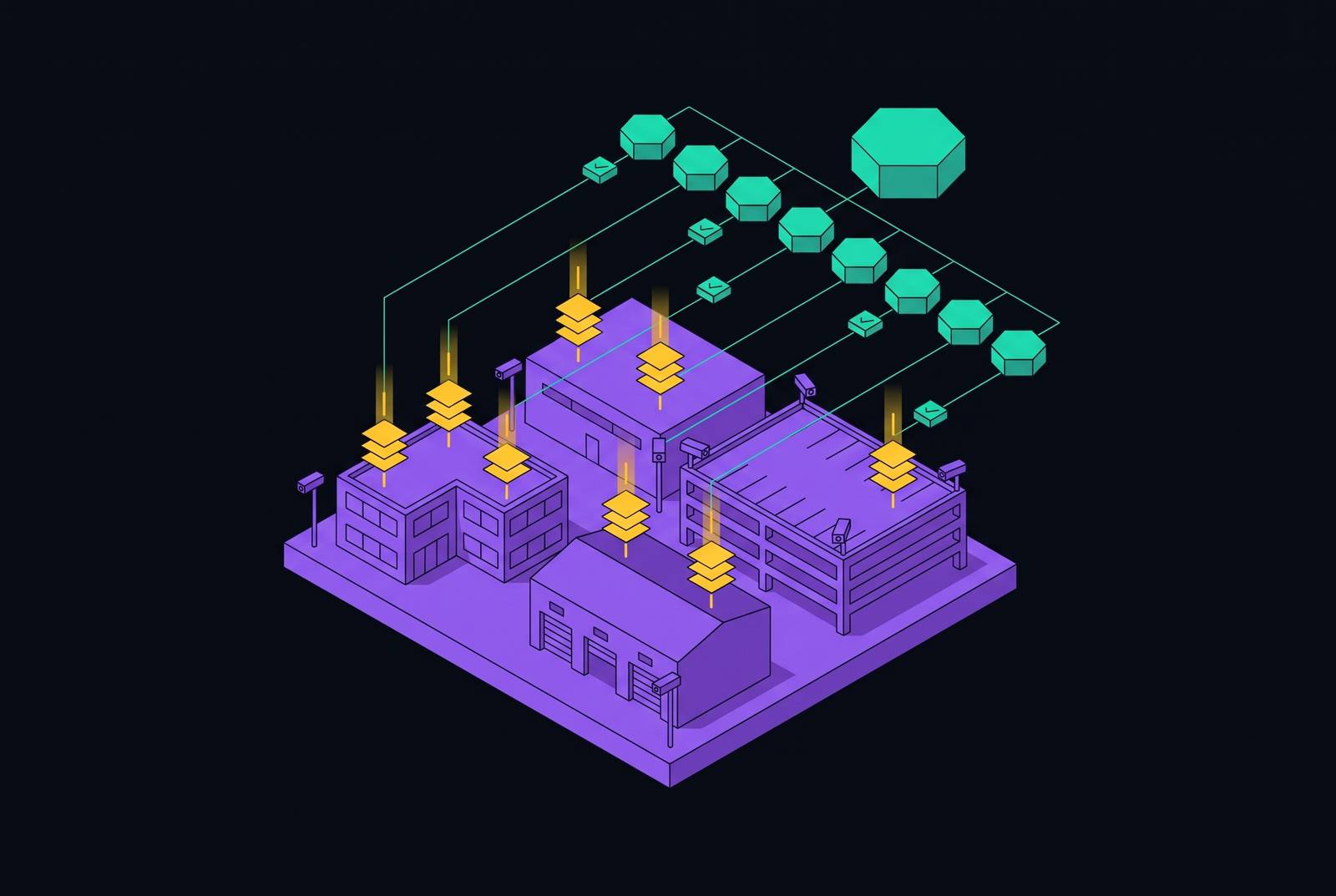
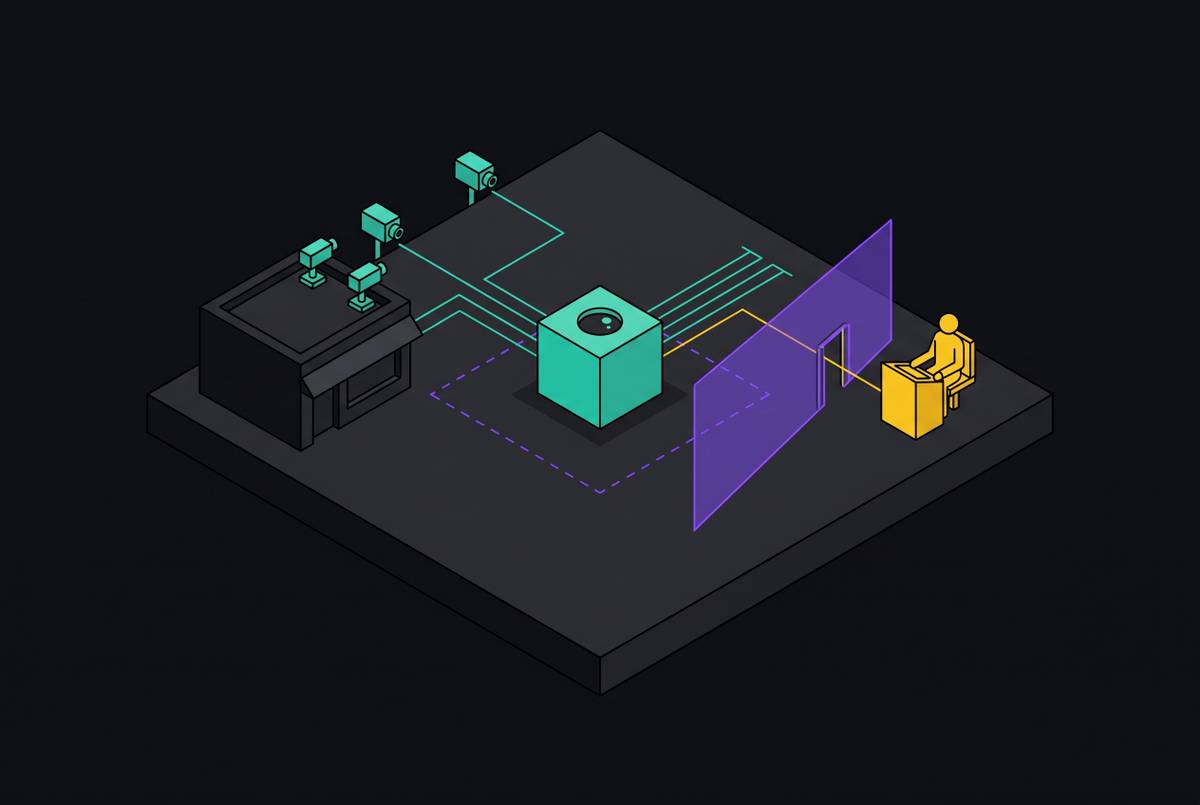
AI triage plus human response for commercial video surveillance uses AI agents to review alarms in parallel, filter routine activity, and send context-rich, verified incidents to live operators for response decisions. The defining advantage is peak-load performance. During an alarm surge, parallel review removes the serial screening bottleneck so real threats do not have to wait behind unrelated signals.
Why human operators hit a hard ceiling when alarm volume spikes
An honest answer to how long an operator can watch a wall of monitors is that sustained attention has limits. Yet the legacy model still relies on people to watch more and more screens while they check incoming alarms. The constraint is physiological before it is organizational, because knowledge of a site does not give an operator the capacity to examine several incidents simultaneously.
Staffing can distribute work, but it cannot remove that constraint. Each operator still reviews one alarm at a time. Training can help people make better judgments, and shift rotation can help them stay less tired, but they still have to review alarms one at a time. Adding screens increases the field to watch without increasing the attention available to watch it. Adding guards expands the pool of reviewers, but it does not change how each review proceeds.
At peak volume, that arrangement encounters a burst of work. Weather, shift changes, and maintenance windows can generate AC loss, battery faults, and communication troubles across legacy panels. Pixel-based motion detection adds alerts from shadows, animals, and weather that people also have to review. Those signals compete for the same finite attention. The structural failure begins when arrivals exceed the rate at which operators can distinguish routine events from incidents requiring action.
How the false-alarm flood turns a physiological limit into a queue crisis
A false alarm consumes more than review time. It occupies a place ahead of another event. When enough unrelated signals arrive at once, a real threat has to wait behind activity that should never have needed a person to review it. Peak volume therefore changes the cost of false alarms from wasted effort to delayed access to the operator who can authorize a response.
With rule-based motion detection, that problem keeps coming back because the same trigger may be just as likely to fire each time. A forklift crossing a zone can produce the same signal as a genuine intruder, even after hundreds of routine crossings during a shift. Without learning or contextual discrimination, the next crossing starts another review. Alert fatigue then compounds the strain on operators when they mute or ignore notifications. The system continues generating traffic while the human screening layer becomes less dependable.
The queue that builds up is especially hard to handle during after-hours activity, weather events, and shift boundaries, when routine signals can hide real threats. Simply adding analytics to an existing video management system does not necessarily remove it. An analytical engine grafted onto a legacy pipeline can inherit its latency and data silos, leaving useful findings trapped behind the same processing constraints. The relevant distinction is whether each alarm can be assessed without waiting for another review to finish.
What AI agents actually do differently by reasoning in parallel
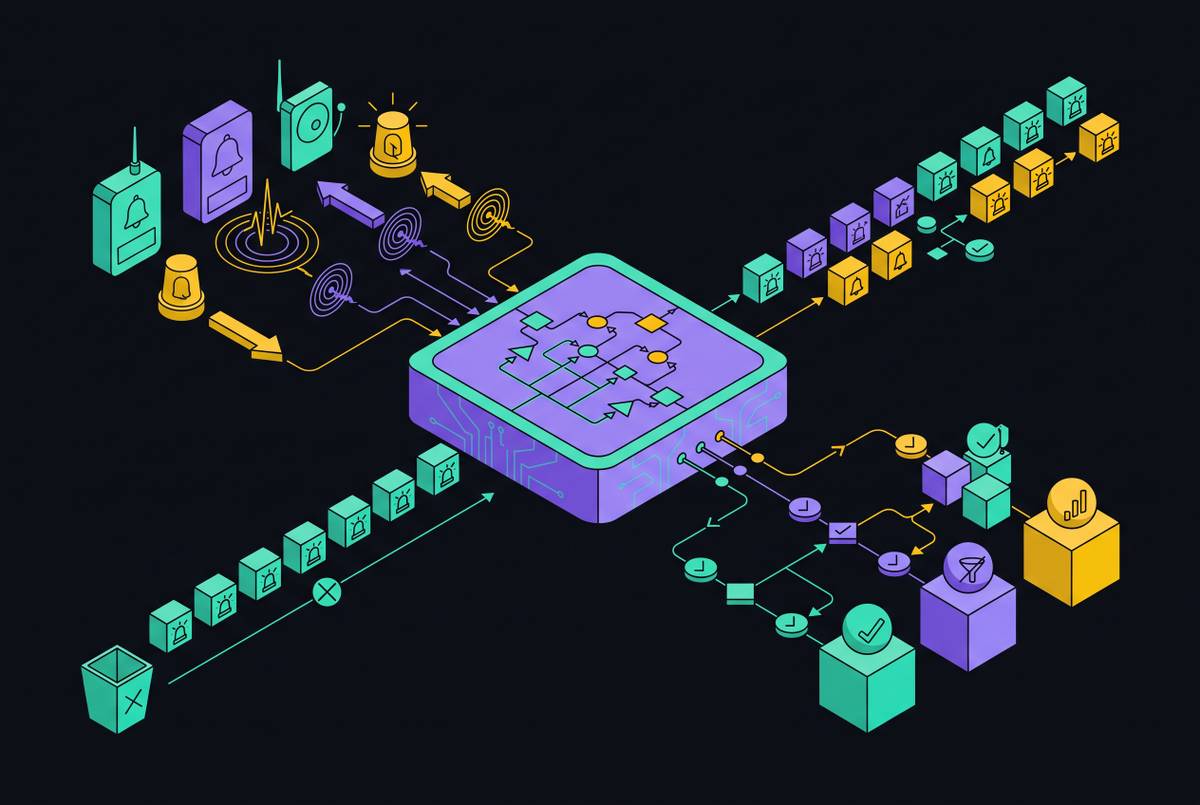
Parallel AI review separates an alarm’s assessment from the attention already committed to other alarms. In this architecture, every alarm enters review when it fires rather than waiting for a human reviewer to become available. Simultaneous events can be evaluated simultaneously. The change is not merely faster work within the old sequence, but the removal of serial human screening as the intake bottleneck.
The agent’s task also extends beyond identifying motion. It classifies the event, assesses site context, assigns confidence, and produces a situation model before escalating to an operator. Non-threatening events are filtered at that initial layer. The human receives an account of what is happening and why it warrants attention, rather than a timestamp and a clip that still require the entire investigation.
The Parks Associates / 3dEYE white paper from October 2025 states that cloud platforms can convert large volumes of raw alerts into as few as 4–6 actionable alerts per camera daily. An agent can also initiate preliminary steps, including sounding a deterrent or repositioning a PTZ camera, while preparing the escalation. Its report can include real-time video, access records, actions already taken, and ranked response options.
Why peak events are where the structural gap becomes impossible to ignore
On a quiet night, a well-staffed legacy center can clear incoming alarms quickly enough that its queue stays manageable. From the outside, an AI-augmented center may look much the same. Both can bring a genuine incident to an operator while the response window remains open. How well either center works when few alarms come in says little about what happens when many cameras send alarms in the same minute.
A storm makes the comparison more revealing. Dozens of cameras can trigger at once while operators are still reviewing alarms one at a time. A shift-change window can produce the same mismatch through routine activity. Once arrivals outpace completed reviews, the backlog grows and response times degrade nonlinearly. A serious alarm’s waiting time then depends on both traffic ahead of it and its severity.
In a parallel-review architecture, additional concurrent alarms do not have to wait for earlier assessments to finish. A review should take about the same time even during a surge. A verified-threat escalation can therefore reach the human response layer within the same short window whether it is the only alarm or one among a rapid succession. This comparison concerns time to assessment and escalation, rather than a promise that every subsequent human action is instantaneous. For buyers, peak-load performance exposes the distinction that average response figures can hide, namely whether the system evaluates new events immediately or stores them until attention becomes available.
How site-specific context shapes what AI agents can actually verify during a surge
Parallel processing is useful only if the agent can distinguish routine activity from a threat. Otherwise, it simply evaluates noise more quickly. A truck yard camera at 2 a.m. on a Tuesday presents a different situation when an overnight delivery is scheduled than when the yard should be empty. The image alone does not supply that operational permission.
To verify an event, the agent needs staff schedules, authorized vehicle lists, delivery windows, and access-zone permissions by time of day. Known environmental factors also shape interpretation, including a loading dock fan that trips motion detection or a tree line moving in wind. These details define what constitutes an incident at that site. To assess a person near a restricted corridor after midnight, the agent needs to check the access rules that apply there as well as detect the person.
During a portfolio-wide surge, the agent also needs to distinguish closed locations from sites with authorized overnight crews and recognize which sites are in verified-response jurisdictions. Missing context recreates the bottleneck downstream. If every ambiguous event becomes an escalation, operators inherit another flood despite the parallel intake layer. The design response is to encode site context into decision logic at setup and update it as schedules and protocols change. When a threshold is crossed, that context should support a classified, confidence-scored payload.
How this plays out differently across commercial, multifamily, and industrial sites
Commercial and retail sites combine overnight, weekend, and holiday risk windows with periods of fatigue and reduced staffing. Routine signals still need to be checked during those windows. AI agents can pre-filter that activity so an operator receives visual verification of a person in a restricted zone or a vehicle at a loading dock outside its delivery window. Operational permission distinguishes routine activity from an incident.
Multifamily properties require a different interpretation of after-hours activity because residents can legitimately arrive and move around at unusual times. Late activity is not itself an intrusion. Package theft and garage intrusions must be separated from authorized movement, including late-night move-ins and holiday traffic. Building-wide power events can add a simultaneous burst of signals. A cloud-based monitoring architecture removes local hardware dependencies and allows one operation to cover a geographically distributed portfolio without proportionally expanding headcount.
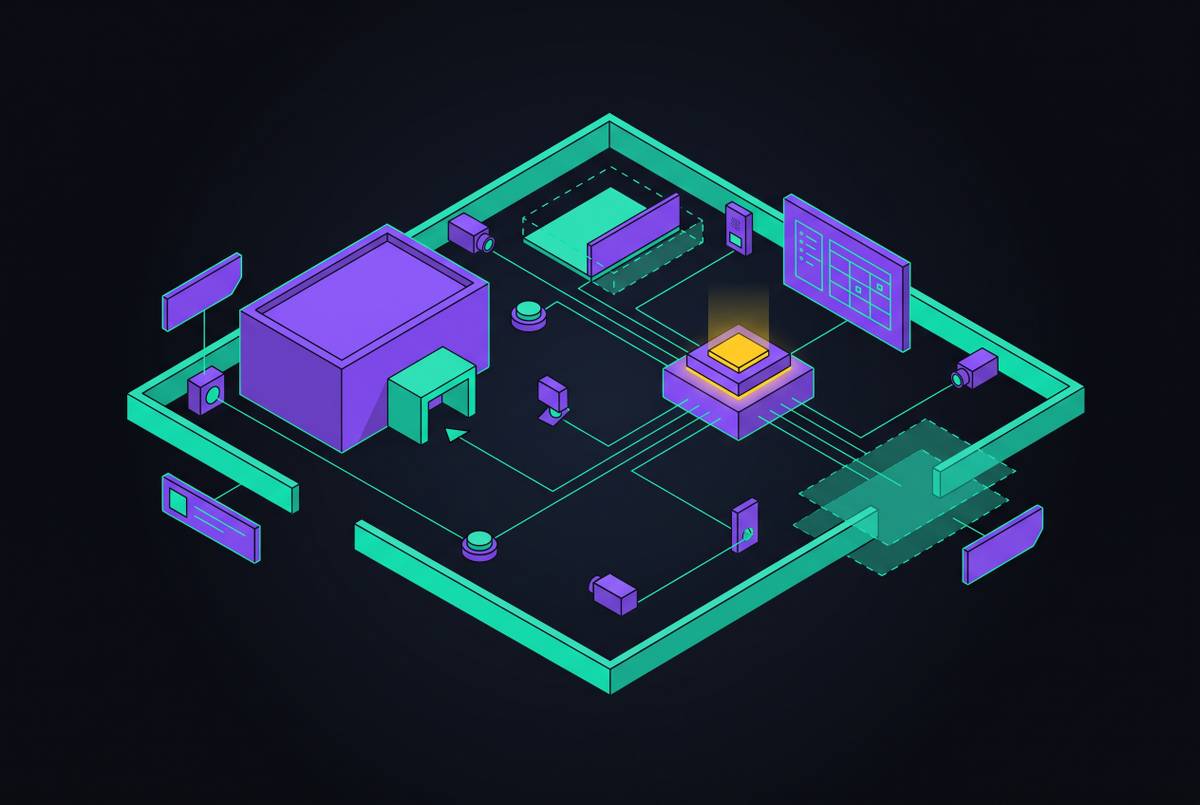
At industrial sites, shift changes, planned maintenance, and weather events can trigger perimeter sensors at several facilities at once. Here, the system can use learned normal-operation patterns as its baseline in place of fixed motion thresholds. An anomaly is assessed against the activity of that facility. Cross-site dashboards consolidate visibility, while edge nodes manage bandwidth and AI pre-filtering limits what human monitors must inspect.
What the human operator's role becomes when AI handles the queue
Removing routine screening from operators changes where their judgment enters the response workflow. The legacy model assigns the same person two competing jobs, filtering noise and responding to threats. During a surge, the first can consume the attention needed for the second. In an AI-first workflow, the agent performs initial filtering while the operator evaluates the verified escalation and makes the dispatch decision.
The quality of that handoff changes the decision itself. A drawn-firearm detection accompanied by a confidence score, a live camera frame, an access log, and a suggested response sequence gives an operator specific evidence to assess. A generic motion alert behind a queue of fifty does not. Human verification at this stage means judging the incident and appropriate response from assembled evidence, rather than beginning with an undifferentiated signal. The role becomes more focused while remaining just as consequential.
This division also separates two kinds of workload. The agent’s parallel assessment does not need to pause while an operator handles an earlier escalation, and routine alarm noise no longer competes directly with response decisions. That separation depends on meaningful filtering and site-aware verification, rather than forwarding every detection under a new label. AI provides continuous screening across concurrent events. Trained operators provide judgment at the verified-threat response layer, where the consequences of action require human responsibility.
What monitoring setup uses AI to filter alerts before routing to live operators?
For a buyer evaluating this model, the first diagnostic question is whether the system reviews every alarm or defers lower-priority signals during a surge. Deferral preserves a queue, even if the product calls it triage. The relevant distinction is between prioritizing an event after assessment and postponing assessment altogether. To remove the screening bottleneck, a setup must allow parallel review without waiting for an operator to be free.
Buyers also need to check what the service-level agreement measures. Average acknowledgment time can conceal peak-event delays. Time to verified-threat escalation under surge conditions is the more useful measure because it tests whether an actionable finding reaches the response layer when intake is busiest. The associated stress-test question is what happens when alarm volume doubles. In the parallel model, assessment and escalation time should remain effectively constant as alarm volume increases.
The handoff itself deserves equally close examination. A raw clip is not a verification. The buyer should check for a classified event with a confidence score, camera location, timestamp, and access context in the operator’s handoff, then check for the site’s schedules, authorized-activity patterns, and zone-specific rules in the judgment behind it. Those criteria distinguish faster detection from usable triage for retail, warehouse, and other commercial surveillance.