The Surveillance Blind Spot That Grows Every Time an Operator Mutes a Camera
Muted cameras create hidden coverage gaps that persist across shifts undetected.
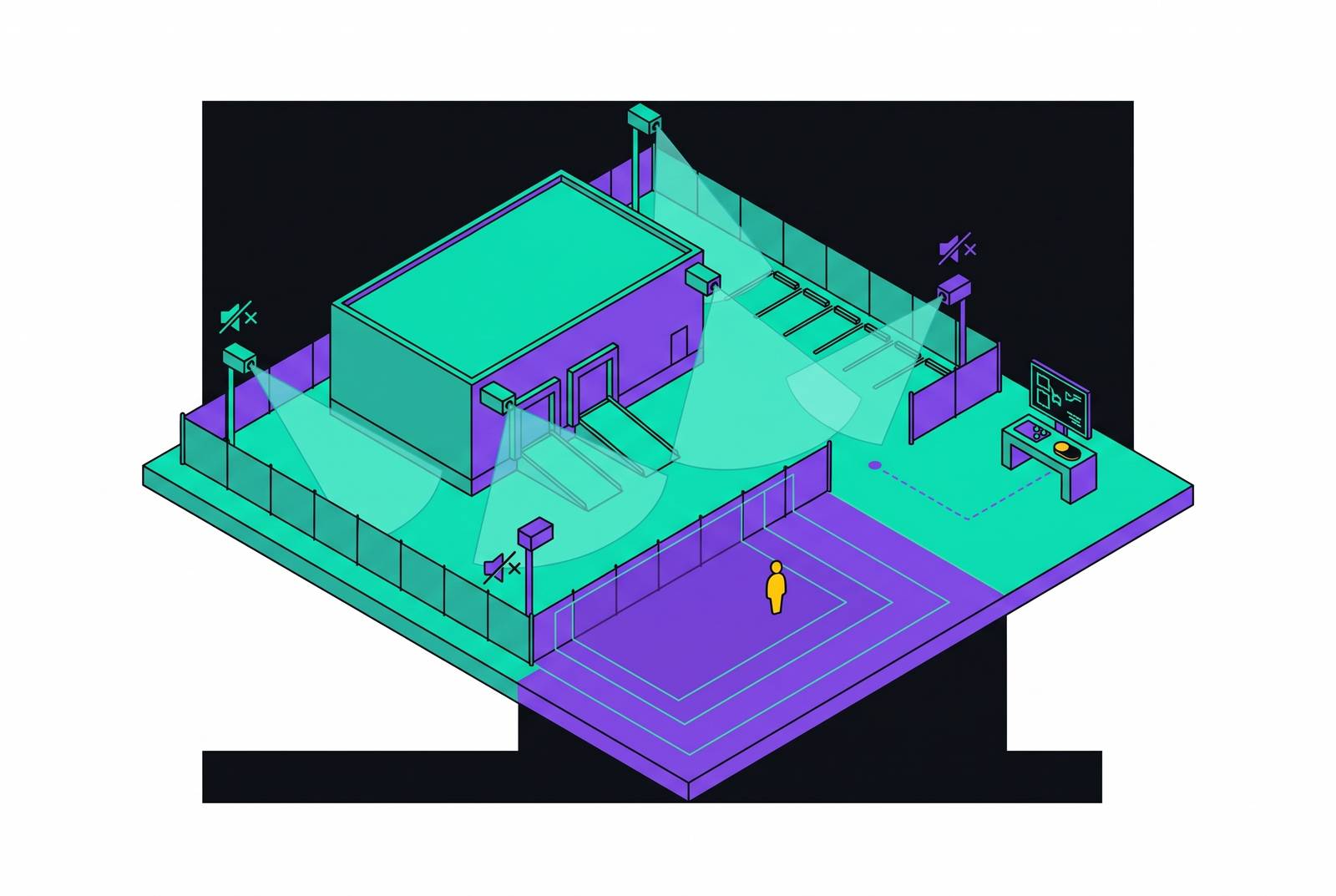
Muting noisy cameras reduces alerts by removing coverage. Each muted camera leaves a hidden blind spot that can last from one shift to the next, with more blind spots adding up across sites. An architecture that filters noise before it reaches the human queue addresses operators’ limited capacity for sustained attention.
Why operators mute cameras in the first place
For an operator facing a growing alarm queue, silencing a camera that repeatedly fires on headlights can feel like the responsible choice. That camera consumes time that other alerts need. Legacy detection systems that are set too sensitively trigger on shadows, headlights, and movement around them, teaching operators that most alerts need no action. After enough repetition, muting becomes a way to preserve attention for signals that appear more credible.
Watching dozens of feeds while checking nonstop alerts takes more attention than people can reliably give. Effort cannot remove that biological limit, and professional discipline cannot make an unreliable signal informative. In an environment where the queue grows faster than it can be cleared, muting may be the operator’s only available means of controlling the workload. The choice makes sense when the operator has so few options, even though it gives up coverage the operator is supposed to provide.
How a rational individual decision becomes a structural blind spot
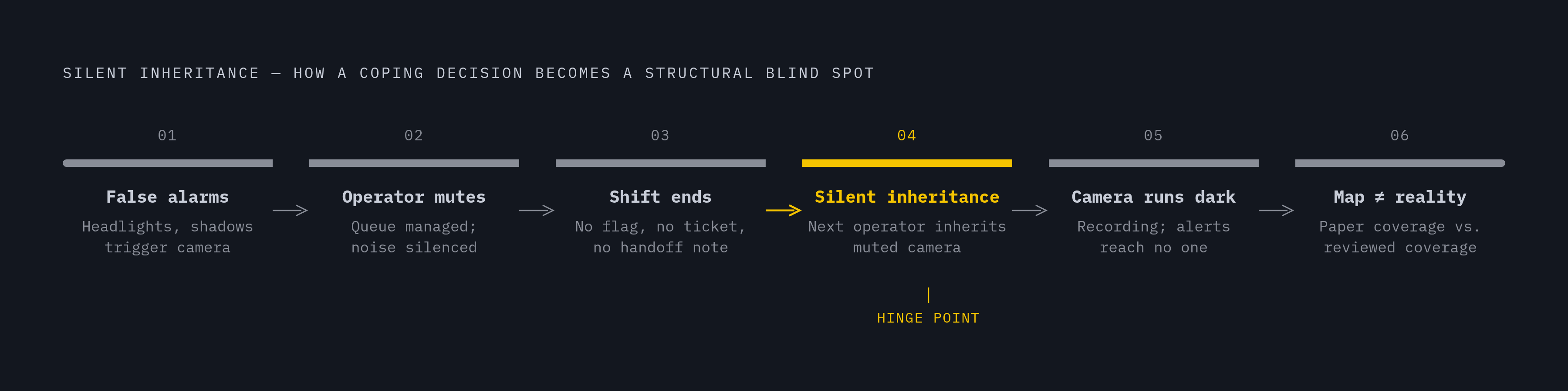
The sacrifice becomes harder to see at shift change. In the standard workflow described here, the next operator inherits muted cameras without a flag, a ticket, or an audit trail explaining what was silenced and why. A decision made to survive one overloaded shift becomes a persistent removal of a monitoring node. The camera can remain installed and recording while its notifications no longer bring activity to anyone’s attention.
Across multiple sites, those decisions create an undocumented coverage map. The estate described as installed and monitored is no longer the estate actually being reviewed. The camera count on paper does not show which views have stopped helping to protect the site live. The gap is therefore not simply the missed alert that prompted a complaint or an investigation. It includes locations where the monitoring service has quietly stopped working as expected, with no one knowing which locations they are.
Activu’s 2026 trend analysis describes the traditional command center as a reactive warehouse for disconnected data, with operators acting as the integration layer between fragmented systems. Muting is one expression of that overload. A visible staffing shortage can prompt additional staffing, but an undisclosed coverage gap cannot prompt a targeted correction. Recording may still support an investigation, yet it does not substitute for active review and intervention. Treating the two as equivalent creates the appearance of protection without the corresponding monitoring function.
The alarm queue problem that makes muting inevitable under the legacy model
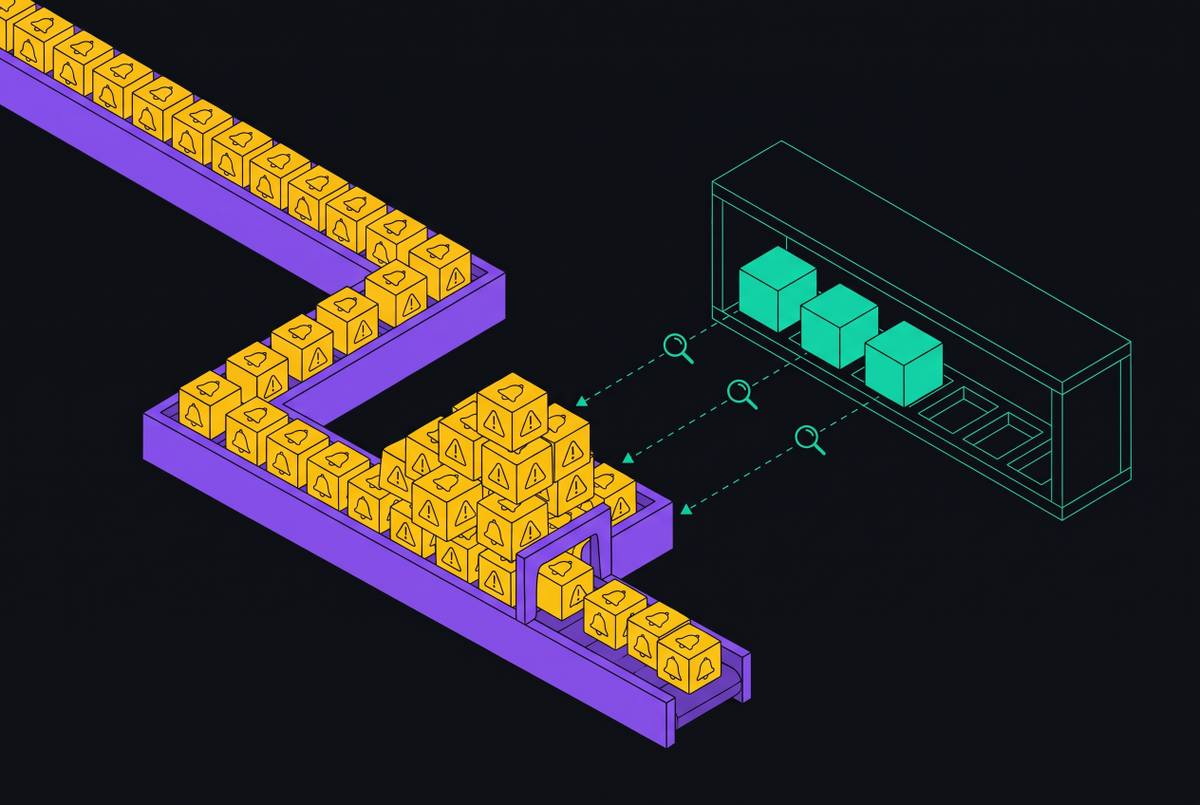
The pressure begins before an operator sees an alert. A detection architecture that generates large volumes of unverified signals transfers the work of separating noise from threats to the monitoring center. Each false alarm takes time that an operator could spend checking a real event. When arrivals exceed the team’s ability to evaluate them, unfinished work accumulates. The queue becomes a growing claim on attention that has already been exhausted.
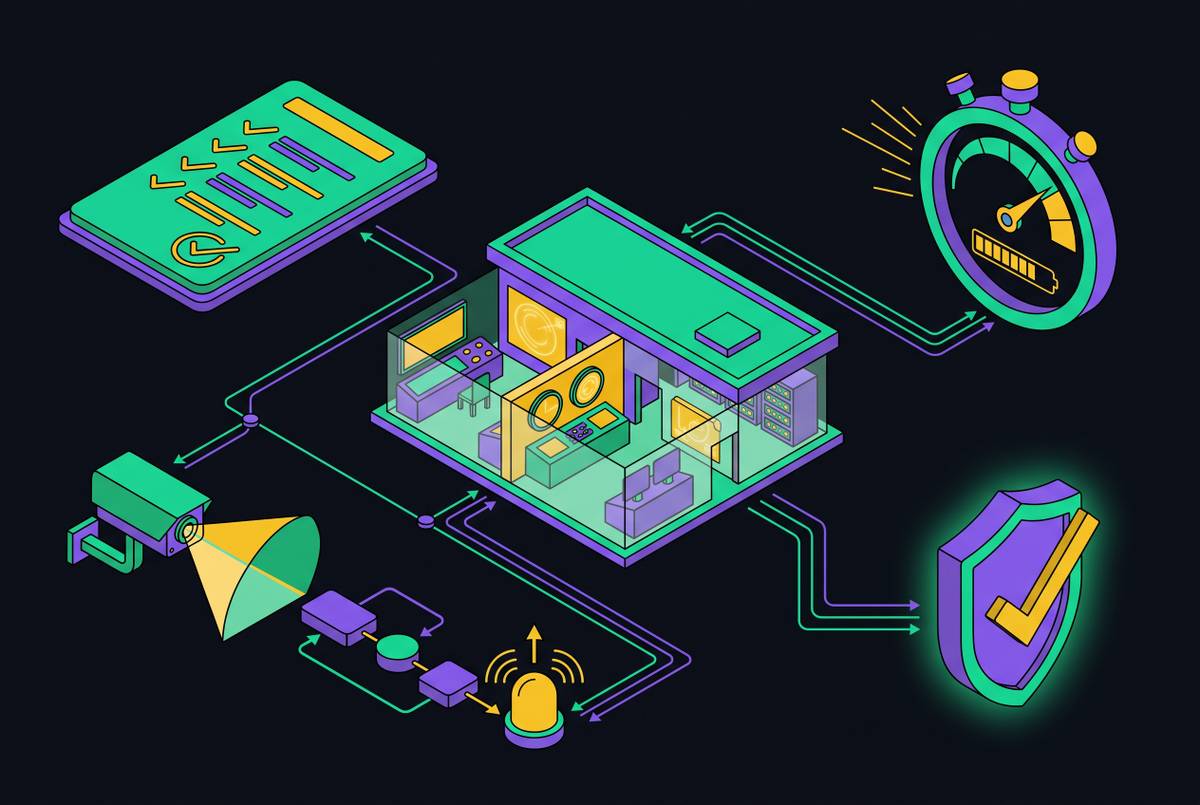
Review also involves more than looking at video. An operator may need to move between footage on one screen, access control on another, and environmental sensor information elsewhere to establish what happened. That manual correlation consumes the same time budget needed to clear incoming alarms. Activu’s NOC analysis describes a “wall of alarms” that produces fatigue. Although the operational context differs, the same conflict applies when surveillance operators must integrate fragmented information under continuous alert pressure.
More operators can handle more work without making the signals any better. If the queue still refills faster than the expanded team can clear it, the underlying overload remains. The false-alarm rate belongs to the detection architecture. Under those conditions, muting is the predictable endpoint of requiring humans to absorb more noise than they can evaluate.
What happens to a real threat while it waits in the queue
A real threat enters the same overloaded review process. When it sits behind dozens of false alarms, its importance does not automatically move it to the front, because establishing that importance is the work still waiting to happen. Response times measured in tens of minutes can follow from queue depth. The threat continues while the monitoring center works through earlier signals.
Response latency consumes the time available for prevention. An event brought to a human quickly enough may still permit intervention, while the same footage reviewed after the event can only support documentation and investigation. The recording has not necessarily changed in quality. Its operational use has changed because the opportunity to act has passed. Activu’s trend analysis notes that even a brief delay in a high-stakes environment can compromise safety and operational integrity.
The contractual clock does not describe that entire interval. UL standards set a strict period from signal receipt to operator action at a listed central station, but that period begins when the station receives the signal. Time spent waiting for review consumes part of the receipt-to-action window before a human sees the event. Most monitoring contracts do not separately measure or regulate receipt-to-review delay, even where they measure receipt-to-action performance. A service-level commitment framed that way does not, by itself, reveal how long a developing threat waits for attention.
Why the false solutions make the blind spot worse
Offshoring changes the labor cost. It does not reduce alarm volume or improve the distinction between harmless activity and a threat. Where the arrangement introduces higher latency and less site-specific context, it also weakens the review process that must compensate for poor detection. The queue remains, while operators have less local understanding with which to resolve it. A lower-cost review layer is not the same as a better-informed one.
Systematically silencing noisy cameras turns an informal adaptation into policy. The monitoring center may become quieter because some cameras no longer send alerts. A camera that repeatedly detects headlights can also cover an area where a genuine threat occurs. Silencing the source suppresses both possibilities.
Per-alarm overage pricing introduces a different conflict. It rewards alarm volume rather than its reduction, placing the financial model at odds with the goal of delivering fewer, better signals to operators. Charging for the excess does not perform the missing verification or shorten the review work each signal requires. These approaches leave humans responsible for integrating fragmented systems and resolving unverified detections. They change the cost or visibility of overload without changing what produces it.
What an architecture built around the attention ceiling actually looks like
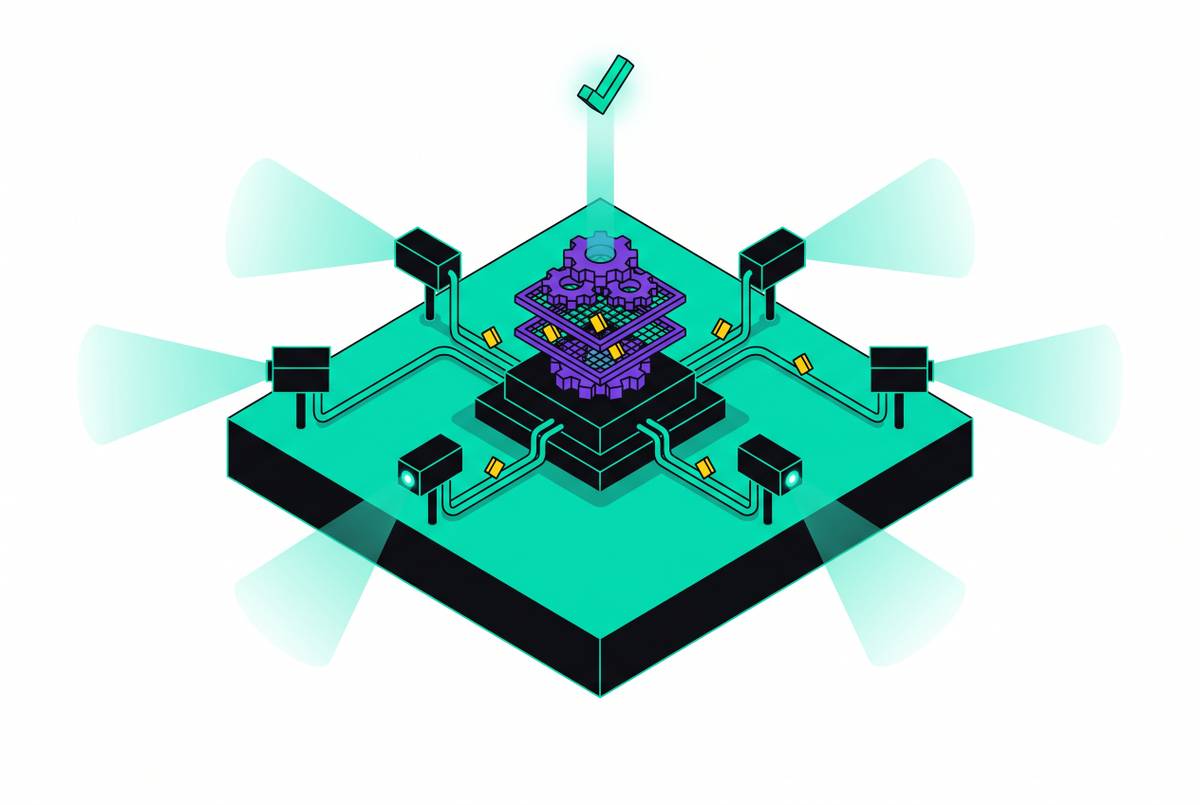
An AI-agent-first architecture separates continuous scanning from response judgment. Machines review feeds without fatigue, while trained humans decide what to do about events that warrant their attention.
AI agents can assess schedules, authorized activity, and environmental conditions instead of treating motion alone as a reason to escalate. A camera that fires on headlights every night can remain under review while the agent filters the environmental noise. The source stays active rather than being muted. Its low-signal behavior becomes something to interpret.
Site-specific protocols supply the basis for that interpretation. They define what authorized activity looks like at a location, at which hours, and by which personnel. A generic model lacks those distinctions and can produce generic errors, whereas a contextualized agent can triage against the conditions of the actual site. In this design, only verified events reach the human queue. The operator’s limited attention is reserved for events requiring judgment instead of spent discovering that most alerts are harmless.
Activu’s trend analysis predicts that 70 percent of critical infrastructure operators will move from continuous manual monitoring to automated, event-driven alerting. Commercial security needs the same change in how the system divides the work. Automation must do the scanning and filtering so that people no longer have to check every signal the system takes in.
How human operators function differently when AI handles the queue
The human operator begins with a specific flagged event. Under the legacy model, much of the operator’s cognitive budget goes into deciding which alarm among dozens deserves attention first. In the AI-first model, that initial triage has already occurred, so the operator can verify the event with its context rather than first reconstructing why it might deserve review. Machine verification for escalation and human verification for response serve different purposes. The former narrows the workload, while the latter supports an accountable decision.
CHI’26 research on multi-robot video sensemaking with public safety professionals found that LLM-based explanations presented with video footage reduced manual workload and increased operator confidence. That finding supports giving operators context with footage rather than raw video alone. It does not make confidence a substitute for judgment. Instead, it shows how machine assistance can make the evidence easier for a professional to assess without assigning the response decision to the machine.
A single trained operator who reviews AI-escalated, context-annotated events can cover as many cameras as would need many operators under the legacy model, because that operator no longer has to do every first review. AI agents should filter and reason, while a person judges the event in context, answers for the decision, and has the authority to dispatch. Human expertise becomes the response layer rather than the bottleneck through which all noise must pass.
What should buyers ask their monitoring provider about muted cameras
For buyers, the practical next step is an audit of actual review coverage. Buyers should first ask which cameras have been muted, disabled, or moved to a reduced sensitivity threshold, when each change occurred, and who made it. That establishes the coverage currently being delivered. It also distinguishes a documented operating decision from a change inherited without explanation. A nominal inventory cannot answer either point.
Buyers should ask for peak-hour alarm queue depth and the measured interval between signal receipt and operator review. They should also ask how a spike in alarm volume changes review time and by how much. These questions expose the delay before anyone evaluates the event. An answer about dispatch performance alone leaves that part of the process unresolved.
Buyers should ask what context distinguishes authorized activity from a threat and how that context changes when schedules or personnel change. A provider that cannot explain which cameras it has silenced or how it reviews alerts cannot show what coverage buyers get for their money. The buying standard is whether every camera remains actively reviewed and how quickly a verified threat reaches a human.